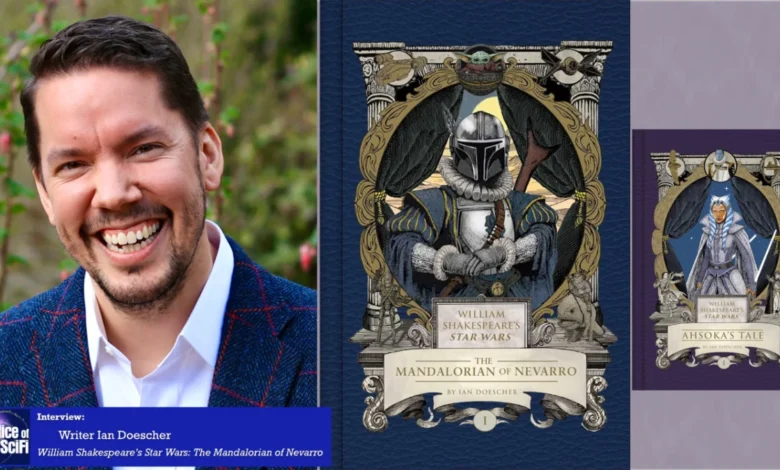
The celebrated author Ian Doescher, renowned for his audacious and successful fusion of the Bard’s dramatic flair with the galaxy far, far away, is once again venturing into the expansive Star Wars universe. This time, Doescher’s quill is poised over the gritty, compelling narrative of The Mandalorian, bringing the adventures of Din Djarin and Grogu to the hallowed grounds of iambic pentameter. The latest endeavor, titled William Shakespeare’s Star Wars: The Mandalorian of Nevarro Part the First, is published by Insight Editions, a company that has fostered a fruitful partnership with the author, bringing beloved franchises into theatrical, Shakespearean interpretations.
This new work marks a significant expansion of Doescher’s acclaimed William Shakespeare’s Star Wars series, which previously adapted the original trilogy films. The transition from feature films to a television series, particularly one as serialized and character-driven as The Mandalorian, presents a unique set of challenges and opportunities for adaptation. Doescher, in a recent interview, shed light on the genesis of this project and the creative considerations involved in distilling a season of television into a five-act play.
The Genesis of a Shakespearean Mandalorian
The collaboration between Ian Doescher and Insight Editions for the William Shakespeare’s Star Wars series began with the initial nine books, which covered the original trilogy films. These books, met with considerable critical and commercial success, established a dedicated audience eager for more. According to Doescher, Lucasfilm approached Insight Editions with the prospect of further adaptations, and the popularity of The Mandalorian made it a natural and highly anticipated choice.
“Lucasfilm approached Insight Editions about the previous nine books,” Doescher stated, referencing the initial foray into adapting the Skywalker Saga. This established relationship paved the way for further creative explorations. The decision to adapt The Mandalorian, a series that has captivated audiences with its blend of western sensibilities, samurai film influences, and its focus on found family, offered Doescher a fresh canvas.
Adapting the Small Screen for the Stage
The primary challenge in adapting The Mandalorian Season 1, which comprises eight episodes, lies in its episodic nature and the compressed timeline required for a single theatrical work. Unlike adapting a feature film, which has a defined beginning, middle, and end within a roughly two-hour runtime, a television season unfolds over a much longer narrative arc. Doescher noted the difficulty of condensing an eight-episode season into a cohesive, five-act play.
“The challenge of distilling an 8-episode season into a single 5 act adaptation, as compared to adapting the trilogy movies, one movie at a time,” he explained. This necessitates a careful selection of plot points, character developments, and thematic elements to ensure the essence of the season is preserved while adhering to the structural conventions of Shakespearean drama. Each episode of The Mandalorian introduces new characters, planets, and plot threads, all of which must be woven together seamlessly into a dramatic tapestry.
The adaptation process requires Doescher to not only translate the dialogue and action into iambic pentameter but also to identify the core dramatic arcs and character motivations that drive the narrative. This involves a deep understanding of both Shakespearean dramatic structure and the nuances of The Mandalorian‘s storytelling. The series’ focus on Din Djarin’s evolving relationship with Grogu, his internal conflicts about his creed, and his encounters with various factions within the galaxy provides ample material for dramatic interpretation.
A Richer Universe Through Shakespearean Lenses
Doescher’s work is more than just a novelty; it offers a unique lens through which to re-examine familiar narratives. By employing Shakespearean language, he imbues the characters and their struggles with a timeless quality. The motivations of bounty hunters, the ethics of the Mandalorian creed, and the profound bond between a lone warrior and a Force-sensitive child are all given new depth and resonance when framed by the eloquence and dramatic tradition of the Elizabethan era.
The William Shakespeare’s Star Wars series has consistently been praised for its wit, its clever use of Shakespearean tropes, and its ability to capture the spirit of the original films. Doescher’s approach often involves introducing soliloquies that reveal the inner thoughts of characters, asides that offer commentary on the action, and dramatic confrontations that echo the conflicts found in plays like Hamlet or Macbeth.
A Revitalized Collection and Future Prospects
In addition to the new Mandalorian adaptation, Insight Editions has also undertaken a comprehensive reissue of all previous William Shakespeare’s Star Wars volumes. These updated editions are available in both elegant leather-textured hardcover and accessible trade paperback formats. This reissue ensures that fans can experience the entire Shakespearean Star Wars saga in a refined presentation, solidifying its place as a beloved collection for both literary and cinematic enthusiasts.
Doescher also hinted at the possibility of further adaptations from the Star Wars universe, suggesting that the television series format offers a rich vein of material to explore. “Potentially more of the TV series going forward,” he indicated, leaving fans to speculate which beloved characters and storylines might next receive the Shakespearean treatment.
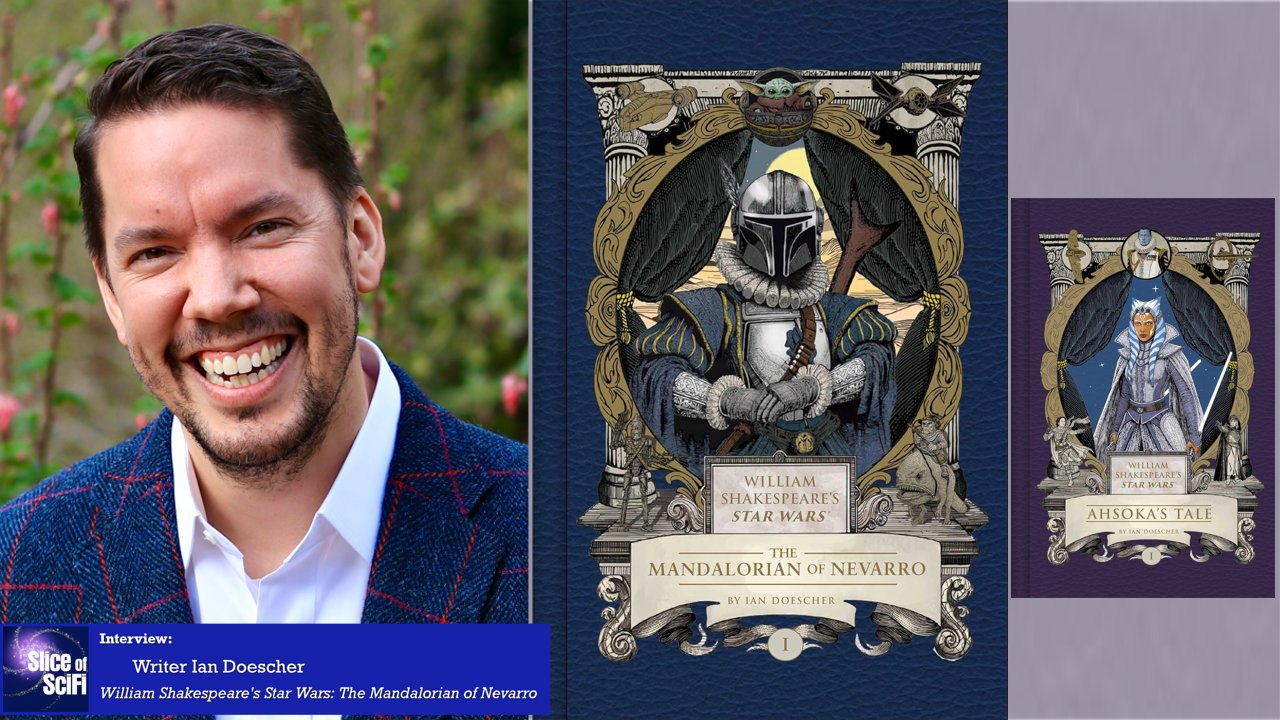
The mention of “Ahsoka’s Tale” appearing this fall further fuels this anticipation. Ahsoka Tano, a fan-favorite character who has transitioned from animated series to live-action, possesses a complex history and a compelling narrative arc that would undoubtedly translate well into a dramatic, Shakespearean form. Her journey of self-discovery, her grappling with her past, and her role as a mentor figure present rich thematic possibilities for Doescher.
The Enduring Appeal of Shakespeare and Star Wars
The enduring appeal of Ian Doescher’s William Shakespeare’s Star Wars series lies in its unexpected yet harmonious synthesis of two seemingly disparate worlds. Shakespeare’s plays, with their exploration of universal themes such as love, loss, ambition, and betrayal, resonate across centuries. Similarly, Star Wars, from its inception, has tapped into fundamental archetypes and mythic storytelling.
Doescher’s genius is in recognizing these commonalities and bridging the gap. He demonstrates that the dramatic conflicts and emotional depth found in Shakespeare can effectively illuminate the narratives of Star Wars, and vice versa. The iambic pentameter, often perceived as archaic, becomes a vibrant medium for expressing the gravitas and the humor of the Star Wars universe.
The success of this series also speaks to a broader cultural interest in reinterpretations and mashups. In an era where established franchises are constantly being reimagined, Doescher’s work offers a sophisticated and artistically driven approach, rather than a superficial pastiche. It respects both the source material of Shakespeare and the narrative integrity of Star Wars, creating something new and engaging in the process.
Broader Impact and Future Implications
The continued success of the William Shakespeare’s Star Wars series, and the expansion into television adaptations, has significant implications for both the literary and entertainment industries. It demonstrates the potential for innovative literary adaptations of popular culture, opening doors for other authors to explore similar cross-genre collaborations.
Furthermore, it highlights the growing appreciation for narrative craftsmanship across different mediums. By reinterpreting a modern visual medium through the lens of classical theatre, Doescher encourages audiences to engage with storytelling in new ways. It fosters a deeper appreciation for language, dramatic structure, and the timeless nature of human experience, regardless of the setting or technological backdrop.
The publication of William Shakespeare’s Star Wars: The Mandalorian of Nevarro Part the First is not merely the release of a new book; it is an event that celebrates creativity, interdisciplinary artistry, and the enduring power of compelling storytelling. As the galaxy far, far away continues to expand, so too does the potential for Doescher’s unique brand of theatrical adaptation, promising more adventures, more drama, and more Elizabethan flair for fans of both Shakespeare and Star Wars. The continuing partnership between Ian Doescher and Insight Editions, under the watchful eye of Lucasfilm, suggests a bright future for this ambitious and beloved literary endeavor. The reissued original trilogy and the upcoming Ahsoka’s Tale further solidify this series as a cornerstone of modern speculative fiction, offering a fresh, eloquent, and deeply engaging way to experience the narratives that have captured the imaginations of millions. The ability to condense a full season of a television show into a cohesive five-act play is a testament to Doescher’s mastery of both the original source material and the dramatic structure of Shakespeare. This process involves a meticulous dissection of plot, character arcs, and thematic throughlines, ensuring that the essence of Din Djarin’s journey and the unfolding saga of Grogu are preserved. The inclusion of soliloquies and asides, hallmarks of Shakespearean drama, allows for an exploration of the internal lives of these characters that might be less explicit in the television format. This adds a layer of psychological depth, revealing the unspoken doubts, convictions, and evolving perspectives of the characters in ways that are both familiar to Shakespearean audiences and illuminating for Star Wars fans.
The strategic decision by Lucasfilm and Insight Editions to expand the William Shakespeare’s Star Wars series beyond the original trilogy films is a clear indicator of the franchise’s robust health and its appeal to a diverse audience. The success of the initial nine books created a strong foundation, demonstrating a market eager for these unique adaptations. The choice of The Mandalorian, a series that has become a cultural phenomenon in its own right, was a shrewd move to capitalize on this established momentum. The series’ inherent themes of honor, duty, paternal bonds, and the harsh realities of a post-Empire galaxy lend themselves remarkably well to the dramatic weight and thematic complexity often found in Shakespeare’s works.
The reissuance of the original William Shakespeare’s Star Wars volumes in new formats—leather-textured hardcover and trade paperback—is a significant move for Insight Editions. It not only offers existing fans a chance to upgrade their collections but also serves as an accessible entry point for new readers. This strategic decision ensures the longevity of the series and its continued presence in the market, reinforcing its status as a premium collectible for fans of both literary and cinematic genres. The availability in multiple formats caters to a wider range of consumer preferences and budgets, further broadening the reach of Doescher’s unique brand of storytelling.
The anticipation for "Ahsoka’s Tale" is a testament to the rich narrative potential that exists within the broader Star Wars canon, particularly within its animated and live-action series. Ahsoka Tano’s journey, from her origins as Anakin Skywalker’s Padawan to her independent path as a formidable warrior and Force-wielder, is filled with significant character development, moral quandaries, and epic confrontations. These elements are fertile ground for Doescher’s dramatic reinterpretation, promising a compelling Shakespearean rendition of her complex story. The potential for exploring her internal struggles, her relationships with key figures like Anakin Skywalker and Obi-Wan Kenobi, and her philosophical evolution would undoubtedly resonate with audiences familiar with both the character and Shakespeare’s dramatic explorations of heroism and destiny.
The ongoing success of this series contributes to a broader trend in media where classic literary styles are being applied to contemporary popular culture. This trend fosters a greater appreciation for the foundational elements of storytelling and encourages audiences to engage with these narratives on a deeper, more analytical level. By translating the visceral action and emotional beats of Star Wars into the eloquent verse of Shakespeare, Doescher bridges generational and stylistic divides, making both classic literature and modern blockbusters more accessible and engaging for a wider audience. This cross-pollination of genres and styles enriches the cultural landscape, demonstrating that timeless themes can be explored effectively across diverse artistic mediums. The long-term implication is a more integrated understanding of storytelling, where the artistry of Shakespeare and the imaginative scope of Star Wars are seen not as separate entities, but as interconnected expressions of the human condition.
Related posts: