Christmas at the Kringles: Talking with the Filmmakers The director and several cast talk about their glee at making a Christmas horror romp

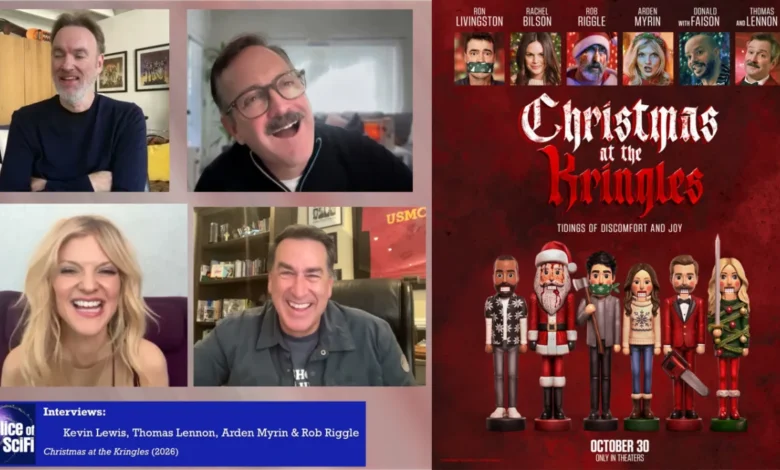
The intersection of holiday cheer and cinematic bloodshed has long occupied a unique and profitable niche in the horror-comedy landscape, and the genre is expanding its footprint once again with the release of Christmas at the Kringles. Directed by Kevin Lewis, the film injects a heavy dose of subversive terror and practical-effects-driven carnage into traditional tropes of family dysfunction during the winter season. Ahead of the film’s wider release, the creative team behind the project—including Lewis and key cast members Thomas Lennon, Arden Myrin, and Rob Riggle—sat down for an extensive retrospective interview to discuss the logistical challenges, comedic hurdles, and sheer creative joy of bringing North Pole mythology to the slasher format.
The appeal of blending festive cheer with macabre violence is not a novel concept in cinema, but contemporary audiences have shown an increasing appetite for holiday-themed horror. Over the past two decades, the subgenre has evolved from low-budget novelty releases into a legitimate arena for high-concept storytelling, dark satire, and practical effects showcases. Christmas at the Kringles aims to capitalize on this appetite by subverting the wholesome expectations associated with Christmas gatherings, transforming a classic family dynamic into a high-stakes arena of destruction, hand-to-hand combat, and festive weaponry.
Behind the Lens: Kevin Lewis on Practical Effects and Chaos
At the helm of the production is director Kevin Lewis, whose vision for the project relied heavily on grounding the supernatural and slapstick violence in tangible, physical reality. During the discussion, Lewis emphasized the delicate balancing act required to maintain comedic timing while executing a relentless third-act sequence defined by total environmental and physical destruction.
According to Lewis, maintaining humor amidst carnage is a matter of strict pacing and performance calibration. The director noted that the chaos unleashed upon both the actors and the physical sets during the climactic sequences demanded meticulous choreography. Rather than relying on digital enhancements to generate the film’s bloody set pieces, Lewis made a deliberate choice to utilize practical effects whenever possible. This approach not only lends a visceral, tactile authenticity to the horror elements but also creates a dynamic physical environment for the actors to react to in real-time, heightening the comedic contrast between mundane holiday arguments and extreme cinematic peril.
Meet the Kringles: Character Conception and Wardrobe Choices
The film’s ensemble cast brings distinct comedic sensibilities to their respective roles, navigating the thin line between grounded family satire and outright cinematic absurdity. Thomas Lennon, who stars as the unhinged family patriarch Nick Kringle, shared insights into his approach to the character. Playing a man whose grip on reality is as fragile as a glass ornament required Lennon to lean heavily into the frantic energy of the role. Notably, Lennon performed the vast majority of his own stunt work and physical altercations, including a series of intense, up-close fight scenes opposite co-star Peter Livingston. Lennon expressed enthusiasm for the genre, indicating that his experience on the production has left him eager to explore further opportunities within holiday horror filmmaking.
Meanwhile, Arden Myrin takes on the role of Carol Kringle, delivering a performance defined by eccentric behavioral quirks and a meticulously curated aesthetic. Described by the cast and crew as resembling a cross between traditional holiday iconography and the hyper-stylized sensibilities of reality television, Carol’s wardrobe functions as a visual manifestation of her internal volatility. Myrin noted that developing the character involved finding the comedy in a matriarch who maintains an immaculate, festive facade while navigating chaotic domestic violence. The performance relies heavily on subtext, reminding viewers that beneath Carol’s carefully constructed holiday smile lies a deeply unpredictable personality.
Rob Riggle as Battle Santa: Combat, Commitment, and Glitter Hazards
Rounding out the core creative insights is Rob Riggle, who steps into the role of "Battle Santa." Tasked with embodying a physical iteration of Saint Nicholas who is fully prepared to commit acts of violence in defense of the true spirit of Christmas, Riggle’s preparation involved intense physical conditioning and stunt choreography alongside veteran actress Beverly D’Angelo.
Riggle discussed the physical demands of playing a combat-ready holiday icon, noting that the role required a complete commitment to the absurdity of the premise. Beyond the stunt work and fight training—and hints of a potential return for a hypothetical sequel—Riggle highlighted the unexpected occupational hazards of cinematic warfare, specifically the logistical nightmare of dealing with industrial quantities of decorative glitter embedded firmly in his facial hair for days at a time. Such practical details underscore the unique working conditions often encountered on the set of a high-energy holiday horror-comedy.
The Evolution and Cultural Impact of Holiday Horror
The release of Christmas at the Kringles arrives at a time when audiences are increasingly seeking counter-programming to traditional, sentimental holiday media. The tradition of holiday horror dates back decades, with foundational titles establishing the notion that the most vulnerable time of year is also the most ripe for subversion. Over time, the genre has transitioned from marginalized midnight movies into mainstream accessibility, driven in large part by streaming platforms and specialty distribution labels that cater to horror enthusiasts year-round.
Industry analysts note that horror comedies, in particular, perform exceptionally well because they offer emotional release through laughter while satisfying the adrenaline rush of traditional genre filmmaking. By casting recognizable comedic actors—such as Lennon and Riggle—alongside seasoned character performers, productions like Christmas at the Kringles bridge the gap between broad comedy and genre fandom, drawing in viewers who might not otherwise consume traditional horror content.
Production Logistics and the Revival of Practical Filmmaking
The emphasis on practical effects highlighted by director Kevin Lewis reflects a broader industry conversation regarding the limits of Computer-Generated Imagery (CGI) in modern filmmaking. While CGI remains a dominant tool in major studio blockbusters, the horror genre has long maintained an affinity for physical effects due to their tactile nature and ability to evoke genuine visceral reactions from audiences.
In executing the third-act destruction of the Kringle household, the production team faced significant logistical hurdles. Designing sets that could withstand simulated explosions, structural damage, and extensive stunt work without compromising safety required months of pre-planning and engineering. The collaboration between the stunt department, the special effects crew, and the actors ensured that the kinetic energy of the script translated effectively to the screen. For actors like Lennon and Riggle, performing their own stunts added an extra layer of authenticity to the physical comedy, allowing the humor to stem directly from the genuine exertion and reactions of the performers.
Audience Engagement and the Future of the Kringle Franchise
As the promotional cycle for Christmas at the Kringles continues, the filmmakers and cast have expressed optimism regarding the potential for future installments. The enthusiasm voiced by Lennon and Riggle for returning to the holiday horror sandbox suggests that the intellectual property possesses the flexibility to expand into a broader cinematic universe if audience reception warrants a follow-up.
For fans of the genre, the film offers a blend of familiar tropes and fresh comedic chemistry, anchored by a cast experienced in improvisational and scripted comedy alike. As discussions surrounding the film circulate within horror and science fiction communities, creators continue to engage directly with audiences through dedicated media platforms, podcasts, and digital channels to discuss the behind-the-scenes realities of independent filmmaking.
Ultimately, Christmas at the Kringles stands as a testament to the enduring appeal of genre-bending cinema. By fusing the comforting iconography of the winter holidays with high-stakes violence, practical stunts, and sharp comedic performances, the creative team has delivered a project that speaks directly to the evolving tastes of contemporary horror audiences. Whether the film initiates a new holiday tradition for viewers seeking alternatives to standard festive fare remains to be seen, but the passion of its creators ensures that the journey to the North Pole has rarely been this chaotic or entertaining.