Supergirl #19 Review: Kara Zor-El Faces a Powerless Future, Academic Hurdles, and Mantle Contenders

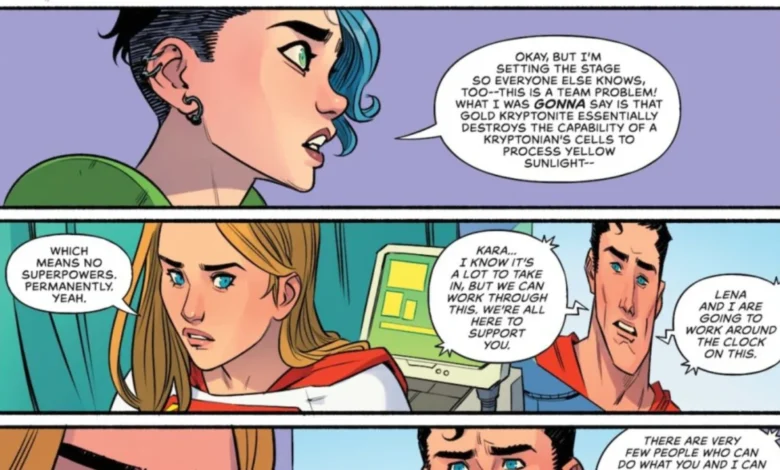
The release of Supergirl #19 from DC Comics marks a significant narrative pivot for Kara Zor-El, pushing the iconic hero into uncharted territory. Written, illustrated, and cover-designed by Sophie Campbell, this issue addresses the immediate fallout of Kara’s debilitating exposure to gold Kryptonite—a substance famously known in DC lore for permanently or temporarily stripping Kryptonians of their cellular ability to process yellow sunlight. Without her signature extraterrestrial abilities, the protagonist must navigate a series of terrestrial vulnerabilities, ranging from collegiate reintegration to violent corporate and personal rivalry over the vacated Supergirl moniker. Scheduled for release on November 11, 2026, with a standard retail price of $3.99, the issue has already generated considerable discussion among industry analysts and fandom communities regarding the character’s long-term trajectory.

The transition from an invincible cosmic protector to an ordinary human serves as a classic narrative trope within superhero fiction, yet Campbell’s modern approach leans heavily into themes of identity, institutional bureaucracy, and the burden of legacy. Rather than retreating to a secure stronghold of the Justice League or the Fortress of Solitude, Kara chooses a remarkably grounded path: reenrolling at Stanhope College. However, her return to academia is immediately complicated by external threats, most notably the persistent danger posed by the villainous Reactron, whose radioactive suit and personal vendetta against the House of El render standard campus security measures entirely inadequate.
Background Context of the Gold Kryptonite Arc

Gold Kryptonite holds a unique and terrifying status within the broader Superman family mythology. Unlike green Kryptonite, which acts as a lethal poison through radiation, or red Kryptonite, which induces unpredictable mutations, gold Kryptonite permanently severs a Kryptonian’s physiological connection to solar energy. In classic continuity, its use was often restricted to extreme disciplinary measures within Kryptonian society or catastrophic worst-case scenarios.
In the contemporary narrative overseen by Campbell, Kara’s loss of powers is not merely a temporary inconvenience or a fleeting plot device; it acts as a catalyst for examining her place in a world she has spent her life defending without the safety net of invulnerability. The decision to strip her of flight, super-strength, and invulnerability forces a reevaluation of what defines a hero. Historical precedents in DC storytelling—such as Superman’s various depowerment arcs or Clark Kent’s periods operating under altered physiological states—demonstrate that removing powers often highlights the innate moral character of the individual over their physical capabilities. In Kara’s case, the narrative asks whether she remains a hero when reduced to human biological limits.

The Succession Crisis: Matrix, Nightflame, and the Super Force
While Kara attempts to adapt to her newfound fragility, a distinct vacuum of power emerges within her immediate circle. The mantle of Supergirl—symbolizing hope, resilience, and planetary defense—does not remain vacant for long. The storyline introduces an intense ideological and physical struggle between two distinct figures from Kara’s periphery: the recently resurrected shape-shifting entity known as Matrix and the gothic-aesthetic powerhouse Nightflame.

Matrix, a foundational character in the history of the Supergirl title with deep roots in post-Crisis continuity, brings a complex history of identity and duty to the ongoing
debate over who rightfully embodies the role. Conversely, Nightflame represents a starkly contrasting visual and philosophical ethos, introducing a darker, alternative energy to the heroic landscape. The friction between these two candidates escalates quickly into direct confrontation, as both attempt to establish their legitimacy through combat and public display.

Adding further complexity to the succession crisis is the involvement of "Kara’s Super Force," a coalition of allies and secondary figures who maintain a vested interest in the protection of the mantle. Advance solicitations and preview materials indicate that a surprise contender from this group may enter the fray, challenging the binary rivalry between Matrix and Nightflame. Industry commentators have noted that this multifaceted competition serves as a meta-commentary on legacy characters in modern comic book publishing, where titles and symbols are frequently contested, shared, or fought over by multiple inheritors.
Academic Reintegration at Stanhope and the Reactron Threat

Juxtaposed against the cosmic-level politics of the Supergirl mantle is the mundane, high-stress environment of Stanhope College. Kara’s decision to return to higher education represents an attempt to reclaim a semblance of normalcy, a recurring theme in young adult and transitional superhero narratives. However, academic orientation and dormitory life present their own unique trials, which are exponentially magnified by her current lack of superpowers.
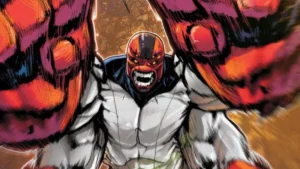
The primary physical antagonist of this arc, Reactron, introduces a lethal element to the college setting. Armed with radioactive energy generation and a deep-seated hatred for Kryptonians, Reactron’s presence near an educational institution creates an immediate hostage and survival dynamic. Without the ability to shrug off energy blasts or physically overpower her assailant, Kara must rely on tactical intellect, environment manipulation, and the support of her remaining mortal and super-powered friends to survive orientation week.

This juxtaposition of everyday student anxieties—such as navigating campus bureaucracy and fitting in socially—with life-or-death confrontations against classic rogues’ gallery villains forms the emotional core of Campbell’s run. It allows the creative team to explore the psychological weight of trauma and vulnerability, contrasting the high-stakes heroics of the past with the quiet resilience required to sit in a lecture hall while hunted.
Publishing Details, Alternative Covers, and Market Implications

From a retail and publishing standpoint, Supergirl #19 arrives with significant promotional backing from DC Comics. In addition to the standard edition featuring Sophie Campbell’s interior work and primary cover, the issue offers a robust variant cover lineup designed to appeal to collectors. Confirmed variant covers include contributions from high-profile artists:
- Miguel Mercado Cover (Order Code: 0926DC0130)
- Karen S. Darboe Cover (Order Code: 0926DC0131)
- Chuma Hill Cover (Order Code: 0926DC0132)
- Gerald Parel Cover (Order Code: 0926DC0133)
Each variant is priced at the standard retail tier of $4.99, positioning the issue within the upper-middle tier of DC’s monthly publishing line. Diamond Comic Distributors and Lunar Distribution metrics indicate steady pre-order volume, driven largely by the creative stability of Campbell’s dual role as writer and artist, a configuration that has historically fostered cohesive visual and narrative storytelling.

Implications for the Broader DC Universe
The events of Supergirl #19 carry broader implications for the status of legacy characters within the current publishing landscape. By deliberately handicapping one of the publisher’s most powerful heroines, DC allows for a character-driven examination of agency, power dynamics, and the psychological impact of disability or sudden loss of capacity.

Furthermore, the public dispute over the Supergirl identity touches upon themes of ownership and representation. As Matrix, Nightflame, and potential dark-horse candidates vie for recognition, the narrative questions whether a mantle is defined by the costume, the powers, or the individual’s underlying commitment to justice. As comic book retailers prepare for the issue’s November 11 release date, readership metrics will likely reveal whether audiences respond favorably to a grounded, depowered Kara Zor-El or if the appetite for high-octane cosmic action will necessitate a swift return to her traditional status quo. For now, however, Kara’s immediate concerns remain remarkably terrestrial: surviving orientation, avoiding Reactron, and passing her classes without the benefit of x-ray vision.