Below: Netflix’s New Coastal Horror Series Dives Into the Depths of Newfoundland Folklore and Environmental Unease

The release of the six-part limited series Below on Netflix marks a significant entry into the growing subgenre of coastal horror. Set against the stark, atmospheric backdrop of Snook’s Arm, Newfoundland, the series blends localized folklore with the contemporary anxieties of climate change. Produced with a focus on character-driven drama, the show follows the experiences of a isolated fishing community grappling with an anomalous environmental crisis.
The Premise and Narrative Foundation
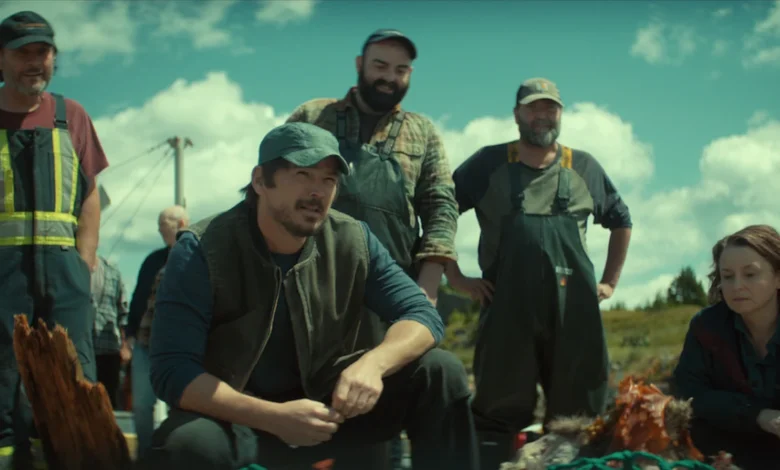
The series centers on Calvin Penney, portrayed by Josh Hartnett, a traditionalist fisherman attempting to preserve his family’s heritage and the economic stability of his coastal hometown. The narrative trajectory shifts from a character study of a fading maritime culture to a creature feature when a massive cephalopod, triggered by shifting ecological conditions, begins to affect the region’s biodiversity and local infrastructure.
Unlike many genre entries that rely on supernatural or paranormal explanations, Below grounds its central threat in biological reality. The series posits that the creature’s presence is a direct consequence of migration patterns altered by global warming and oceanic temperature shifts. This narrative choice aligns the show with recent trends in "eco-horror," a subgenre that uses the natural world as a mirror for human culpability and industrial negligence.
Chronology of Production and Release
Development of the series began as part of Netflix’s initiative to bolster its regional content, specifically targeting the unique geography and cultural identity of Atlantic Canada. The production team utilized the remote landscapes of Newfoundland to emphasize the isolation essential to the story’s tone.
![‘Below’ Reels In a Winner With Its Small-Town Sea Creature Saga [Season Review]](https://www.dreadcentral.com/wp-content/uploads/2026/10/Below-Calvin-Heads-Towards-Sea-Monster.jpg)
The production timeline saw the series move from pre-production in early 2025 to a primary shooting schedule that lasted four months. Post-production focused heavily on the practical and visual effects required to render the cephalopod, with the creative team opting for a "less is more" approach, prioritizing suspense and atmospheric tension over constant creature reveals. The series premiered on Netflix in October 2026, positioning it as a key addition to the platform’s fall horror lineup.
Cast and Character Dynamics
The casting of Josh Hartnett as Calvin Penney provides a grounded anchor for the series. Hartnett, alongside Charlie Heaton, who plays his son Wade, portrays the generational friction inherent in a community facing economic decline. The dynamic between the two characters reflects the broader conflict between those who wish to maintain traditional, unsustainable practices and those who recognize the necessity of adaptation.
Mackenzie Davis joins the ensemble as Dr. Fonda Howander, a marine researcher whose arrival in Snook’s Arm serves as the catalyst for the scientific investigation of the anomaly. Her character acts as the intellectual counterweight to the local inhabitants, bridging the gap between the community’s lived experience and the empirical data of the encroaching threat.
Supporting Data and Environmental Context
The thematic weight of Below is bolstered by the real-world context of maritime environmental issues. Coastal communities in the North Atlantic have long faced the consequences of overfishing, habitat degradation, and the shifting of species migration due to climate-driven ocean warming. While the series introduces a hyperbolic threat in the form of a giant cephalopod, the underlying commentary regarding the instability of the ecosystem is rooted in documented ecological phenomena.
The series explores the tension between local autonomy and outside industry. As the community of Snook’s Arm deals with the biological disruption, the narrative also touches upon the legal and political complexities of resettlement and the influence of provincial legislation. These bureaucratic subplots, while dense, serve to highlight the vulnerability of small-scale economies in the face of both natural disasters and corporate or governmental interference.
![‘Below’ Reels In a Winner With Its Small-Town Sea Creature Saga [Season Review]](https://www.dreadcentral.com/cdn-cgi/image/width=788%2Cheight=444%2Cfit=crop%2Cquality=65%2Cgravity=auto%2Cmetadata=none%2Cformat=auto%2Conerror=redirect/wp-content/uploads/2026/10/Below-Calvin-Heads-Towards-Sea-Monster.jpg)
Analysis of Genre and Tone
Below functions as a synthesis of several horror subgenres. It incorporates the "small-town mystery" trope seen in works like Jaws or the writing of Stephen King, while simultaneously channeling the tension-based storytelling of modern creature features. The cinematography plays a pivotal role, utilizing the misty, rugged coastlines of Newfoundland to create a sense of inevitable decay.
Critics have noted that the show’s decision to limit its run to six episodes prevents the narrative bloat common in streaming miniseries. By maintaining a tight focus, the show avoids the "filler" episodes that often plague longer series, opting instead to build toward a climactic final act. However, the reliance on bureaucratic exposition in the early episodes remains a point of critique, as the focus on local referendums occasionally conflicts with the high-stakes horror elements.
Industry Implications and Market Position
The release of Below highlights a broader strategy by streaming platforms to leverage localized, regional stories with high production values. By selecting settings that are geographically distinct—such as the coastal communities of Atlantic Canada—producers can differentiate their content in a saturated market.
Despite its high-quality production and strong performances, the series faces the inherent challenges of the modern streaming landscape. The "miniseries" format has become an industry standard, leading to a high volume of content that often struggles to maintain cultural relevance beyond its initial release window. While Below succeeds as a self-contained narrative, its long-term impact on the genre remains to be seen. Its performance metrics will likely serve as a case study for the viability of mid-budget, character-focused horror versus the massive, franchise-heavy blockbusters that typically dominate top-ten charts.
The Role of Visceral Tension
The creature effects in Below are deliberately restrained. The showrunners opted to weaponize the presence of the cephalopod sparingly, a choice that emphasizes the psychological impact of the creature on the townspeople rather than the physical destruction alone. This strategy is reminiscent of classic suspense cinema, where the unseen threat is often more potent than a CGI-heavy antagonist.
![‘Below’ Reels In a Winner With Its Small-Town Sea Creature Saga [Season Review]](https://www.dreadcentral.com/cdn-cgi/image/width=788%2Cheight=443%2Cfit=crop%2Cquality=65%2Cgravity=auto%2Cmetadata=none%2Cformat=auto%2Conerror=redirect/wp-content/uploads/2026/10/Below-Calvin-Examines-Animal-Carcass.jpg)
The visual representation of the creature, when it does appear, is designed to evoke a sense of ancient, biological reality rather than fantasy-based monstrosity. The use of practical effects, combined with subtle digital enhancements, creates a believable presence within the film’s gritty, realistic environment. This commitment to visual consistency helps maintain the audience’s suspension of disbelief, even as the plot ventures into more extreme territory.
Conclusion
Below serves as a consistent, well-executed addition to the catalog of Netflix’s genre offerings. While it may not revolutionize the creature feature format, it effectively utilizes its Newfoundland setting to enhance its themes of environmental anxiety and community erosion. By prioritizing character development and atmospheric tension over spectacle, the series offers a thoughtful, albeit uneven, exploration of humanity’s precarious relationship with the natural world.
For viewers interested in the intersection of climate-conscious storytelling and traditional horror, the series provides a compelling, if occasionally dense, experience. Its success—or lack thereof—in the coming months will likely inform how streaming platforms approach similar regional horror projects in the future. As it stands, Below is a testament to the potential of the six-episode format to deliver a complete, thematic, and visually striking narrative that respects the audience’s time while providing a substantial, if niche, contribution to the horror genre.