Modder RPGKing117 Successfully Porting Fallout 1 to Run Within Fallout 4 Pip-Boy and Terminals

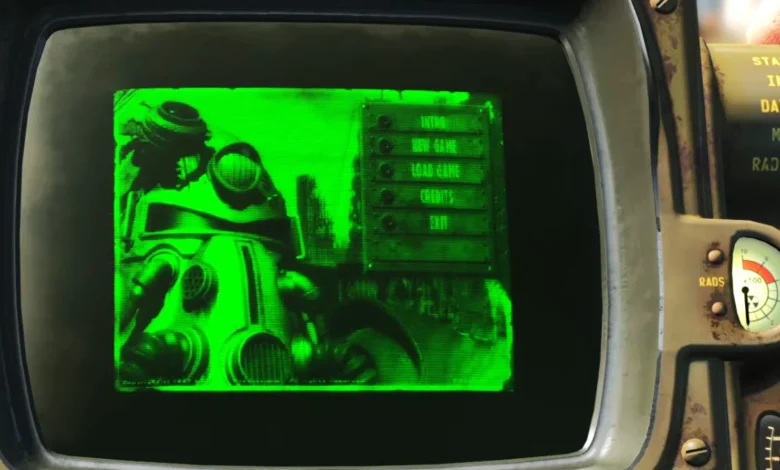
The landscape of video game modding has reached a new milestone of technical complexity as the prominent modder known as RPGKing117 has announced the successful integration of the original 1997 Fallout title into the game world of Fallout 4. This project, which allows the entirety of the classic isometric role-playing game to be played on the protagonist’s in-game Pip-Boy and various monochrome computer terminals scattered throughout the Commonwealth, represents a significant evolution in "game-within-a-game" architecture. This development follows the modder’s recent and highly publicized success in porting The Elder Scrolls III: Morrowind into the Fallout 4 engine, signaling a new era of cross-title compatibility facilitated by sophisticated script extensions and source porting.
Technical Framework and Implementation
The methodology behind running a fully functional version of Fallout 1 within the 3D environment of Fallout 4 relies on a complex interplay between the Fallout 4 Script Extender (F4SE) and external source ports. While the Morrowind project utilized a custom version of OpenMW—an open-source engine recreation of Morrowind—to handle the heavy lifting of game logic and rendering, the Fallout 1 project is expected to utilize a similar framework.
Industry analysts and technical observers point toward Alex Batalov’s "Fallout Community Edition" as the likely engine candidate for this integration. The Community Edition is a reverse-engineered source port of the original Fallout engine, designed to run natively on modern operating systems while providing the flexibility needed for external hooks. By utilizing F4SE, RPGKing117 has developed a bridge that allows Fallout 4 to capture the control inputs of the player and redirect them to the instance of Fallout 1 running in the background.
The visual component of the mod is achieved through framebuffer streaming. In technical terms, a framebuffer is a portion of RAM containing a bitmap that drives a video display. RPGKing117’s mod captures the data being sent from the Fallout 1 engine’s GPU output and re-routes it as a dynamic texture applied to the 3D models of the Pip-Boy and terminal screens within Fallout 4. This ensures that the game is not merely a static video or a simplified recreation, but the actual, original game code running in real-time, responsive to player interaction.
A Chronology of Innovation: The RPGKing117 Portfolio
The announcement of the Fallout 1 port is the latest in a series of rapid-fire releases from RPGKing117, who has spent the last several months pushing the boundaries of what is possible within the Creation Engine.
In early 2024, the modder gained notoriety within the Elder Scrolls community for a mod that introduced modern "Skyrim-style" quest markers into Morrowind. This was viewed as a controversial move by purists who value Morrowind’s lack of hand-holding, yet it demonstrated the modder’s ability to manipulate the fundamental UI and navigation systems of older Bethesda titles.
Following this, RPGKing117 shifted focus to the Fallout 4 engine. The "Morrowind in a Pip-Boy" mod served as a proof of concept for the framebuffer streaming technique. It allowed players to wander the radioactive wastes of Boston while simultaneously managing a character in the province of Vvardenfell. The success of this project laid the groundwork for the current Fallout 1 endeavor, which arguably carries more thematic weight given the shared lineage of the two franchises.
Historical Context: From Isometric Roots to First-Person Shooters
The significance of playing Fallout 1 within Fallout 4 cannot be overstated for long-time fans of the series. Fallout 1, released in 1997 by Interplay and Black Isle Studios, established the "post-nuclear" aesthetic and dark humor that defined the franchise. It featured a top-down isometric perspective and turn-based combat, a stark contrast to the first-person, real-time action mechanics introduced by Bethesda Game Studios when they acquired the IP and released Fallout 3 in 2008.
By embedding the 1997 original into the 2015 sequel, RPGKing117 has created a digital bridge between two distinct eras of gaming history. For many players, the Pip-Boy has always been more than a menu; it is a diegetic piece of technology that grounds the player in the world. While Bethesda previously included "holotape" mini-games in Fallout 4—such as Atomic Command (a clone of Missile Command) and Red Menace (a clone of Donkey Kong)—these were simplified tributes. The ability to play a 60-hour complex RPG like Fallout 1 within that same interface is a feat of engineering that transcends simple Easter eggs.
Community and Industry Reactions
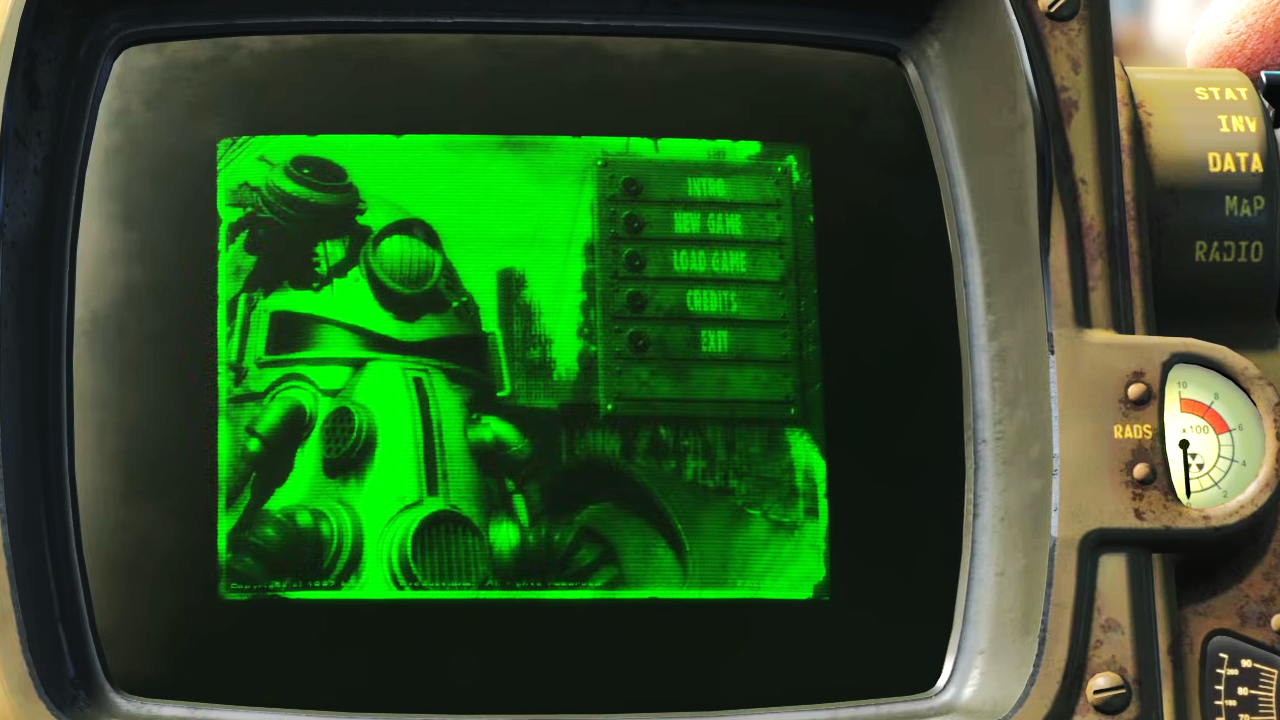
The modding community has reacted with a mixture of awe and nostalgic enthusiasm. On platforms such as Nexus Mods and GitHub, users have praised the "Inception-like" quality of the project. While the mod has not yet seen a public release, a demonstration video uploaded to YouTube has garnered significant attention, showcasing the protagonist navigating the classic Shady Sands and Vault 13 locations while standing in the middle of a bombed-out Boston suburb.
"This is the ultimate evolution of the ‘Can it run Doom?’ meme," noted one prominent mod reviewer. "We are no longer just putting games on refrigerators or calculators; we are putting entire legendary RPGs inside other legendary RPGs. It’s a testament to the longevity of the Fallout 4 engine and the ingenuity of the community."
While Bethesda Softworks has not issued an official statement regarding the mod, the company has historically maintained a permissive relationship with the modding community, provided that no copyrighted assets from other publishers are being distributed illegally. Since both Fallout 1 and Fallout 4 are owned by Microsoft/Bethesda, the legal hurdles for such a mod are significantly lower than cross-publisher projects.
Technical Implications and Performance Analysis
The performance overhead of running two game engines simultaneously is a primary concern for potential users. Fallout 4 is already a resource-intensive title, and layering a secondary engine—even one as old as Fallout 1—requires careful memory management.
Initial reports suggest that because Fallout 1’s system requirements are negligible by modern standards, the primary bottleneck is the script latency involved in F4SE. The mod must translate modern mouse and keyboard inputs into the specific coordinates required by the isometric interface of the original game. Furthermore, the visual fidelity of the Pip-Boy screen, which often includes "scan lines," green monochrome filters, and simulated curvature, adds a layer of post-processing that must be applied to the Fallout 1 video stream in real-time.
There is also the matter of UI scaling. Fallout 1 was designed for 640×480 resolutions. Scaling this to fit the small, irregularly shaped screen of a Pip-Boy or a square terminal in Fallout 4 requires sophisticated interpolation to ensure that text remains legible. RPGKing117’s demonstration suggests a high degree of success in this area, with the iconic Pip-Boy 2000 interface of the original game appearing surprisingly clear on the Pip-Boy 3000 Mark IV of the sequel.
Broader Impact on Video Game Preservation and Meta-Gaming
Beyond the "novelty" factor, the work of RPGKing117 highlights the growing importance of source ports and open-source engine recreations in the field of game preservation. Projects like OpenMW and the Fallout Community Edition are vital for ensuring that classic titles remain playable on modern hardware. By integrating these ports into modern games, modders are finding new ways to expose younger audiences to the foundations of the genre.
This project also fits into the broader trend of "meta-gaming," where the boundaries between the player’s reality and the game world are blurred. Playing Fallout 1 inside Fallout 4 is a form of digital archaeology; the player character is essentially discovering the "history" of their own universe through a simulated interface. It enhances the role-playing experience by providing a literal connection to the past.
Future Prospects
As RPGKing117 prepares the mod for a public release on GitHub and Nexus Mods, expectations are high for future iterations. There is already speculation that the modder may attempt to integrate Fallout 2 or even the original Elder Scrolls titles into the Fallout 4 ecosystem.
The successful porting of Fallout 1 serves as a definitive statement on the power of community-driven development. It proves that with the right tools—and a sufficient amount of technical persistence—the limitations of a game engine are often more fluid than they appear. For the fans waiting to revisit the Master’s lair or explore the ruins of the Glow, they may soon be able to do so without ever leaving the comfort of their Fallout 4 save file.
The release date for the public version of the mod remains unconfirmed, but interested parties are encouraged to monitor RPGKing117’s official profiles for updates. As the modding scene continues to push toward the "farthest frontiers of absurdity," the line between separate games continues to thin, creating a more interconnected and versatile gaming experience for enthusiasts worldwide.

