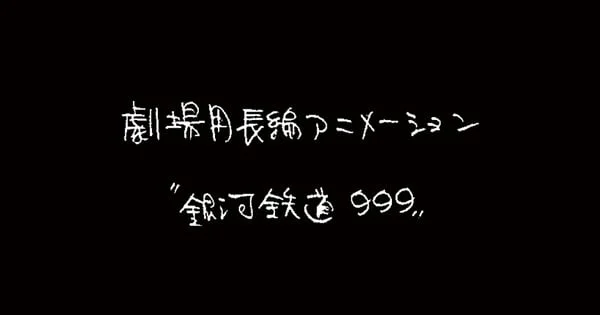
The news comes at a pivotal moment for the legacy of the late Leiji Matsumoto, the visionary creator of Galaxy Express 999, Captain Harlock, and Space Battleship Yamato. The project is being framed not only as a continuation of a beloved narrative but also as a tribute to the enduring themes of humanity, mortality, and the vast mysteries of the cosmos that Matsumoto championed throughout his career.
The Return of a Visionary Director
The involvement of Rintarō is perhaps the most striking aspect of this announcement. Now a veteran of the industry, Rintarō’s directorial fingerprints are all over the most successful iterations of the franchise. In addition to the 1979 theatrical film—which was the first anime film to top the Japanese box office—he also directed the 1981 sequel, Adieu Galaxy Express 999, and the 1998 special, Galaxy Express 999: Emeraldas: The Eternal Warrior.
Beyond the "Leijiverse," Rintarō is celebrated for his highly stylized and cinematic approach to animation, evidenced in masterpieces such as the 2001 film Metropolis, the 1996 X/1999 feature, and the 1983 psychological sci-fi epic Harmagedon. His return to Galaxy Express 999 suggests a creative direction that favors the philosophical depth and visual grandeur of the original films rather than a simple modern reboot. According to the announcement, Rintarō is specifically tasked with the original story draft, ensuring that the narrative core of the new film aligns with the established lore while potentially exploring new frontiers of the universe.
Contextualizing the Galaxy Express 999 Legacy
To understand the weight of this announcement, one must look at the historical significance of the franchise. The original manga by Leiji Matsumoto debuted in 1977 and ran until 1981, spanning 18 volumes. It introduced audiences to Tetsuro Hoshino, a young orphan living on a futuristic Earth where the wealthy can afford "machine bodies" that grant them eternal life. Driven by a desire to avenge his mother and obtain a cybernetic body for himself, Tetsuro meets Maetel, a mysterious and elegant woman who offers him a ticket on the Galaxy Express 999—a space-faring steam locomotive that travels to the planet where machine bodies are given away for free.
The subsequent television series, which aired for 113 episodes from 1978 to 1981, expanded the universe significantly. Each stop at a new planet served as a parable, touching on themes of social inequality, the environmental cost of industrialization, and the inherent value of a finite human life. The 1979 film took these episodic adventures and distilled them into a cohesive, high-stakes cinematic experience that resonated globally, cementing the 999 as a cultural icon.
A Period of Loss for the Franchise
While the announcement of a new film brings excitement, it also arrives during a somber period for the Galaxy Express 999 community. The production must navigate the recent loss of several key figures who defined the franchise’s identity.
On March 3, 2026, the industry mourned the passing of Masako Ikeda at the age of 87. Ikeda was the definitive voice of Maetel, providing the character with a signature blend of maternal warmth and haunting melancholy. Her performance was instrumental in making Maetel one of the most enigmatic and beloved figures in anime history. Replacing such a legendary voice will be one of the most significant challenges for the new production.
Furthermore, the franchise lost its musical heartbeat on February 20, 2026, with the death of composer Nozomi Aoki at the age of 94. Aoki’s orchestral scores provided the epic, sweeping atmosphere necessary for a journey through the stars. His work on Galaxy Express 999 and Fist of the North Star remains highly regarded for its emotional resonance. The new film will likely need to find a composer who can honor Aoki’s melodic legacy while bringing a contemporary sensibility to the score.

Chronology of Recent Developments and the 50th Anniversary
The announcement of the new film is part of a broader resurgence of interest in Matsumoto’s works. A timeline of recent events highlights the momentum leading up to this reveal:
- March 2018: Yuzuru Shimazaki launches the manga Ginga Tetsudō 999 Another Story: Ultimate Journey in Akita Shoten’s Champion RED magazine. This series served as a modern retelling and expansion of the original Matsumoto mythos.
- February 19, 2025: The Ultimate Journey manga concludes its successful seven-year run, bridging the gap between old and new fans.
- June 2025: A massive Leiji Matsumoto exhibition begins touring Japan to celebrate the 50th anniversary of Galaxy Express 999. The tour has already seen high attendance in Tokyo, Fukuoka, and Aichi, with an upcoming stop scheduled for Saitama.
- February–March 2026: The passing of composer Nozomi Aoki and voice actress Masako Ikeda, leading to a wave of nostalgia and retrospectives on the series.
- July 25, 2026: Toei Animation officially announces the new film with Rintarō at the helm.
The 50th-anniversary exhibition has played a crucial role in maintaining the franchise’s visibility. By showcasing original manuscripts, production cells, and conceptual art, the tour has reminded the public of the meticulous craftsmanship that went into the series’ inception.
Implications for the Modern Anime Industry
The decision by Toei Animation to revisit Galaxy Express 999 reflects a wider trend in the Japanese animation industry: the revival of classic "Golden Age" properties for modern audiences. With the success of projects like Space Battleship Yamato 2199 and various Lupin III iterations, studios have found that there is a significant appetite for stories that offer more than just contemporary tropes.
For Toei, this project represents a balancing act. They must satisfy a legacy fanbase that grew up with the 1979 film while appealing to a younger generation accustomed to modern digital animation standards. The choice of Rintarō suggests a commitment to "prestige" animation. It is expected that the film will utilize high-end production techniques to depict the cosmic vistas and intricate mechanical designs that are hallmarks of the series.
Thematically, the story of Tetsuro and Maetel remains strikingly relevant. In an era where discussions about transhumanism, artificial intelligence, and the ethics of life extension are moving from science fiction to reality, the core conflict of Galaxy Express 999—the choice between a cold, immortal machine existence and a warm, fleeting human life—resonates with modern philosophical inquiries.
Official Responses and Anticipation
While specific plot details remain under wraps, the reaction from the industry and the fan community has been one of cautious optimism and deep respect. Leijisha, the management company for Matsumoto’s works, and Comic Natalie have both emphasized the importance of Rintarō’s return as a stabilizing and inspiring force for the production.
Fans on social media platforms have expressed a mixture of excitement for the new visuals and a sense of "end of an era" due to the recent deaths of the original cast and crew. Many are speculating on whether the film will be a direct sequel to Adieu Galaxy Express 999 or a standalone reimagining that incorporates elements from the Ultimate Journey manga.
As the 50th-anniversary exhibition continues its tour through Saitama and beyond, the new film stands as the centerpiece of a grand celebration of Leiji Matsumoto’s life and work. It serves as a reminder that while the creators and voices may pass away, the 999 continues its journey through the sea of stars, carrying the hopes and dreams of humanity with it.
Toei Animation is expected to release further details regarding the cast, release date, and a teaser trailer in the coming months. For now, the return of Rintarō to the conductor’s seat of the Galaxy Express 999 is enough to signal that this will be one of the most anticipated cinematic events in the world of anime.