Agentic Ais Transformative Impact Reshapes Software Development And Logistics Demanding Strategic Adaption
The Agentic Evolution: How Autonomous AI is Architecting the Future of Software and Logistics
The transition from generative AI—models that merely predict the next token—to agentic AI—systems capable of autonomous reasoning, tool usage, and goal completion—marks a paradigm shift in industrial operations. Unlike traditional automation, which relies on rigid, rule-based scripts, agentic AI operates with high-level intent. It evaluates environments, identifies bottlenecks, selects appropriate software libraries or supply chain routes, and executes complex, multi-step workflows with minimal human oversight. This evolution is not merely an incremental upgrade; it is a fundamental reconfiguration of how value is created, managed, and delivered across software engineering and global logistics.
Software Development: From Coding to Architecture Oversight
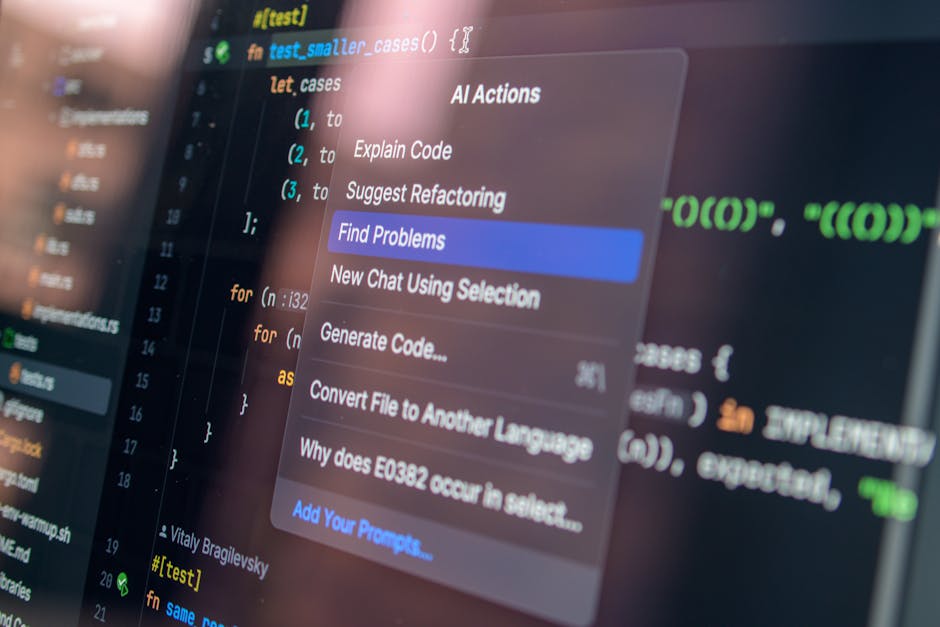
In the traditional software development lifecycle (SDLC), engineering productivity has been measured by lines of code, pull request velocity, and sprint capacity. Agentic AI disrupts this by shifting the human role from "writer" to "architect and auditor." AI agents can now act as autonomous junior developers, performing end-to-end tasks such as feature implementation, debugging, and cross-platform refactoring.
Current state-of-the-art frameworks allow agents to interface with IDEs, CI/CD pipelines, and cloud infrastructure management tools. When a developer defines a requirement, the agent performs a contextual search through the existing codebase, identifies dependencies, writes the necessary code, implements unit tests, and verifies the deployment in a sandboxed environment. This transforms the software development team into a management layer, where senior engineers focus on high-level system design, security, and strategic business alignment rather than the granular mechanics of syntax.
However, this transition introduces critical dependencies. As development processes become decentralized and AI-driven, the potential for technical debt accelerates. If agents are optimized for speed, they may prioritize functional code over long-term maintainability or security robustness. Strategic adaptation in software development, therefore, requires the implementation of AI-native governance. Organizations must develop "guardrail layers"—automated testing suites and static analysis tools specifically designed to monitor agent output—to ensure that the velocity gained by AI does not compromise the stability of the digital infrastructure.
Furthermore, the rise of agentic software development necessitates a shift in talent strategy. Junior-level roles, which have historically been the training ground for coding proficiency, are increasingly being automated. Businesses must pivot their recruitment and development focus toward "agent orchestrators"—professionals who possess the systems thinking skills to manage fleets of autonomous agents rather than those who possess only technical proficiency in a specific programming language.
Logistics: The Intelligent Supply Chain
Logistics has long been the primary target for optimization, but traditional systems were reactive, relying on static data and historical patterns. Agentic AI brings predictive and adaptive capabilities to the physical flow of goods. These agents can autonomously orchestrate complex supply chains, managing everything from inventory procurement to last-mile delivery route optimization in real-time.
An autonomous logistics agent functions as a central nervous system for supply chain operations. It continuously ingests data from disparate sources: satellite imagery, IoT sensor data from containers, geopolitical risk alerts, and real-time weather feeds. When a disruption occurs—such as a port strike or a sudden surge in demand in a specific region—the agent does not merely flag the event; it re-plans the entire supply chain. It may autonomously reroute cargo, negotiate new contracts with third-party logistics providers, and rebalance regional inventory levels to mitigate losses before the ripple effects reach the end consumer.
This capability fundamentally redefines supply chain resilience. Traditional logistics strategies focused on efficiency, often trading off flexibility for lower operational costs (the "just-in-time" model). Agentic AI allows for a "just-in-case" model that is cost-effective because the agents minimize the overhead of holding excess inventory while maximizing the agility of the network.
However, the integration of agentic AI into logistics introduces significant cybersecurity and systemic risks. As supply chains become governed by autonomous agents, they become vulnerable to adversarial attacks and algorithmic bias. If an agent’s decision-making process is compromised or if it learns biased patterns from historical data, the result could be a catastrophic breakdown in the flow of essential goods. Consequently, organizations must invest in "explainable AI" (XAI) frameworks for their logistics agents. Transparency in how agents arrive at decisions is not just an ethical requirement but a business necessity for risk management and regulatory compliance.
Strategic Adaptation: The Three Pillars of Success
To harness the transformative power of agentic AI, organizations must move beyond pilot projects and integrate autonomous agents into their core business logic. This requires a three-pronged strategic adaptation: infrastructural, operational, and cultural.
1. Infrastructural Modernization: Data Interoperability
Agentic AI is only as effective as the data it can access and the tools it can manipulate. Siloed data remains the greatest barrier to agentic performance. Organizations must prioritize the creation of unified data fabrics that provide agents with high-fidelity, real-time access to operational systems. Whether it is a software agent needing access to a repository or a logistics agent needing access to a warehouse management system (WMS), the infrastructure must be API-first and modular. Without seamless integration, agents are reduced to high-end chatbots; with it, they become autonomous business engines.
2. Operational Governance: Human-in-the-Loop 2.0
The concept of "human-in-the-loop" must evolve. In the age of agentic AI, the human role is to serve as an "exception handler." Instead of reviewing every task, human operators should define the policy boundaries—the financial thresholds, the risk profiles, and the ethical parameters—within which the agents must operate. Strategic adaptation involves the creation of autonomous oversight systems that continuously audit agent actions for drift or suboptimal performance. This creates a feedback loop where the AI learns from the corrections provided by human operators, effectively refining its decision-making heuristics over time.
3. Cultural Realignment: The Shift to Cognitive Work
The most significant barrier to adoption is not technical, but cultural. The workforce must be retrained to operate in an environment where agents are colleagues, not just tools. This involves fostering a culture of "AI-first operations," where the default assumption is that an agent should handle a task unless there is a specific reason for human intervention. This requires a massive investment in upskilling, focusing on data literacy, ethical AI oversight, and strategic project management. Leaders must move away from evaluating success based on output volumes and toward evaluating it based on the quality of the AI-orchestrated strategy.
The Macroeconomic Implications of Autonomy
The widespread deployment of agentic AI across software development and logistics will lead to a significant compression of market reaction times. Businesses that can deploy autonomous agents effectively will be able to iterate products and reconfigure supply chains in hours, whereas their competitors might take weeks. This creates a "digital divide" between organizations that treat AI as a productivity tool and those that treat it as a fundamental operating system.
We are entering an era where the competitive advantage will lie in the efficiency of one’s agentic architecture. In software, this means the ability to ship hyper-personalized, secure applications at unprecedented speeds. In logistics, it means the ability to offer near-instant, reliable delivery in an increasingly volatile global market.
The risks of inaction are clear. As these systems become more prevalent, the standard for operational efficiency will rise. Firms that fail to adapt will find themselves managing legacy systems that are too slow and too brittle to compete with AI-governed entities. Conversely, the companies that successfully navigate this transition will see a total transformation of their cost structures. By replacing human-intensive processes with scalable, autonomous agentic workflows, businesses can decouple growth from headcount, allowing for exponential scaling without the corresponding increase in operational complexity.
Conclusion: Embracing the Agentic Future
The transformation brought by agentic AI is as profound as the introduction of the internet or the cloud. It changes not just what we build and how we move it, but the speed at which the global economy operates. Organizations that view this shift through a lens of strategic adaptation—prioritizing robust data governance, clear ethical frameworks, and an AI-augmented workforce—will set the pace for the next decade.
The agents are here. They are capable of rewriting code, debugging systems, rerouting supply chains, and making high-stakes decisions. The question for leaders is no longer whether to implement agentic AI, but how to architect their organizations to thrive in a landscape where autonomous reasoning is the new standard of excellence. Those who master this transition will redefine the boundaries of what is possible in software and logistics, while those who lag will find their models rendered obsolete by the sheer speed and precision of their autonomous counterparts. This is the new reality of industrial production: a marriage of human strategy and synthetic autonomy, operating at the speed of thought.
