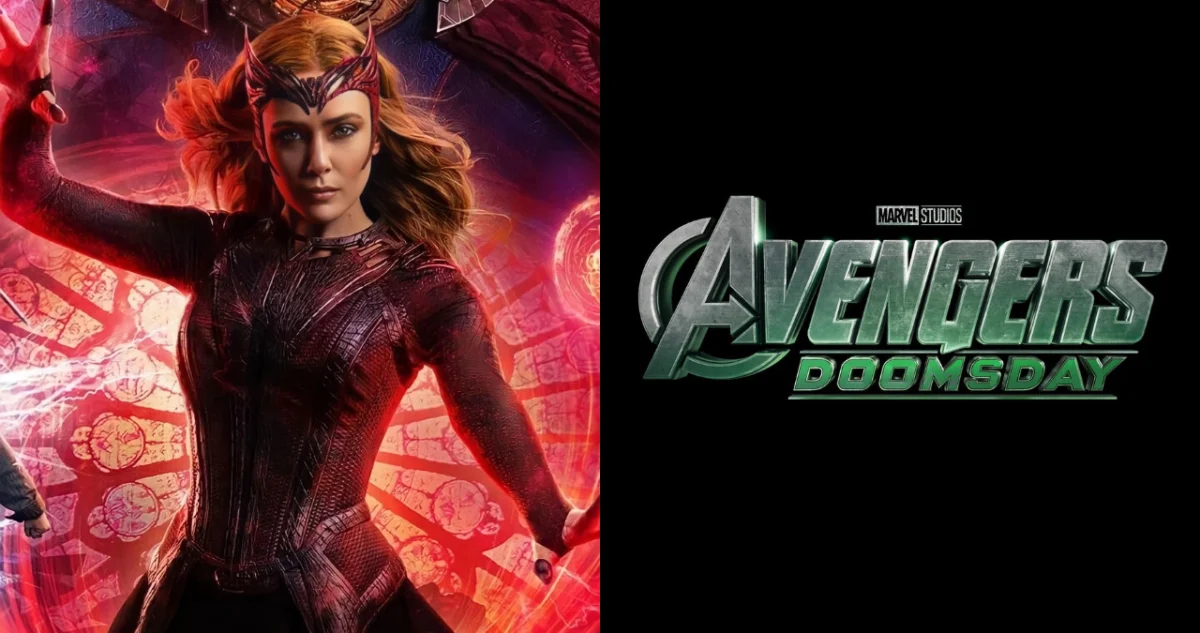
Elizabeth Olsen Addresses Avengers: Doomsday Involvement Amidst Intense Fan Speculation

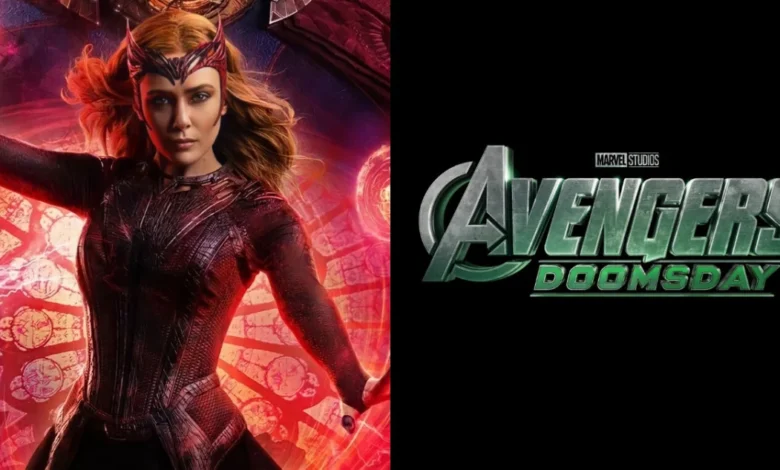
Elizabeth Olsen, the acclaimed actress behind the Marvel Cinematic Universe’s Scarlet Witch, has recently addressed persistent rumors linking her character to the highly anticipated film Avengers: Doomsday. During an appearance at the Chicago Comics and Entertainment Expo (C2E2), Olsen provided a cryptic response to inquiries about her knowledge of the upcoming blockbuster, stating a lack of information that has fueled further speculation among the dedicated fanbase. Her comments, initially reported by ComicBookMovie.com, highlight the pervasive secrecy surrounding major MCU projects and the significant role the Scarlet Witch has played in shaping the franchise’s evolving narrative.
The Scarlet Witch, also known as Wanda Maximoff, has arguably been one of the most central and impactful characters in the MCU over the past several years. Her journey, marked by immense power, profound grief, and devastating consequences, has left an indelible mark on the universe, leading many to believe that her return in the Multiverse Saga’s climactic events is not only possible but narratively essential. Despite her apparent demise in Doctor Strange in the Multiverse of Madness, the nature of her powers and the multiverse itself have kept hopes alive for her reappearance.
The Scarlet Witch’s Enduring Legacy in the MCU
Wanda Maximoff’s trajectory within the Marvel Cinematic Universe is a testament to complex character development and the escalating stakes of the franchise. Introduced alongside her brother Pietro in a post-credits scene for Captain America: The Winter Soldier (2014) before making her full debut in Avengers: Age of Ultron (2015), Wanda began as a Sokovian experiment victim empowered by HYDRA through the Mind Stone. Her initial motivations were driven by a desire for revenge against Tony Stark, but she quickly transitioned into a hero, joining the Avengers.
Her powers, initially depicted as telekinesis and mental manipulation, rapidly evolved into full-fledged magic. Captain America: Civil War (2016) showcased her struggle with controlling her immense abilities, a theme that would resonate throughout her arc. Her romance with Vision (Paul Bettany) provided a grounded emotional core amidst the cosmic chaos, making their separation and his subsequent death in Avengers: Infinity War (2018) particularly heartbreaking. Her raw power was on full display in Avengers: Endgame (2019), where she single-handedly challenged Thanos, demonstrating a level of strength few other heroes could match.
However, it was the Disney+ series WandaVision (2021) that cemented her status as a pivotal figure. The series delved deep into her psyche, exploring her grief and trauma following Vision’s death and the Blip. Her creation of a reality-bending sitcom world in Westview, New Jersey, inadvertently turning the town into her personal illusion, revealed the true extent of her latent abilities. By the series’ conclusion, Wanda fully embraced her destiny as the Scarlet Witch, a mythical being prophesied to wield chaos magic capable of altering reality. The Darkhold, a grimoire of dark magic, became her companion, promising answers but ultimately corrupting her.
This corruption reached its zenith in Doctor Strange in the Multiverse of Madness (2022). Driven by the desire to reunite with her children, Billy and Tommy, whom she had conjured in Westview, Wanda traversed the multiverse, becoming a formidable antagonist. Her relentless pursuit of a universe where her children existed led her to commit acts of extreme violence, culminating in her apparent self-sacrifice to destroy all copies of the Darkhold across the multiverse, seemingly perishing under the rubble of Mount Wundagore. This dramatic conclusion left her fate ambiguous, a common tactic in comic book narratives and the MCU to allow for future returns.
From Westview to Wundagore: A Chronology of Power and Grief
The chronological progression of Wanda Maximoff’s story is crucial to understanding why her potential return is such a point of discussion.
- 2015: Avengers: Age of Ultron – Introduction as a powerful individual enhanced by the Mind Stone, initially opposing the Avengers.
- 2016: Captain America: Civil War – Joins the Avengers, struggles with power control, begins relationship with Vision.
- 2018: Avengers: Infinity War – Forced to destroy Vision to prevent Thanos from acquiring the Mind Stone, only for Thanos to reverse time and kill him again. Participates in the battle against Thanos.
- 2019: Avengers: Endgame – Returns after the Blip, unleashes formidable power against Thanos, demonstrating a heightened sense of grief and rage.
- 2021: WandaVision – Creates a magical reality in Westview, comes to terms with her identity as the Scarlet Witch, and is exposed to the Darkhold’s influence.
- 2022: Doctor Strange in the Multiverse of Madness – Fully corrupted by the Darkhold, becomes a multiversal threat in her quest for her children, seemingly perishes in Mount Wundagore.
This detailed timeline underscores the character’s continuous evolution and the direct impact she has had on key narrative arcs, including the foundational elements of the Multiverse Saga. Her powers have grown exponentially, making her a potential game-changer in any conflict of multiversal proportions.
The Multiverse Saga and Wanda’s Crucial Role
Elizabeth Olsen’s recent comments at C2E2 saw her claim, "I know nothing. I know about VisionQuest, because I’ve seen Paul [Bettany] in the last six months. I know nothing about any of it. Is [Secret Wars] what happens after? I’m not kidding. Why did I think there were two Secret Wars? Are there not?” This statement, delivered with a hint of feigned ignorance or genuine confusion, immediately sparked debate. The mention of VisionQuest, an upcoming Disney+ series centered on Vision, indicates she is still connected to the MCU apparatus, if only tangentially through former co-stars. Her apparent confusion about Secret Wars (the second Avengers film in the Multiverse Saga) could be a masterful diversion or a meticulously compartmentalized understanding of the overarching narrative.
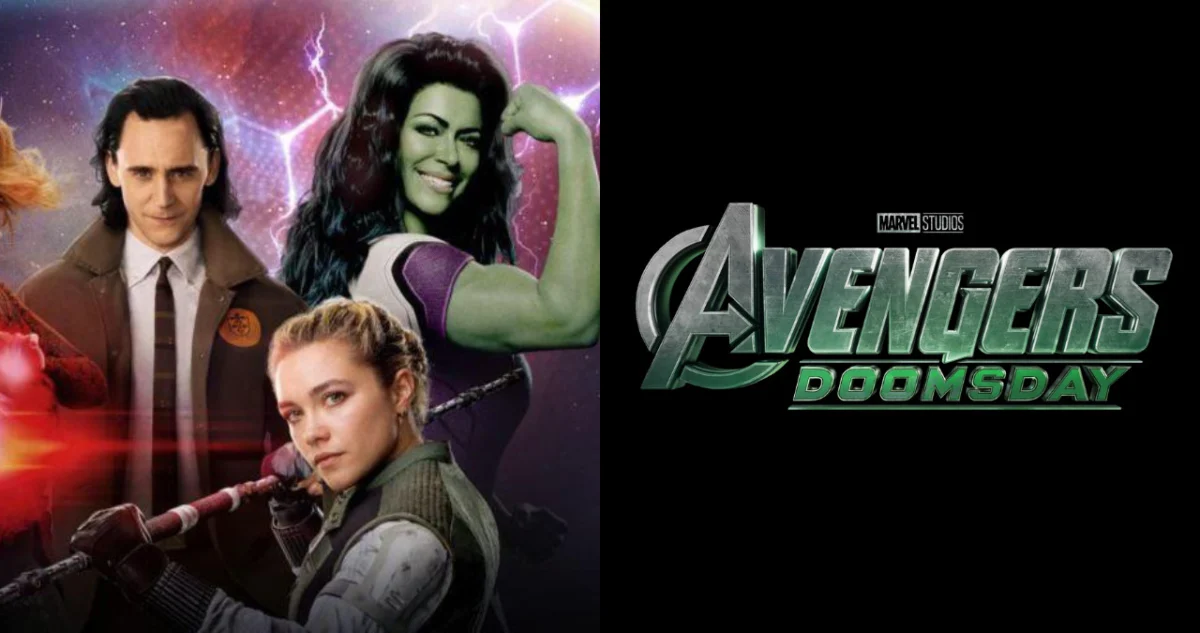
The Multiverse Saga, which Avengers: Doomsday (December 2026) and Avengers: Secret Wars (May 2027) are set to conclude, revolves around incursions, alternate realities, and the very fabric of existence being threatened. The Scarlet Witch, with her demonstrated ability to warp reality and interact with the multiverse, is uniquely positioned to play a significant role. Her powers are among the most formidable in the MCU, capable of both creation and destruction on a grand scale. If the Multiverse is indeed collapsing or facing an existential threat, a character with Wanda’s reality-altering capabilities would be either an invaluable asset or a catastrophic liability. Her actions in Multiverse of Madness directly contributed to multiversal instability, making her return almost narratively obligatory for resolution.
Echoes of "House of M": Wanda, Mutants, and Marvel Lore

A key element in the ongoing speculation about Wanda’s return, particularly in the context of Avengers: Doomsday and the nascent "Mutant Saga," lies in her extensive comic book history. In the comics, Wanda Maximoff is famously a mutant, the daughter of Magneto (though this lineage has been retconned multiple times). More importantly, she was the central figure in the iconic 2005-2006 comic event House of M. In this storyline, driven by grief and mental instability, Wanda used her immense powers to reshape reality, creating a world where mutants were the dominant species and her family was alive and well. When this reality was challenged, she famously uttered the words "No More Mutants," depowering the vast majority of the mutant population globally.
This comic book precedent is highly relevant to the MCU’s future. With the X-Men and mutants officially on the horizon, Wanda’s comic book ties to mutantkind cannot be overlooked. Could her actions in Westview – creating children out of magic and bending reality to her will – be an MCU parallel to her House of M reality-warping? The title Avengers: Doomsday itself strongly suggests the involvement of Doctor Doom, a character who, in the comics, orchestrated the 2015 Secret Wars event, where he became God Emperor Doom, ruling over a patchwork Battleworld created from various alternate realities. Doom has also historically manipulated Wanda’s powers for his own ends. The potential convergence of Scarlet Witch, Doctor Doom, and the emergence of mutants creates a rich tapestry of narrative possibilities that strongly hint at Wanda’s necessity.
If Wanda were to return, she could either be revealed as a mutant herself within the MCU, or her powers could be instrumental in either inadvertently causing the rise of mutants (as a reverse "No More Mutants" scenario) or being a key player in their integration. Her tragic arc and immense power make her a uniquely complex figure whose reintroduction could redefine the MCU’s approach to its most powerful individuals and its burgeoning mutant population.
Decoding the Secrecy: Marvel’s Long-Standing Playbook
The entertainment industry, particularly the MCU, is infamous for its rigorous secrecy protocols. Actors are routinely coached to deny involvement, feign ignorance, or provide misleading statements to preserve the element of surprise for audiences. This strategy is a well-established part of Marvel’s marketing playbook, designed to maximize impact and build anticipation. Notable examples include Andrew Garfield and Tobey Maguire’s repeated denials of their involvement in Spider-Man: No Way Home until the film’s release, only for them to appear as pivotal characters. Similarly, Benedict Cumberbatch initially denied playing Doctor Strange.
Given this history, Elizabeth Olsen’s claims of knowing "nothing" about Avengers: Doomsday are viewed with considerable skepticism by many fans and industry observers. It is highly probable that an actress of her caliber, portraying such a significant character, would be privy to key developments, especially concerning the climactic films of a saga she has been central to. The fact that she acknowledges knowing about VisionQuest but claims ignorance about the Avengers films could be a deliberate tactic to compartmentalize information or to subtly hint at her return in a way that doesn’t directly spoil the main event. Marvel often employs a "need-to-know" basis, even for its top talent, to prevent leaks. It is plausible that Olsen only has information relevant to her direct involvement, which might not include the full scope of Doomsday or Secret Wars if her role is specific or unfolds later in the narrative.
Avengers: Doomsday and Secret Wars: A Multiversal Confluence
Avengers: Doomsday is slated for release in December 2026, followed by Avengers: Secret Wars in May 2027. These two films are positioned as the grand finale of the Multiverse Saga, promising a scale and scope that will likely dwarf previous Avengers installments. The title Doomsday strongly implies the significant presence of Doctor Doom, Victor Von Doom, a character revered as one of Marvel’s most iconic and formidable villains. Doom, a genius scientist, sorcerer, and ruler of Latveria, has a long history of attempting to conquer or reshape reality. His inclusion suggests a threat of unprecedented magnitude.
In the comics, Doom’s involvement in various Secret Wars iterations has been pivotal, often leading to him acquiring immense power and reshaping entire realities. His intellectual prowess combined with mystical abilities makes him a perfect antagonist for the Scarlet Witch, a powerful magic-user. The dynamic between Doom and Wanda, whether as allies, adversaries, or manipulated pawns, holds immense narrative potential.
For Wanda Maximoff, the apparent self-sacrifice at Mount Wundagore left her fate ambiguous. In the world of comic books and the MCU, "death" is often a temporary state, particularly for characters with reality-altering powers or those involved in multiversal shenanigans. It is entirely plausible that she was merely transported, reborn, or that a variant of her exists who could be drawn into the conflict. Her experience with the Darkhold and its multiversal implications also means she holds unique knowledge that could be vital to understanding or combating the threats posed by Doctor Doom and the impending incursions.
The Road Ahead: Speculation and Fan Anticipation
The anticipation surrounding Elizabeth Olsen’s potential return as the Scarlet Witch in Avengers: Doomsday is palpable. Her character has resonated deeply with audiences, not only for her power but also for her deeply human struggles with loss and trauma. Her journey from victim to hero to tragic anti-villain has been one of the most compelling arcs in the MCU.
The implications of her return are far-reaching. Narratively, she represents a force of immense, almost unfathomable power, capable of resolving or exacerbating multiversal crises. Her connection to the nascent Mutant Saga through her comic book history offers a natural bridge for the introduction of the X-Men. Furthermore, her potential confrontation or alliance with Doctor Doom would be a monumental cinematic event, pitting two of Marvel’s most complex and powerful figures against each other.
While Elizabeth Olsen’s official statements maintain a veil of secrecy, the confluence of thematic elements, character history, and established MCU patterns suggests that the Scarlet Witch’s story is far from over. Her presence in Avengers: Doomsday would not only satisfy fervent fan demand but would also be a logical and perhaps necessary component in navigating the catastrophic events promised by the conclusion of the Multiverse Saga. As the December 2026 release date approaches, fans will undoubtedly continue to dissect every hint and rumor, eagerly awaiting official confirmation of Wanda Maximoff’s next chapter in the ever-expanding Marvel Cinematic Universe.
Related posts: