LEGO Ideas Announces Official Godzilla Set (21375) Alongside Exclusive Collector Gift with Purchase

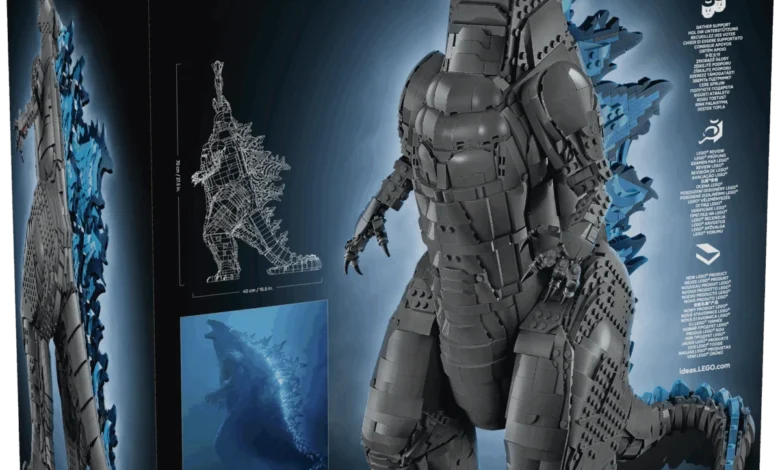
The intersection of pop culture collectibles and brick-based engineering has reached a monumental new milestone with the official announcement of the LEGO Ideas Godzilla (21375) set. Developed through the highly collaborative and fan-driven LEGO Ideas platform, this upcoming release bridges the gap between classic cinematic history and modern construction toys. The announcement arrives hand-in-hand with details regarding an exclusive Gift with Purchase (GWP) item—the LEGO Ideas Godzilla Logo and Footprint set—designed to incentivize early adopters and dedicated collectors within select markets.
This latest addition to the LEGO portfolio underscores a broader corporate strategy of targeting adult collectors, often referred within the industry as "AFOLs" (Adult Fans of LEGO), who possess significant purchasing power and an appetite for sophisticated, display-ready models based on intellectual properties (IPs). By tapping into Legendary Entertainment’s multi-billion-dollar Monsterverse, LEGO continues to diversify its product lines far beyond traditional children’s toys, cementing its status as a premier global lifestyle and entertainment brand.
Main Facts of the Release
The newly revealed LEGO Ideas Godzilla (21375) set captures the essence of the legendary pop culture icon, translating the King of the Monsters into the iconic medium of interlocking plastic bricks. While comprehensive statistics regarding piece counts and retail pricing vary by region and final rollout schedules, the set is slated to feature intricate detailing reflective of the character’s storied cinematic lineage.
To complement the main build, the LEGO Group has introduced a specialized promotional item available while supplies last: the LEGO Ideas Godzilla Logo and Footprint set. This secondary build acts as a thematic companion piece, designed to enhance the display value of the primary model. However, prospective buyers should note that the promotional item is subject to strict regional availability, restricted to select markets, and dependent on membership status and specific terms and conditions. As with many high-profile LEGO releases, supplies are expected to be tightly constrained, likely triggering high demand among both toy collectors and die-hard monster movie enthusiasts.
Chronology of the Monsterverse and Fan Collaboration
The journey toward a brick-built Godzilla has been years in the making, intersecting the evolution of Legendary’s cinematic universe with the grassroots mechanics of the LEGO Ideas community.
Legendary’s Monsterverse officially kicked off in 2014 with the release of Gareth Edwards’ “Godzilla,” a film that successfully revitalized the classic Toho monster for a contemporary global audience. This cinematic foundation expanded rapidly over the next decade. In 2017, audiences were introduced to “Kong: Skull Island,” followed by “Godzilla: King of the Monsters” in 2019, which brought classic adversaries like Mothra, Rodan, and King Ghidorah into the modern fold. The momentum culminated in the 2021 blockbuster crossover “Godzilla vs. Kong.”
Most recently, the franchise achieved unprecedented box office success with “Godzilla x Kong: The New Empire,” which grossed over $570 million worldwide, officially securing its place as the highest-grossing Godzilla film of all time. Across all theatrical releases, the Monsterverse has accumulated over $2.5 billion at the global box office. The universe has since transcended the silver screen, expanding into television via Apple TV’s acclaimed series “Monarch: Legacy of Monsters”—which debuted its second season in February 2026—alongside a rich tapestry of video games, graphic novels, and live experiences. Looking ahead, Legendary has already scheduled the next major cinematic installment, “Godzilla x Kong: Supernova,” for release in 2027.
Simultaneously, the LEGO Ideas platform has operated as a democratic incubator for fan-inspired concepts. Founded on the principle that everyday builders can submit their own designs to be considered for official production, the platform requires a submission to reach 10,000 public votes before undergoing rigorous evaluation by LEGO master designers. The approval of a Godzilla concept bridges decades of cinematic history with the interactive, hands-on methodology of the LEGO System in Play, a design philosophy that has defined the company since its inception.
Supporting Data and Corporate Backgrounds
To understand the scale of the LEGO Ideas Godzilla (21375) release, one must examine the corporate framework and market positioning of the entities involved: The LEGO Group, Legendary Entertainment, and Toho Co., Ltd.
The LEGO Group was founded in Billund, Denmark, in 1932 by Ole Kirk Kristiansen. Derived from the Danish words "LEg GOdt," which translate to "Play Well," the company has grown from a small carpentry workshop into a family-owned global enterprise. Today, its products are sold in more than 120 countries worldwide. The foundational philosophy of the LEGO System in Play—utilizing standardized, interlocking bricks that allow children and fans to build and rebuild anything they can imagine—remains unchanged, even as the company diversifies into high-end adult collectibles, digital gaming, and entertainment media.
On the other side of the partnership is Legendary Entertainment, a leading independent media studio with dedicated divisions for film (Legendary Pictures), television and digital media (Legendary Television and Digital Media), and comics (Legendary Comics and Publishing). Legendary has established a formidable reputation for acquiring, producing, and delivering high-quality commercial entertainment based on fan-driven intellectual property. Productions associated with Legendary Pictures have collectively realized gross revenues of nearly $21 billion worldwide at the global box office, solidifying its status as a powerhouse in modern blockbuster filmmaking.
Furthermore, the legal framework governing the merchandise involves rigorous licensing agreements. MONSTERVERSE is a registered trademark of Legendary Pictures, LLC, while Godzilla is a trademark and copyright of Toho Co., Ltd., requiring careful coordination between Danish toy manufacturers, American media studios, and Japanese copyright holders to bring the set to market.
Official Responses and Industry Perspectives
While direct public relations statements regarding the exact day-to-day rollout of set 21375 remain tightly controlled by corporate communication schedules, industry analysts and representatives from both the LEGO Group and Legendary Entertainment have frequently emphasized the strategic value of cross-media collaborations.
From the perspective of toy market analysts, bridging a legacy film monster with the collectibility of LEGO bricks represents a masterclass in demographic expansion. Adult collectors frequently drive the secondary market for specialized building sets, viewing them not merely as toys, but as display-grade sculptures. The inclusion of the LEGO Ideas Godzilla Logo and Footprint as a Gift with Purchase is viewed by retail experts as a targeted retention tool designed to drive direct-to-consumer sales through official brand channels, bypassing traditional retail intermediaries.
Representatives for the LEGO Ideas platform have historically highlighted that bringing a fan-voted concept to life requires balancing the artistic vision of the original submitter with the rigorous structural integrity and safety standards enforced by professional LEGO designers. Translating an organic, asymmetrical creature like Godzilla into rigid, geometric plastic elements presents a unique engineering hurdle—one that demands innovative building techniques, creative part usage, and careful color balancing.
Broader Impact and Market Implications
The release of the LEGO Ideas Godzilla set carries significant implications for both the collectible toy sector and the broader entertainment licensing landscape.
First, it validates the commercial viability of monster-themed building sets on a global scale. While historically, the LEGO product catalog has leaned heavily toward sci-fi franchises (such as Star Wars), automotive partnerships, and architectural landmarks, the incorporation of cinematic monsters opens the door for a wider exploration of horror, fantasy, and creature-feature genres within the brick-building ecosystem.
Second, the synergy between the physical toy release and Legendary’s ongoing multimedia blitz—spanning the “Monarch: Legacy of Monsters” television series and upcoming cinematic entries like “Godzilla x Kong: Supernova”—demonstrates the modern imperative of 360-degree brand engagement. Consumers today do not merely watch a film or a television show; they seek to curate physical spaces that reflect their fandoms. Premium collectibles like set 21375 serve as tangible touchpoints that maintain fan engagement during the lulls between major cinematic releases.
Finally, the reliance on the LEGO Ideas platform reinforces the value of community-driven product development. By actively involving the consumer base in the ideation phase, manufacturers mitigate commercial risk while simultaneously fostering deep brand loyalty. As the boundary between traditional media consumption and physical merchandising continues to blur, releases of this magnitude serve as a bellwether for how legacy entertainment properties will continue to monetize their fan bases in the years to come.