A growing wave of discontent is rippling through the thrifting community as consumers increasingly report encountering shockingly high prices at Goodwill stores, with some items costing as much as, or even more than, their new counterparts at mainstream retailers like Walmart and Target. This phenomenon, amplified by viral social media content, has ignited a fervent debate about the affordability of thrift shopping and the efficacy of Goodwill’s charitable mission.
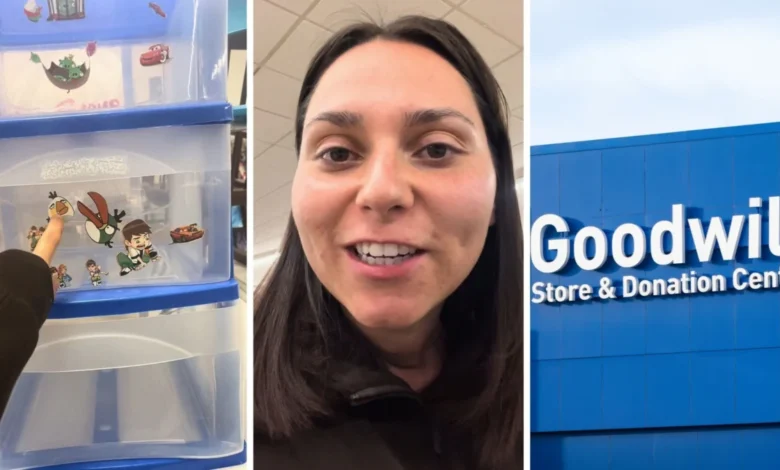
The latest prominent voice in this burgeoning criticism is TikTok creator Becky (@missbecky7), whose video documenting her recent shopping experience at a Goodwill store has garnered over 1.8 million views. In the widely shared footage, Becky navigates the aisles, her initial enthusiasm quickly turning to disbelief as she uncovers a series of inflated price tags. Her exasperated declaration, "They’re done. Canceled," delivered outside the store, encapsulates the sentiment of many shoppers who feel that Goodwill has lost its way from its foundational purpose of providing affordable goods.
A Shocking Inventory of Elevated Prices
Becky’s video provides a stark visual of the alleged price hikes. She begins by highlighting a broken broom priced at $10, questioning its value. Next, she points to storage boxes, also marked at $10, before encountering what she describes as a "cot tent" with an astonishing $200 price tag. Her sarcastic commentary, "If you needed a cot tent because you have nowhere to sleep, don’t worry. $200," underscores the perceived disconnect between the item’s utility and its cost. She suggests that anyone with $200 to spend would likely opt for more permanent housing solutions.
The scrutiny continues with a hanging chair, priced at $50. Becky notes that a comparable new item would cost around $100, suggesting that even at Goodwill’s price, it’s a significant investment. The lamp, designed to resemble an old-fashioned street lamp, further fuels her dismay. Initially appearing to be a unique find, she discovers the glass-like material is actually plastic and the price is a steep $55.
Other items that drew Becky’s attention include a blue plastic outdoor chair for $20, gel stickers for $4, and a Thanksgiving decoration still bearing a T.J. Maxx price tag of $6, which Becky humorously notes is being sold at its original retail price. She also points out a broken gold-colored watch for $10, a decorative pineapple for $10, opened crayons for $6, and what appears to be used Play-Doh, also priced at $6. By the end of her tour, Becky announces her decision to cease shopping at Goodwill, a sentiment echoed by many viewers in the comments section.
A Chorus of Consumer Agreement
The reaction to Becky’s video has been overwhelmingly consistent with her observations. Commenters on TikTok and other platforms have shared similar experiences, confirming that the issue of inflated prices is not isolated to one location. A recurring theme in the feedback is the source of these items: donations. Users express incredulity that items received as charitable contributions are being resold at prices that negate the core benefit of thrift shopping.
"And mind you, it’s all DONATED," one user emphatically stated, highlighting the perceived 100% profit margin on donated goods. Another commenter posed a provocative question, "Can we all collectively stop donating to goodwill?!" This sentiment suggests a growing frustration and a potential boycott of donations as a means to pressure the organization.
Specific items mentioned by viewers further illustrate the perceived absurdity of the pricing. The $20 price tag on a "PLASTIC chair" was deemed "absolutely wildddddddd." Another user recalled purchasing a similar hanging chair from Aldi for a mere $12.99 the previous year, reinforcing the idea that Goodwill’s prices are out of sync with market value and consumer expectations.
The "Why" Behind the Price Increases: Goodwill’s Perspective
This trend of rising prices at thrift stores, particularly Goodwill, has been a subject of discussion for some time. The organization, a registered nonprofit, has historically emphasized its commitment to funding various community programs. According to a blog post by Looking Fly on a Dime, Goodwill has previously stated that a significant portion of its revenue, often cited as 92 cents of every dollar, is reinvested into its mission. These programs reportedly include youth services, veteran support, recycling initiatives, and rehabilitation efforts.
However, the anecdotal evidence from shoppers and online discussions suggests a disconnect between these stated goals and the perceived impact at the local level. While Goodwill’s corporate structure mandates reinvestment in its mission, the tangible benefits for the communities it serves are not always transparently evident to every shopper.
Online forums, such as Reddit’s r/Goodwill_Finds, offer a platform for these discussions. One Reddit user described their local Goodwill’s "career center" as "a small room with a couple computers and a printer," where printing costs a dime and job support primarily consists of basic interview advice. This portrayal suggests a minimalist approach to services, leading some to question the allocation of funds if prices are rising accordingly.
Conversely, other individuals have shared more positive and impactful experiences with Goodwill’s programs. A Reddit user who previously worked for a regional Goodwill in northern New England detailed the organization’s robust neurorehabilitation program for individuals with severe traumatic brain injuries. This program provided residential support, with one facility housing six men in apartments with 24/7 staff assistance. Such accounts highlight the varied nature of Goodwill’s operations and the significant positive impact it can have when adequately funded and implemented.
Analysis: Economic Pressures and Shifting Retail Landscape
The escalating prices at Goodwill can be attributed to a confluence of factors. Firstly, the burgeoning popularity of thrift shopping, fueled by a growing awareness of sustainable fashion and the desire for unique or vintage items, has created increased demand. As demand rises, organizations like Goodwill may feel empowered to adjust prices to maximize revenue, especially if they perceive a market willing to pay more.
Secondly, the broader economic landscape, including inflation and rising operational costs, could also be a contributing factor. Even nonprofit organizations face increased expenses for utilities, staffing, transportation, and store maintenance. These costs may necessitate higher retail prices to maintain financial stability and fund their programs.
However, the core criticism remains: when does the pricing strategy of a charitable organization begin to undermine its fundamental mission of providing affordable goods to those who need them? The "canceled" sentiment expressed by Becky and echoed by thousands of viewers suggests that for many, Goodwill has crossed that threshold. The organization’s nonprofit status, while crucial for its charitable endeavors, also places it under scrutiny regarding its financial practices and the accessibility of its services.
The juxtaposition of high prices with the origin of goods as donations creates a perception issue. Shoppers often view thrift stores as places to find bargains on items that might otherwise be discarded. When these items are priced at or above retail, the perceived value proposition diminishes, leading to feelings of disillusionment.
The Path Forward: Transparency and Re-evaluation
The viral nature of these complaints suggests a widespread issue that Goodwill, as an organization, needs to address proactively. While the commitment to community programs is laudable, the accessibility of its retail operations is intrinsically linked to public perception and support. A potential consequence of continued high pricing could be a decline in donations and customer traffic, ultimately impacting the very mission these higher prices are intended to support.
Moving forward, Goodwill may need to engage in a more transparent dialogue with its customer base. Clearly communicating the breakdown of how revenue is utilized and demonstrating the tangible impact of its programs at a local level could help bridge the gap in consumer trust. Furthermore, a re-evaluation of pricing strategies, perhaps with tiered pricing based on item condition or historical sales data, could ensure that affordability remains a cornerstone of the Goodwill shopping experience.
The current discourse highlights a critical juncture for Goodwill. The organization faces the challenge of balancing its financial sustainability and its charitable mandate in an evolving retail environment. The consumer outcry, amplified by social media, serves as a powerful indicator that the organization’s current trajectory may be alienating a significant portion of its supporters and the very community it aims to serve. The coming months will likely reveal whether Goodwill can adapt to these criticisms and restore the trust and accessibility that have long defined its brand.
The Mary Sue has reached out to Goodwill and Becky via email for comment and additional information.
Related posts: