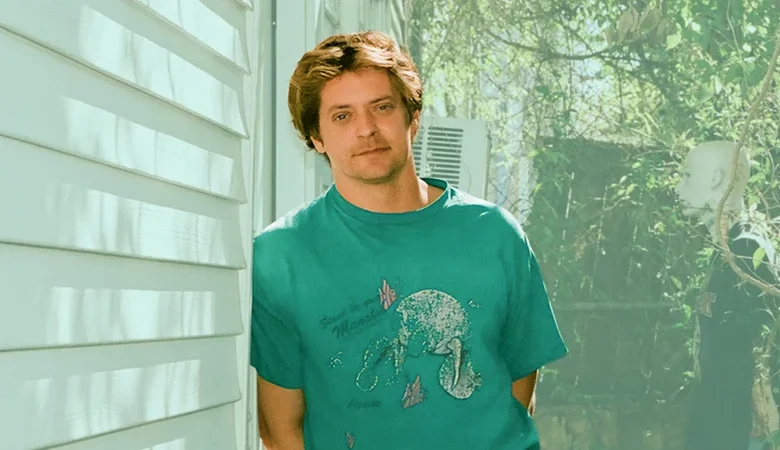
Thomas Dollbaum, a Florida native whose latest album, Birds Of Paradise, delves into the sun-drenched yet often shadowed corners of his home state, is poised to make a significant mark on the indie rock landscape. The album, released on the burgeoning Dear Life Records, showcases a unique blend of country-tinged songwriting and indie rock sensibilities, delivered with a conversational drawl that evokes a distinct Southern charm, even from his current base in New Orleans. While the album’s release was subject to unexpected delays, Dollbaum’s patient approach and the undeniable quality of his work suggest that the wait may have been a strategic advantage, allowing his music to mature and find its audience in a scene increasingly receptive to his sound.
The Genesis of Birds Of Paradise and an Unforeseen Delay
Birds Of Paradise, officially released on Friday, has been in the can for approximately three years. The recording sessions took place in 2023 in Water Valley, Mississippi, with an ad-hoc band that included MJ Lenderman, an artist who has since become a leading figure in this specific niche of indie rock. Lenderman, who was not yet the celebrated artist he is today when the album was recorded, contributed drums to the initial sessions and later added guitar and harmonies to several tracks, most notably the standout single "Coyote." This collaboration, where Lenderman’s voice provides a distinctive counterpoint to Dollbaum’s lead vocals, has been highlighted as a key element of the album’s appeal.
The delay in the album’s release stemmed from a falling out with Dollbaum’s previous label over "creative differences." This unforeseen hurdle meant that Birds Of Paradise was put on hold, awaiting a new home. The eventual signing with Dear Life Records, a label known for championing foundational 2020s alt-country acts like Fust and Florry, as well as Lenderman’s own project, Boat Songs, offered a promising avenue for the album’s release. However, Dear Life Records also operates with a curated release schedule, leading to further waiting periods before Birds Of Paradise could officially be brought to the public.
Dollbaum’s Perspective on the Extended Timeline
When discussing the lengthy gap between recording and release, Dollbaum, speaking via Zoom with a ruggedly handsome demeanor characterized by a solid jaw and beach-blonde hair, expressed a remarkably laid-back attitude. "I mean, there was a while I felt a little in the wilderness," he admitted. "No one really was looking at it that much. Then Dear Life had reached out, but they were just busy. They only do a certain amount of records a year." He elaborated, "I think they planned on putting it out a year and a half ago. I was like, ‘Well, I’ve already waited almost half a year, a year, so why not just wait and put it out with some people I like?’"
Dollbaum also views the extended timeline as potentially beneficial, suggesting it allowed for a more thorough digestion of the material, both for himself and for his future audience. "I don’t think it hurts, at all," he stated. "I think it also got the amount of time it needed to be digested, even by me. Took a while to get everything in order. It’s in a good place, like it’s the best version of itself it can be." He reflected on the timing relative to Lenderman’s rise: "It’s funny, even with Jake, when we recorded it, Manning Fireworks hadn’t even come out yet. It’s funny to see where he’s at now.”
A Lyrical Cartographer of Florida’s Underbelly
Despite the casual demeanor, Dollbaum exhibits the characteristics of a burgeoning star within the indie rock scene. His lyrical prowess shines on tracks like "Florida" and "Whippits/Trailer Lights," where he demonstrates a natural storytelling ability infused with a specific regional flavor that has also distinguished artists like MJ Lenderman and Karly Hartzman. His narratives frequently feature down-and-out characters, drifters, and individuals on the fringes of society, all in search of a fleeting moment of stability or simply a place to rest for the night. This immersive quality is further exemplified in new songs such as "Big Boi," which recounts a true story about Dollbaum inadvertently providing transportation for two drug addicts on their way to a "pill mill."
The sonic comparisons to MJ Lenderman are inevitable, given their shared stylistic territory and collaboration. However, Dollbaum’s music also carries an additional layer of robust, heartland rock muscle, drawing parallels to artists like Jason Isbell. Like Isbell, Dollbaum cites the legendary John Prine as a significant influence, a lineage that suggests Birds Of Paradise is likely to resonate deeply with the Americana and alt-country fanbase. Further comparisons can be drawn to older indie troubadours like Damien Jurado, whom Dollbaum acknowledges as an influence, and to storytellers like Warren Zevon and Todd Snider, known for their narratives populated by colorful and often morally ambiguous characters.
The Unfolding Narrative of Florida
Dollbaum’s connection to Florida, his birthplace, remains a central theme in his music, even as he now resides in New Orleans. He views Florida not merely as a place of origin but as a mental landscape where many of his thematic preoccupations reside. "I guess it always feels like the home mentally for me, where things exist," he explained.
His particular fascination lies with the "seedy side" of Florida, a characteristic he attributes to the state’s inherently transient nature. "I mean, Florida’s just really a transient place," Dollbaum observed. "So, growing up there, it was always felt that way more than… I wouldn’t even say that I grew up in it, but it just always seemed around. It’s just a very transient place to me. And kind of misunderstood in a lot of ways."
He pushes back against classifying Florida solely as "the South," suggesting it possesses a distinct identity, albeit with Southern undertones. "I don’t really think of it as the South. It’s kind of its own thing," he stated. "But it does definitely have a lot of aspects of the South. Like, old Florida people are about as Southern as you can get." Dollbaum’s upbringing, split between rural areas and the outskirts of Tampa, provided a complex perspective on the state’s diverse character. He notes that many Floridians, including his own parents who moved there in the 1980s, are not native to the state, highlighting Florida’s role as a destination for reinvention.
"It’s like a less glamorous Hollywood," Dollbaum mused. He elaborates on the influx of people from the Midwest and the Northeast, who often settle in Florida seeking a change of scenery but frequently maintain their established lifestyles. "People always say if you’re coming down 95 on the west coast, it’s mostly New Yorkers who moved down. And then the Midwest usually populates a lot of my part of Florida. There’s a ton of people from Ohio. A lot of people from Texas. People just go there because it’s pretty nice. I think a lot of people move there thinking that they’re going to change, but they don’t really change. They’re just in a nicer setting. So, if you’re a redneck from Ohio and you moved there, it’s going to be the same life. It’s just going to be a little nicer out. Nothing really gets better unless you get better."
Dollbaum also acknowledges the significant changes Florida has undergone, including escalating living costs, which have made his former home less accessible. Despite this, he retains a deep affection for the state’s natural environment, describing it as a unique blend of subtropical and prairie landscapes. "Florida’s changed so much even since I’ve moved away," he remarked. "It used to be really pretty reasonable to live in Tampa. It’s not anymore. It’s really expensive now."
Musical Roots and the "Pill Mill" Chronicle
Dollbaum’s musical journey began within the DIY punk scenes of Tampa, where he frequented shows. However, his personal musical inclinations diverged from the prevailing punk sound. His early musical explorations included a stint in a reggae band that primarily played covers, drawing inspiration from artists like Sublime and embodying a distinctly Floridian vibe. This period, while seemingly distant from his current output, offered a crucial lesson in drawing a crowd: "Yeah. If we do covers, people will show up."
His songwriting inspirations are rooted in classic folk and Americana artists. Bob Dylan and John Prine were early favorites, followed by a deeper dive into the work of Damien Jurado and other ’90s indie stalwarts. He also expresses a growing appreciation for Neil Young’s catalog.
The song "Big Boi" serves as a compelling example of Dollbaum’s knack for transforming everyday encounters into vivid lyrical narratives. The song is based on a true story that unfolded at a Waffle House, where Dollbaum encountered individuals whose car had broken down. What began as a simple act of assistance evolved into an extended engagement, spanning six hours. During this time, he transported them to various locations, including an AutoZone and a pharmacy that operated as a "pill mill."
Explaining the concept of a "pill mill" in Florida, Dollbaum detailed a past legislative environment that allowed for the widespread sale of prescription painkillers like hydrocodone and oxycodone with fewer restrictions. "In Florida, they had laws where you could buy as many opiates as you want," he stated. "If you wanted to get 400 hydrocodone for some reason, they would just sign off. There were no laws against it. So, people would drive from the northeast, buy a thousand pills, and then drive home. There would be these pharmacies that would pop up in gas stations. But all they were really doing was selling hydrocodone and Roxies."
While acknowledging the potential for seeking out material in such situations, Dollbaum emphasizes a more organic approach to songwriting. "I mean, I’ve always been pretty open to people," he said. "I used to give people rides a lot when I was younger. I don’t really do that as much anymore." He views these experiences not as deliberate research but as natural outcomes of interacting with the world and the people within it. "I think that you end up gathering stuff over time. But that’s just part of meeting people." This philosophy of empathetic observation and genuine human connection appears to be the driving force behind his compelling and increasingly resonant artistry.