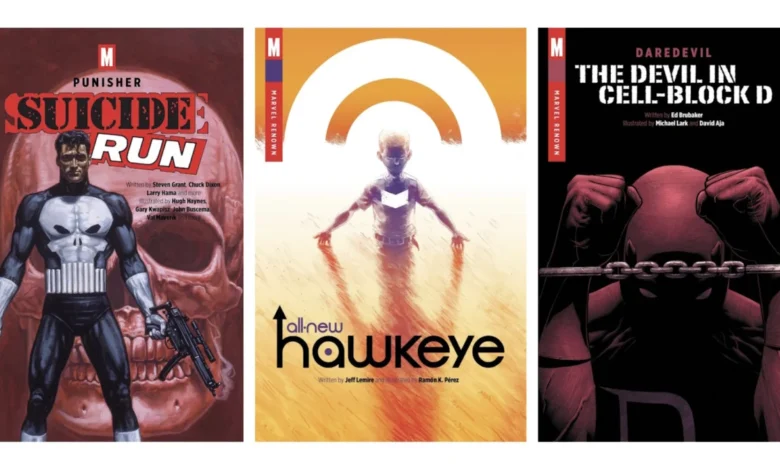
The landscape of comic book publishing is undergoing a subtle yet significant shift regarding how classic and modern trade paperbacks are managed, stocked, and sustained in the commercial market place. During the annual New York Comic Con (NYCC) Retailer Day held at the Javits Center in New York City, executives and publishing representatives from Marvel Comics unveiled a brand-new publishing initiative titled the "Renown" line. In an industry where collected editions frequently fall out of print after their initial solicitations and print runs are exhausted, Marvel’s new venture introduces a foundational rule that is already generating considerable discussion among comic book store owners, distributors, and dedicated collectors: the books included in the Renown line are explicitly intended to be kept perpetually in print.
The announcement was made alongside the reveal of the "Marvel Brick" thick paperback line, marking a concerted effort by the publisher to address long-standing inventory and availability concerns raised by direct-market retailers. While details continue to emerge regarding the exact rollout schedule and initial wave of titles, the overarching mandate of the Renown line represents a distinct philosophical departure from standard comic book publishing practices, where scarcity often dictates secondary market value at the expense of continuous retail sales.
Background and Context of NYCC Retailer Day
To fully understand the significance of the Marvel Renown line announcement, one must examine the venue and the specific audience for which it was intended. NYCC Retailer Day is a specialized, business-oriented, professional-only event designed strictly for comic book store owners, managers, and industry distributors. It is traditionally scheduled for the Wednesday immediately preceding the public opening of New York Comic Con.
The structure of Retailer Day underwent a major evolution in 2024 when ReedPop, the event organizers, expanded New York Comic Con from its traditional four-day schedule into a full five-day convention. This expansion allowed for the creation of a dedicated Wednesday program focused entirely on the business-to-business side of the comic book industry. Hosted in the River Pavilion at the Javits Center, the daylong affair features a packed itinerary consisting of publisher presentations, retailer-focused workshops, keynote speeches, collaborative industry discussions, and structured networking opportunities. Additionally, attendees benefit from exclusive perks such as free creator-signing opportunities, specialized promotional items, and early industry announcements that do not break until later in the public convention weekend.
The event serves as an intimate barometer for the health of the direct market. Retailers use the platform to voice concerns regarding distribution, profit margins, variant cover saturation, and back-catalog availability. Historically, one of the most persistent complaints from storefront operators has been the erratic availability of core graphic novels and collected editions. When a customer walks into a comic shop looking for a definitive run or a popular graphic novel that serves as an entry point to a character’s history, retailers frequently face the frustration of finding the title out of print with no immediate prospect of a reprint. Marvel’s introduction of the Renown line directly targets this friction point within the supply chain.
Chronology of the Marvel Renown Line Unveiling
The rollout of the Renown line occurred during the morning publisher presentations on Wednesday of convention week. Representatives from Marvel Comics took the stage in front of hundreds of assembled direct-market retailers to outline their upcoming publishing strategy for the subsequent calendar year.
- Presentation Opening: Marvel executives introduced structural changes to their collected editions department, acknowledging historical complaints regarding the transience of trade paperback availability.
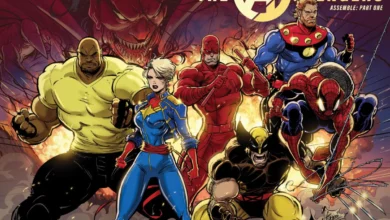
- The Marvel Brick Line Reveal: Prior to the Renown announcement, the publisher detailed the "Marvel Brick" line, focusing on ultra-thick, high-value paperback collections designed to offer readers massive narrative chunks at accessible price points.
- The Renown Line Announcement: Following the Brick line presentation, the Renown initiative was formally detailed. Executives emphasized that the core philosophy of the line is indefinite inventory replenishment.
- Format Specifications: While the initial waves of the Renown line will primarily consist of paperback editions, publishers noted during subsequent Q&A sessions that select releases within the line may also receive hardcover printings based on demand and historical sales metrics.
- Post-Presentation Networking: Following the formal announcements, retailers gathered in the River Pavilion for a concluding industry mixer and cocktail party, where the feasibility, pricing tiers, and structural impact of the Renown line dominated private discussions.
Supporting Data and Publishing Implications

To evaluate the weight of Marvel’s promise to keep the Renown line in print, it is helpful to look at standard economic practices within the comic book industry. Traditionally, trade paperbacks and hardcovers are solicited through trade catalogs such as PRH Comics or Lunar Distribution months in advance. Publishers gauge initial orders from comic shops and bookstores, factor in anticipated re-orders, and print a specific number of copies. Once that inventory is depleted, a book enters "out of stock indefinitely" status. It may or may not be resolicited years later, depending on external factors such as upcoming cinematic releases or television adaptations.
This model creates a boom-and-bust cycle for evergreen titles—stories that new fans continually seek out. By designating a specific line as perpetually in print, Marvel is effectively committing to maintaining warehouse stock and scheduling periodic reprints regardless of whether a title experiences a massive spike in baseline demand. This mirrors strategies seen in the literary fiction and textbook markets, where foundational works remain continuously available to ensure steady, predictable revenue streams for both publishers and retail partners.
Industry Analysts and Retailer Reactions
While public reaction from fans on social media has been overwhelmingly positive—greeted with cautious optimism given the industry’s historical habit of letting essential trades vanish from shelves—retailers at the Javits Center offered a more pragmatic evaluation.
Store owners have long argued that availability is the single greatest barrier to entry for new comic book readers. When a blockbuster film or streaming series premieres, casual fans often visit local comic shops seeking the source material. If a store cannot supply the trade paperback because it is out of print, the sale is lost, and the customer’s momentum is halted.
"If Marvel genuinely keeps these books in stock and available for re-order week after week without long blackouts, it completely changes how we curate our graphic novel sections," noted one independent comic shop owner who attended the Wednesday Retailer Day sessions. "For years, we’ve had to tell customers, ‘It’s out of print, but we can look for a used copy online.’ Being able to point to a permanent shelf line that we can restock at a moment’s notice is a massive win for bricks-and-mortar storefronts."
However, industry veterans also point out logistical hurdles. Maintaining a perpetually in-print back catalog requires significant warehousing capabilities, predictable paper and printing costs, and efficient distribution networks. Publishers must balance the financial commitment of storing and re-running lower-volume titles against the warehouse space required for newer, high-velocity monthly releases.
Broader Impact on the Comic Book Market
The launch of the Marvel Renown line, alongside the Marvel Brick line, signals a broader industry realization: the direct market and bookstore trade markets require structural stability to capture generational readers. As graphic novels continue to gain mainstream traction through libraries, bookstores, and digital platforms, relying solely on short-term print cycles leaves money on the table and frustrates consumers.
By formalizing the Renown line with an explicit guarantee of longevity, Marvel is attempting to build a reliable backbone for comic shop graphic novel racks. If successful, the initiative could prompt competing publishers to re-evaluate their own back-catalog strategies, potentially transforming how classic stories are curated, marketed, and sold across the global marketplace. As the convention floor opens to the public and the broader industry absorbs the news coming out of the River Pavilion, all eyes will be on Marvel’s upcoming solicitations to see which foundational titles make the initial cut for permanent residency on comic shop shelves.