Wizards of the Coast Distributes AI Settlement Funds to Authors in Significant Industry Precedent

In a move that marks a notable departure from the prevailing corporate trend regarding intellectual property and artificial intelligence, Wizards of the Coast (WotC) has opted to distribute a substantial portion of its settlement funds from a legal dispute with the AI firm Anthropic directly to the authors whose work formed the foundation of its intellectual property. The decision, which involves hundreds of thousands of dollars, serves as a financial windfall for the creative professionals who have long contributed to the Dungeons & Dragons and Magic: The Gathering franchises.
The settlement stems from the broader, ongoing conflict between creative industries and generative AI developers. Anthropic, a major player in the AI sector, faced allegations that its large language models were trained on copyrighted materials without authorization. When legal proceedings reached a point of resolution, WotC—as a corporate entity—could have theoretically retained the entirety of the settlement proceeds. Instead, the company initiated a process to ensure those funds reached the writers whose works were integral to the training data that formed the basis of the dispute.
The Mechanics of the Payout
The distribution process was not an immediate or simple administrative task. According to industry insiders and freelancers involved in the process, internal discussions at WotC regarding the appropriate allocation of these funds had been ongoing for several months. James Lowder, a freelance writer and editor with extensive experience contracting for Wizards of the Coast, highlighted that the effort was largely driven by internal pressure from authors who advocated for their rights.
"This is remarkable and amounts to hundreds of thousands of dollars that WotC could have collected going to the writers," Lowder noted in a recent public statement. He emphasized that the result was the product of persistent dialogue between high-level WotC leadership—specifically citing figures such as Dan Ayoub—and prominent authors like R.A. Salvatore, whose decades-long contribution to the Dungeons & Dragons literary canon provided significant weight to the discussions.

The payout is viewed by many in the publishing industry as a "spiritual opposite" to the common corporate practice of retaining settlement or tariff-related refunds, which often fail to reach the creators or consumers affected by the underlying issues. By choosing to prioritize the creators, WotC has established a rare precedent in the current legal landscape of generative AI, where authors often find themselves sidelined during high-level corporate settlements.
A History of Institutional Friction
While the distribution of these funds is being framed as a positive development for creative workers, it arrives against a backdrop of significant institutional friction between Wizards of the Coast and its community, as well as its own internal workforce. Over the past twenty-four months, the company has navigated a series of public controversies that have arguably necessitated a strategic pivot toward better public relations.
The most notable of these was the 2023 attempt to modify the Open Gaming License (OGL). The OGL had governed the Dungeons & Dragons ecosystem for over two decades, allowing third-party creators to build content based on the game’s mechanics. When WotC attempted to introduce restrictive terms that would have allowed the company to claim ownership or royalties over fan-made content, the ensuing backlash was immediate and severe. The company was forced to retract the changes and eventually moved the core rules of the game into the Creative Commons, a significant capitulation that damaged the company’s long-standing trust with its core demographic.
Following the OGL crisis, the company faced further scrutiny regarding its use of AI-generated assets in promotional marketing and, inadvertently, within official sourcebooks. In these instances, the company faced accusations that it was failing to support the professional artists who rely on the brand for work. The subsequent public outcry forced WotC to issue apologies and formalize stricter guidelines regarding the use of generative AI in their products.
Labor Relations and Corporate Restructuring
Beyond external relations, the internal climate at Wizards of the Coast has been characterized by significant upheaval. In late 2023, the parent company, Hasbro, announced a massive workforce reduction of approximately 1,100 employees. These layoffs had a disproportionate impact on the Dungeons & Dragons and Magic: The Gathering divisions, leading to the departure of many long-tenured staff members.

This reduction in force was felt across the industry, particularly in the wake of the success of Larian Studios’ Baldur’s Gate 3. Many of the staff who had initially nurtured the partnership between WotC and Larian were among those let go. While the leadership of Larian Studios has consistently described the conclusion of their partnership as a creative decision rather than a result of corporate hostility, the timing of the layoffs contributed to a public perception of a company in transition, struggling to balance the interests of stakeholders with the needs of its creative teams.
Furthermore, the company has been embroiled in labor disputes regarding the unionization of its staff. WotC has twice resisted voluntary recognition of employee unions, choosing instead to push for formal ballots. These actions have drawn criticism from labor advocates, who argue that the company’s progressive stance on author settlements is being offset by a more traditional, adversarial approach to its internal labor relations.
Strategic Implications of the Settlement
From a corporate strategy perspective, the decision to share the Anthropic settlement funds serves as a dual-purpose move. Economically, the amount is, as noted by industry analysts, relatively modest when compared to the multi-billion dollar valuation of the Hasbro/WotC enterprise. For the writers, the funds are substantial, but for the corporation, the cost is a "cheaply bought" public relations victory at a time when the brand desperately needs to rebuild its reputation.
However, the legal implications are far more significant than the monetary value alone. By effectively acknowledging that the authors have a stake in the value of their work as it pertains to AI training data, WotC is reinforcing a legal standard that favors human creators. If this approach gains traction, it could provide a blueprint for other publishers to follow, potentially forcing AI companies to negotiate not just with the platforms that host the content, but with the creators themselves.
Looking Toward the Future
The current landscape for tabletop gaming and fantasy publishing is at a crossroads. The integration of AI technology into creative workflows remains a contentious issue, and the legal battleground regarding copyright in the age of large language models is still in its infancy. Wizards of the Coast remains in a precarious position; it holds the most valuable intellectual property in the tabletop market, yet it operates within a parent company under pressure to maximize shareholder value.
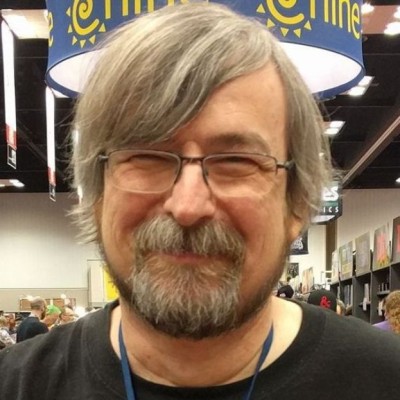
The success of the author-prompted settlement initiative suggests that the most effective path forward for creators in the industry may be collective advocacy. The role played by established authors like R.A. Salvatore demonstrates that those with the most influence can, and should, use their platform to secure better outcomes for the broader community of freelancers and contractors.
As the industry moves forward, the "right thing to do," as described by James Lowder, will continue to be measured against the company’s future handling of labor relations, AI integration, and the preservation of the creative ecosystem that made Dungeons & Dragons a global phenomenon. For now, the distribution of the Anthropic settlement represents a tangible, positive milestone for writers, even as the broader conversation regarding corporate responsibility in the age of automation remains far from settled. The challenge for Wizards of the Coast will be to ensure that this gesture is the beginning of a more collaborative approach to its creative partnerships, rather than an isolated incident intended to soothe a disgruntled workforce and a skeptical fan base.