
Unrealized Franchises: Examining the Original Xbox Titles That Held Immense Potential But Never Fully Materialized Beyond Their Debut Console.


When Microsoft made its ambitious foray into the highly competitive home video game console market in November 2001, the Xbox quickly established a significant presence, carving out a niche alongside established giants like Sony’s PlayStation 2 and Nintendo’s GameCube. Bolstered by substantial financial backing and a clear strategy to attract both developers and players, the console rapidly launched several iconic and enduring franchises. Titles such as Bungie’s seminal first-person shooter Halo: Combat Evolved (2001), which became the console’s killer app, Lionhead Studios’ innovative action role-playing game Fable (2004), and Epic Games’ gritty third-person shooter Gears of War (2006) would all go on to become multi-generational pillars for the Xbox brand, appearing on subsequent systems and garnering massive fan bases. However, not every game developed during this pioneering era, despite showcasing immense promise and creative vision, successfully evolved into a full-fledged, multi-installment franchise. Many titles, ripe with innovative mechanics, compelling narratives, or charismatic characters, were conceived with planned sequels or spin-offs, yet when the time came for further development, these ambitions were ultimately abandoned. The original Xbox era, while laying the groundwork for many successful series, also saw a number of truly distinctive games that, for various commercial, critical, or technical reasons, remained singular experiences or, at best, yielded a single follow-up, ensuring their franchises did not persist beyond the console’s lifecycle. This article delves into three such examples: Blinx: The Time Sweeper, Advent Rising, and Phantom Dust, exploring their initial promise, the factors contributing to their stagnation, and their lasting legacy in the annals of video game history.
The Xbox’s Inaugural Years: A Battle for Market Share and Identity
The launch of the original Xbox represented a significant strategic move by Microsoft, a company primarily known for its software dominance, into the hardware-centric console market. Released in North America on November 15, 2001, the console aimed to leverage PC-like architecture to attract developers and offer superior graphical capabilities compared to its competitors. Microsoft’s entry was audacious, challenging Sony’s PlayStation 2, which had already established a commanding lead, and Nintendo’s GameCube, which catered to a different, often younger, demographic.
To succeed, Microsoft understood the critical importance of exclusive titles. They invested heavily in acquiring and developing new intellectual properties (IPs), recognizing that compelling games would drive hardware sales. While Halo undeniably served as the console’s most significant draw, Microsoft also sought a diverse portfolio, including platformers, action-adventure games, and unique genre blends, hoping to cultivate a broad appeal. This era was characterized by a rapid expansion of game development, with studios experimenting with new ideas and pushing technological boundaries. However, the high cost of development, intense competition, and the unpredictable nature of consumer preferences meant that even games with significant potential faced an uphill battle to establish themselves as long-term franchises. Many games, despite critical praise or innovative concepts, failed to achieve the sales figures necessary to justify continued investment in sequels, leading to their quiet disappearance as the console generation transitioned.
Blinx: The Time Sweeper – A Mascot’s Missed Opportunity
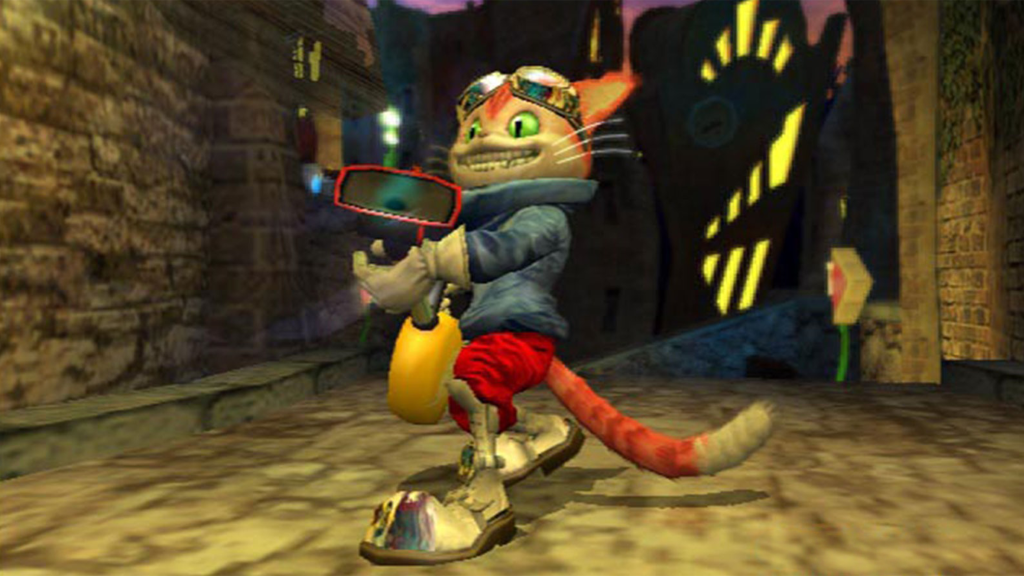
Released in 2002, Blinx: The Time Sweeper was an ambitious 3D platformer developed by Artoon and published by Microsoft Game Studios. Positioned as a potential mascot for the Xbox, Blinx was an anthropomorphic cat equipped with a sentient vacuum cleaner, the TS-1000, capable of manipulating time. The game was famously advertised as "The World’s First 4-D Action Game," highlighting its core mechanic: the ability to slow, speed up, record, reverse, and stop time using "Time Crystals" collected from defeated enemies. Players would strategically employ these "Time Controls" to solve puzzles, navigate environments, and defeat adversaries.
The premise was undoubtedly innovative. Blinx himself possessed a charming, charismatic design, seemingly engineered for mascot status, reminiscent of classic platformer heroes. The game’s mechanics offered a fresh take on the platforming genre, requiring players to think creatively about how to use time manipulation in combat and environmental challenges. Microsoft had high hopes, investing significantly in its marketing campaign, aiming to provide the Xbox with a family-friendly exclusive to rival Nintendo’s Mario and Sony’s Jak & Daxter or Ratchet & Clank.
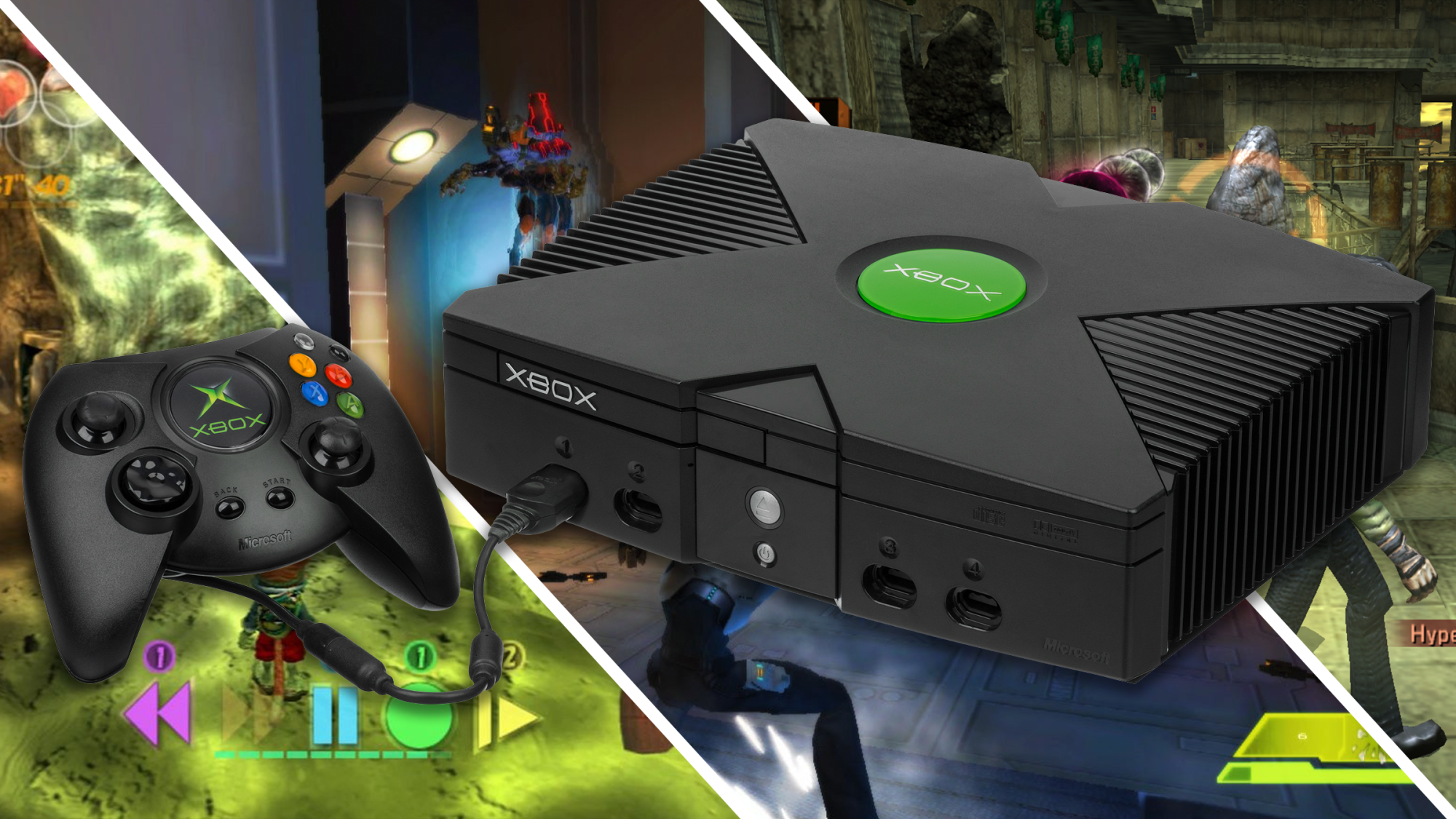
However, despite its unique selling points, Blinx: The Time Sweeper received a mixed critical reception. While praised for its innovative time-manipulation mechanics and imaginative concept, critics often pointed to its steep learning curve, sometimes frustrating level design, and repetitive enemy encounters as drawbacks. The controls, though functional, were not universally lauded, and the game’s difficulty spikes could deter players. Commercially, Blinx struggled to gain significant traction against the more established and critically acclaimed platformers of the era. Its sales, while respectable for a new IP, did not reach the blockbuster levels required to firmly cement Blinx as an Xbox icon.
A direct sequel, Blinx 2: Masters of Time and Space, was released in 2004, attempting to address some of the original’s shortcomings and expand on the universe by introducing a rival pig faction and allowing players to customize their character. While it improved upon certain aspects, it too faced stiff competition and did not achieve the breakout success needed to sustain the franchise. Following Blinx 2, the series effectively went dormant. The IP remains owned by Microsoft, making a modern revival theoretically possible. With the current industry trend of revisiting classic platformers and the growing nostalgia for the original Xbox era, Blinx could be an excellent candidate for a contemporary reimagining, perhaps simplifying its mechanics for a broader audience while retaining its core time-bending charm. However, without concrete plans, the adventures of the time-sweeping cat remain confined to the early 2000s.
Advent Rising – An Ambitious Trilogy Cut Short
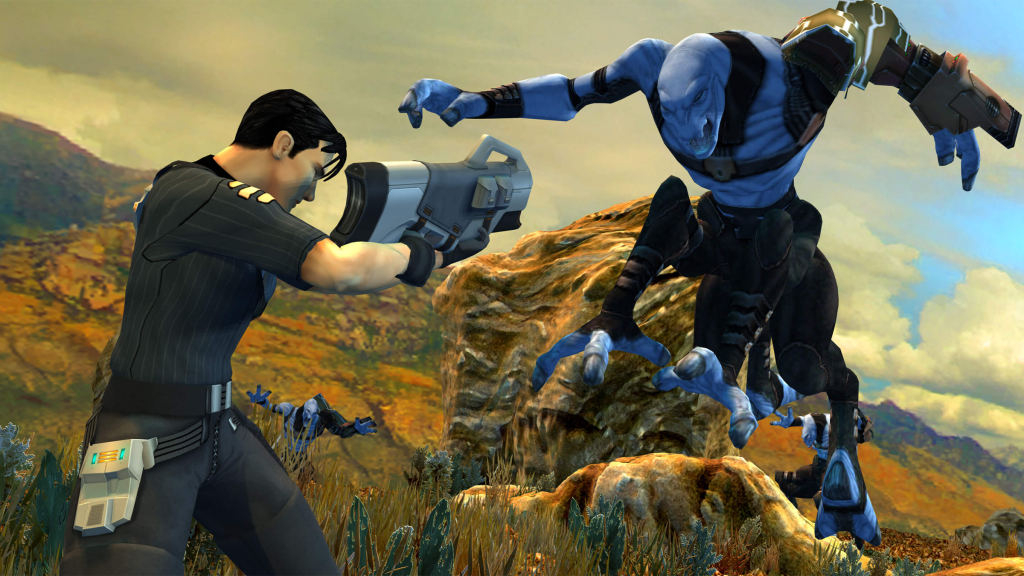
Advent Rising, released in 2005 for the Xbox and PC, was a third-person action-adventure game developed by GlyphX Games and published by Majesco Entertainment. The game stood out due to its incredibly ambitious scope: it was intended to be the first installment in a grand sci-fi trilogy, boasting an epic narrative penned by renowned science fiction author Orson Scott Card (though his direct involvement was primarily in story conception, not scriptwriting). The plot followed Gideon Wyeth, a human who discovers he possesses extraordinary alien powers as humanity faces extinction from an alien race, the Seekers, who believe humans are a legendary ancient species.
Majesco Entertainment invested heavily in Advent Rising, launching it with an extensive cross-media marketing campaign that included a spin-off comic book series and plans for a tie-in novel. The game featured a prominent voice cast, including Wil Wheaton, and aimed to deliver a cinematic, story-driven experience with unique gameplay mechanics, blending conventional third-person shooting with developing psionic powers. Players could dual-wield weapons, use a diverse arsenal, and progressively unlock and upgrade powers like telekinesis, energy blasts, and force fields, offering a dynamic combat system.
However, Advent Rising‘s launch was plagued by significant technical issues and bugs, which severely hampered its critical reception and commercial performance. Reviewers widely criticized the game for its clunky controls, erratic camera, frequent glitches, and inconsistent frame rates. These technical shortcomings overshadowed the game’s strong narrative premise, impressive soundtrack, and ambitious scope. The game’s sales figures were disappointing, falling far short of Majesco’s expectations and the investment poured into the project.
Facing financial difficulties compounded by the poor sales of Advent Rising and other titles, Majesco Entertainment was forced to re-evaluate its strategy. The planned sequels, the tie-in novel, and any further expansion of the Advent Rising universe were summarily canceled. This abrupt termination left the overarching story of the trilogy incomplete, a significant frustration for players who had become invested in Gideon Wyeth’s journey. The failure of Advent Rising serves as a stark reminder of the critical importance of technical polish at launch, especially for new IPs attempting to establish themselves in a crowded market. Even the most compelling narratives and ambitious gameplay concepts can be undermined by a flawed execution. While the game has garnered a cult following over the years, the financial realities and the ownership of the IP make a modern revival or completion of the trilogy highly unlikely, leaving its potential forever etched in the "what if" category of gaming history.
Phantom Dust – A Cult Classic’s Enduring Struggle for Recognition
Phantom Dust, released in 2004, is perhaps the most unique and critically lauded title among these unrealized franchises. Developed by Microsoft Game Studios Japan and directed by Yukio Futatsugi, known for his work on the Panzer Dragoon series, Phantom Dust was an innovative blend of action, strategy, and digital collectible card gameplay. Set on a post-apocalyptic Earth shrouded in dust, humanity has lost its memories and relies on individuals with psychic powers to uncover the past and fight against mutated creatures and other psychics.
The core gameplay loop involved players collecting "skills" (represented as cards) in an arena-based combat system. Players would enter battle with a customized "arsenal" of skills, which manifested as physical attacks, defensive abilities, and environmental manipulations. Matches were fast-paced and tactical, requiring players to adapt their strategies based on the skills they drew during combat and the arena’s layout. This unique hybrid genre, combining the real-time action of a third-person shooter with the strategic depth of a card game, created a highly engaging and distinctive experience.
Initially, Phantom Dust was primarily marketed towards Japanese players, given its development origin and unique aesthetic. However, its critical reception in the West was surprisingly strong, with reviewers praising its originality, deep gameplay mechanics, and captivating art style. Despite critical acclaim and a passionate niche following, Phantom Dust did not achieve significant commercial success. Its complex gameplay, niche genre appeal, and lack of a traditional marketing push in Western markets limited its sales, preventing it from becoming a mainstream hit.
The modest sales figures ultimately led to the cancellation of all plans for a sequel. The game’s director, Yukio Futatsugi, expressed regret over its commercial performance, believing it was ahead of its time. Years later, a glimmer of hope appeared for fans when a reboot of Phantom Dust was announced for the Xbox One in 2014. However, this project faced significant development hurdles and was eventually canceled, a decision met with disappointment by the cult following.
Fortunately, Microsoft did not entirely abandon the IP. In 2017, a remaster of the original Phantom Dust was released for Xbox One and PC, making the game accessible to a new generation of players and allowing veterans to revisit it with enhanced visuals and improved performance. This remaster was a digital-only release and was offered for free for a period, indicative of Microsoft’s commitment to its legacy titles and the cult status of Phantom Dust. While the remaster was well-received and introduced the game to a broader audience, it primarily served as a preservation effort rather than a prelude to a new franchise entry. Despite its critical acclaim and unique vision, a proper sequel or significant expansion into a full-fledged franchise seems unlikely at this point, leaving Phantom Dust as a testament to innovative design that struggled to find mass market appeal.
Broader Implications and Industry Trends
The stories of Blinx, Advent Rising, and Phantom Dust offer valuable insights into the complexities of the video game industry, particularly during a console’s formative years. Microsoft’s initial Xbox strategy was a high-stakes gamble, requiring the rapid establishment of compelling exclusive IPs to differentiate itself. While they succeeded with giants like Halo, the journey was fraught with challenges for many other promising titles.
Challenges of New IP Development: These cases underscore the inherent risks and substantial investment required for developing new intellectual properties. Even with innovative ideas, charismatic characters, or ambitious narratives, success is far from guaranteed. Market saturation, intense competition, and the fickle nature of consumer trends mean that many games, despite their quality, fail to capture the necessary commercial momentum.
Importance of Technical Polish and User Experience: Advent Rising‘s narrative of a promising game undermined by technical issues highlights the critical importance of a polished launch. In an increasingly interconnected world where early reviews and player feedback can rapidly shape public perception, technical stability is paramount. A game with great ideas but poor execution often struggles to recover from a problematic debut.
The Niche vs. Mainstream Dilemma: Phantom Dust exemplifies the challenge of niche appeal. While highly innovative and critically praised, its unique genre blend made it difficult to market to a broad audience. Many cult classics emerge from this space, cherished by a dedicated community but never reaching the sales figures required for significant franchise expansion. Publishers often prioritize titles with clearer, more mass-market appeal to justify the immense development and marketing costs.
Nostalgia and the Remaster Trend: The successful remaster of Phantom Dust reflects a growing industry trend: leveraging nostalgia and digital distribution to breathe new life into older titles. For games that were ahead of their time or simply didn’t find their audience initially, remasters or re-releases can offer a second chance. However, a remaster does not automatically guarantee a sequel, as the financial viability of a full new entry still depends on the sustained interest and commercial performance of the re-released title.
Conclusion
The original Xbox era was a period of immense creativity and technological advancement, laying the foundation for Microsoft’s enduring presence in the video game industry. While it gave birth to numerous blockbuster franchises that continue to thrive today, it also saw the rise and fall of many promising titles that, for various reasons, never quite made it to franchise status. Blinx: The Time Sweeper, Advent Rising, and Phantom Dust stand as poignant reminders of this dynamic landscape. Each offered unique visions and demonstrated significant potential, yet ultimately succumbed to the commercial realities, technical hurdles, or market complexities of their time. Their stories serve as a testament to the unpredictable nature of game development and the fine line between becoming an enduring series and remaining a cherished, but singular, gaming memory. As the industry continues to evolve, these games remain cult favorites, representing the vast, often unseen, wealth of innovation that shapes the tapestry of video game history.


