
The Mummy


A significant departure from its blockbuster predecessors, director Lee Cronin’s latest offering, "The Mummy," plunges audiences into a visceral and unvarnished horror experience, eschewing traditional adventure tropes for a relentless exploration of gore and psychological distress. The film, which recently premiered to a mix of critical intrigue and visceral reactions, marks a bold reimagining of the classic mummy narrative, opting for a modern, unflinching approach to ancient curses and their devastating modern-day consequences. This iteration is less about grand tombs and more about the insidious creep of ancient evil into the fabric of everyday life, presenting a family unit pushed to its absolute breaking point.
A Grotesque Prologue and a Disappearing Daughter
The film opens with a starkly unsettling prologue, establishing a somber and foreboding tone that eschews any semblance of lightheartedness. Set against the backdrop of an Egyptian family grappling with a subterranean secret, this initial sequence immediately signals that "The Mummy" is not a film for the faint of heart. The narrative then shifts focus to the Cannons, an American family residing in Cairo. Patriarch Charlie (Jack Reynor), a TV news correspondent, finds his world shattered when his young daughter, Katie (Emily Mitchell), is snatched from their backyard. Charlie’s frantic pursuit of the abductor through a sandstorm-ravaged cityscape is depicted as one of the film’s most compelling set pieces, a testament to Reynor’s performance and Cronin’s early directorial command of tension.
An Eight-Year Absence and a Harrowing Return
Eight years later, the family, now including Charlie, his wife Larissa (Laia Costa), their teenage son Sebastián (Shylo Molina), and a new young daughter, Maud (Billie Roy), have relocated to Albuquerque. Their lives are irrevocably altered when they receive news that Katie, long presumed lost, has been found. Her discovery is as bizarre as it is chilling: unearthed from within a sarcophagus amidst the wreckage of a plane crash. Cronin masterfully crafts this revelation with a disconcerting, almost casual off-handedness, underscoring the film’s commitment to unsettling its audience.
The film’s descent into pure horror begins in earnest with Katie’s reappearance. Now portrayed by Natalie Grace, the once-lost daughter is a shadow of her former self. Her physical transformation is harrowing; her face is deformed, her skin mottled and shriveled, and she is rendered unable to communicate. The hospital’s swift release of Katie into the Cannons’ care, without any significant medical intervention or grooming, serves as a narrative contrivance to facilitate the film’s graphic content. This leads to a protracted and deeply uncomfortable scene where Larissa is tasked with tending to Katie’s severely neglected toenails, a moment that sets the stage for the escalating bodily horror that follows. Expulsions of vomit, other bodily fluids, and a general onslaught of "random yuckiness" become the film’s modus operandi, drawing comparisons to the extreme gore of Lucio Fulci’s films, albeit filtered through Cronin’s modern sensibility.
Parental Denial and the Erosion of Reality
Despite the increasingly grotesque and terrifying manifestations of Katie’s condition, the Cannons’ reactions remain curiously, almost comically, subdued. Their prolonged denial of the severity of the situation strains credulity, a narrative choice that critics have noted as a potential point of weakness. Instances such as snarling coyotes assembling ominously outside their home are treated as minor inconveniences. Even witnessing Katie scuttling like an animal through the house’s crawlspace and consuming a live scorpion fails to prompt a return to medical professionals. Larissa’s persistent, albeit unconvincing, assertion, "I can fix her," becomes a mantra of denial in the face of overwhelming evidence.
A Narrative Detour into Formulaic Subplots
The film’s narrative structure, critics suggest, could have benefited from a deeper exploration of the parents’ psychological states, rendering their denial more comprehensible and lending greater emotional weight to their ordeal. Instead, "The Mummy" dedicates a considerable amount of screen time to investigative subplots that adhere to conventional horror genre beats. An obligatory consultation with an expert on ancient Egyptian mythology is included, with Charlie’s blunt request, “I’m not interested in your taxes, I’m here to talk about Egyptian hieroglyphics,” highlighting the film’s blend of the mundane and the supernatural.
Adding to the cast of supporting characters is Larissa’s mother, Carmen (Veronica Falcón), an elderly Latina woman who serves as the intuitive harbinger of doom, recognizing the "bad mojo" surrounding Katie. The inclusion of her full name, Carmen Santiago, subtly teases a potential geographical callback that ultimately goes unfulfilled. Meanwhile, back in Egypt, detective Dalia Zaki (May Calamawy) embarks on her own investigation into Katie’s disappearance. These sequences, described as excessively lengthy, create the impression of a parallel narrative that could have sustained its own film, thereby diluting the impact of the central family’s immediate crisis.
The Numbing Effect of Excessive Grotesquerie
The film’s pacing and the sheer volume of relentless atrocities and grotesqueries, coupled with the Cannons’ consistently passive response, ultimately lead to a numbing effect rather than exhilaration. As the narrative grinds on, the intended shock value begins to dissipate, replaced by a sense of weariness. Even Katie’s own supernatural abilities become inconsistently portrayed. When she is eventually restrained, the audience questions why she doesn’t simply employ her occult powers to escape, given the prior displays of vulgar and potent magic. The film’s climax, which centers on a child-in-peril scenario, has been criticized for its gratuitous cruelty and a profound lack of taste, pushing the boundaries of acceptable cinematic violence.
Praiseworthy Craftsmanship Amidst the Mayhem
Despite the film’s narrative shortcomings and its overwhelming descent into extreme horror, there are moments of undeniable craft and artistic merit. The film features several memorable, albeit disturbing, sequences involving teeth, showcasing Cronin’s willingness to explore unconventional and unsettling imagery. The technical execution and the commitment of the actors are consistently praiseworthy. Young actress Natalie Grace delivers a powerful performance, fully immersing herself in the role of Katie and effectively conveying her character’s internal and external torment. Renowned makeup effects artist Arjen Tuiten and his team have unleashed a full arsenal of well-realized prosthetics and gore, creating a visceral and believable depiction of decay and supernatural affliction.
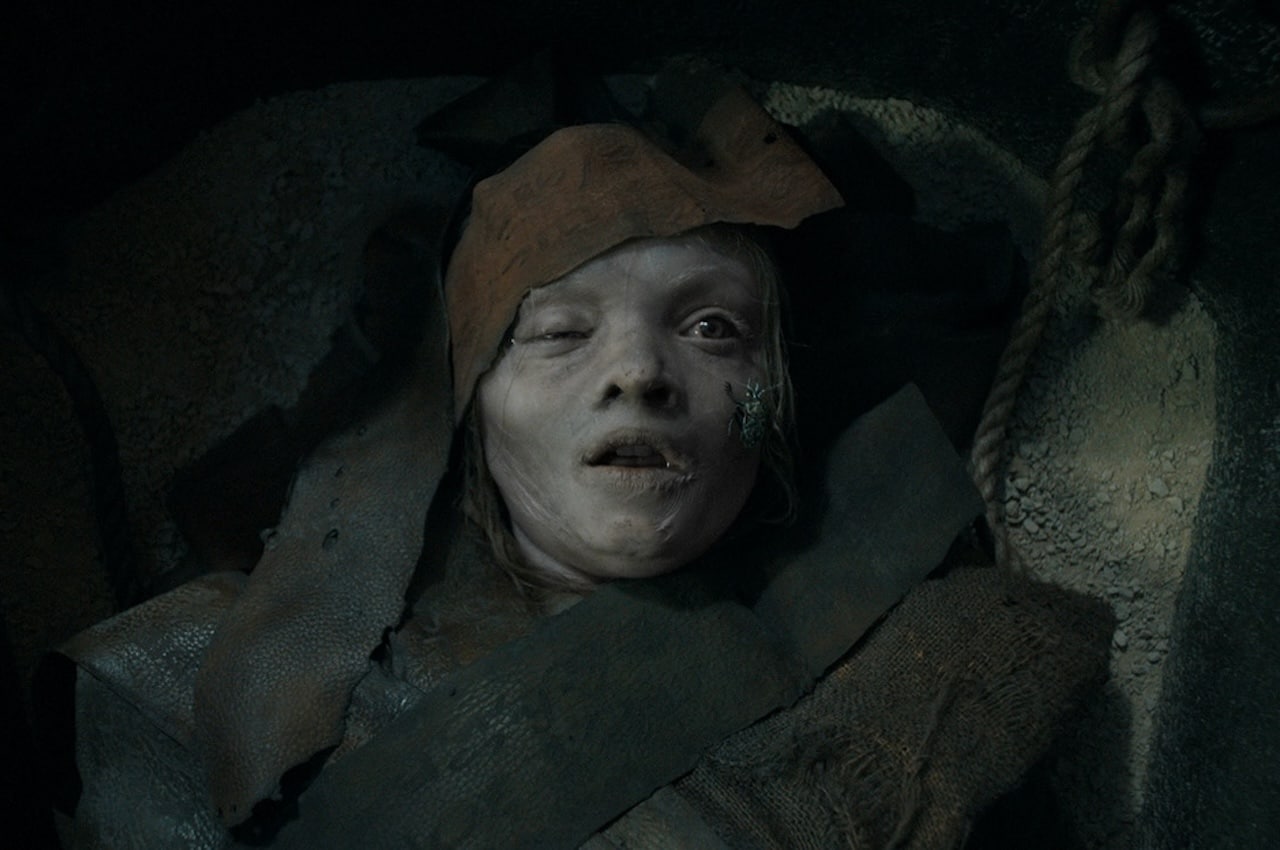
"The Mummy" stands as a testament to the extreme end of the horror spectrum within major studio productions in recent years. However, its protracted runtime and relentless assault on the senses serve as a stark reminder of why many of the most acclaimed horror films, particularly those relying on shock and visceral impact, tend to hover around the ninety-minute mark. The film’s ambition to push boundaries is evident, but its execution ultimately falters, leaving audiences more exhausted than exhilarated by its unflinching portrayal of ancient evil unleashed upon a modern family.
The Legacy of the Mummy in Modern Cinema
The cinematic history of "The Mummy" is rich and varied, dating back to the Universal Pictures classic starring Boris Karloff in 1932. This iconic portrayal established the trope of an ancient Egyptian priest resurrected by modern archaeologists, often seeking vengeance or to reclaim a lost love. Subsequent iterations, particularly the Stephen Sommers-directed franchise in the late 1990s and early 2000s starring Brendan Fraser and Rachel Weisz, reimagined the mummy as a swashbuckling adventure antagonist, blending action, comedy, and fantasy elements. These films achieved significant box office success, cementing a more commercially palatable image of the mummy mythos for a global audience.
More recently, Universal attempted a darker, more interconnected universe approach with "The Mummy" (2017) starring Tom Cruise, which aimed to launch a "Dark Universe" of classic monsters. However, this iteration was met with critical disappointment and underperformed at the box office, signaling a challenge for studios in finding a fresh and engaging direction for the franchise.
Lee Cronin’s "The Mummy" represents a deliberate pivot away from these more commercially oriented interpretations. By embracing an unrated, R-rated aesthetic and a focus on extreme body horror and psychological torment, Cronin appears to be catering to a niche audience within the horror community that craves a more uncompromising and visceral cinematic experience. This stylistic choice aligns with a broader trend in independent and even some studio horror films that prioritize atmosphere, graphic detail, and a sense of dread over traditional narrative arcs and heroic protagonists.
Critical Reception and Audience Response
Early critical responses to "The Mummy" have been polarized. Reviewers have acknowledged the film’s technical prowess, particularly the makeup effects and the committed performances of its cast. However, many have pointed to the film’s pacing and its reliance on shock value as significant drawbacks. The narrative’s perceived thinness and the characters’ often unbelievable reactions to horrific events have been frequently cited as points of contention. Some critics have lauded Cronin’s bravery in pushing the boundaries of mainstream horror, while others have found the film to be excessively graphic and gratuitous, lacking the thematic depth to justify its extreme content.
The film’s deliberate eschewing of traditional horror tropes, such as jump scares in favor of sustained atmospheric dread and visceral disgust, has been a point of discussion. This approach is more aligned with the work of directors like Ari Aster and Robert Eggers, who have found success in crafting slow-burn, psychologically disturbing horror films. However, "The Mummy" appears to lean more heavily into the grotesque and the physically repulsive, a direction that may alienate some viewers who appreciate more nuanced forms of horror.
The commercial prospects of such an extreme film remain to be seen. While it may attract a dedicated cult following within the horror genre, its graphic nature could limit its broader appeal and box office potential. The success of films like "Hereditary" and "Midsommar" has demonstrated a market for artful, disturbing horror, but "The Mummy"’s unvarnished approach may prove to be a more challenging proposition for mainstream audiences.
Broader Implications for Studio Horror
Lee Cronin’s "The Mummy" signifies a bold, albeit potentially divisive, move by a major studio to produce a film that unapologetically embraces extreme horror. In an era where studios often err on the side of caution to maximize broad appeal, Cronin’s vision for "The Mummy" suggests a willingness to take risks and cater to a more discerning horror audience. The film’s potential impact on future studio horror productions is a subject of considerable interest. If "The Mummy" manages to find a significant audience, it could embolden other studios to greenlight more uncompromised and artistically driven horror projects. Conversely, if the film falters commercially or critically due to its extreme nature, it might reinforce a perception that such content is best left to independent productions.
The film’s critical analysis of familial denial in the face of overwhelming supernatural horror also touches upon universal themes that resonate beyond the genre. The struggle of parents to accept the unacceptable, particularly when it concerns their children, is a powerful emotional undercurrent. However, the effectiveness of this exploration is debated, with some arguing that the sheer volume of gore overshadows the potential for deeper emotional engagement.
Ultimately, "The Mummy" stands as a stark reminder of the diverse landscape of contemporary horror cinema. It is a film that dares to be uncomfortable, to shock, and to push boundaries, offering a potent, if unsettling, vision of ancient evil in the modern world. Its legacy will likely be debated among fans and critics, solidifying its place as a significant, if controversial, entry in the annals of horror filmmaking.


