
The Genesis of Modern Role-Playing How a 1979 Dungeons and Dragons Session with Naval Officers Shaped the Career of Fallout Creator Tim Cain


In a detailed retrospective shared via his personal YouTube channel, legendary role-playing game (RPG) designer Tim Cain has provided an illuminating look into the origins of his storied career, tracing his creative lineage back to a single, transformative afternoon in 1979. Cain, best known as the co-creator of the Fallout franchise and a primary architect of titles such as Arcanum: Of Steamworks and Magick Obscura and The Temple of Elemental Evil, revealed that his first exposure to Dungeons & Dragons (D&D) occurred during the Jimmy Carter administration under the guidance of high-ranking United States naval officers. This encounter not only ignited a lifelong passion for tabletop gaming but also established the philosophical and mechanical foundations upon which some of the most influential digital RPGs in history would eventually be built.
The 1979 Encounter: Tabletop Gaming in the Naval Quarters
The setting for Cain’s introduction to the world of high fantasy was as unconventional as it was prestigious. According to Cain’s account, the session was organized by coworkers of his mother, who were high-ranking officers in the U.S. Navy. At a time when Dungeons & Dragons was still a burgeoning subculture, these officers provided Cain with a rigorous and immersive introduction to the game’s mechanics and narrative potential. Cain recalls being tutored by a Dungeon Master (DM) he refers to as "Captain Dave," a figure whose disciplined yet creative approach to the game left an indelible mark on the young developer.
During this era, D&D was transitioning from its experimental roots into a more formalized structure. The late 1970s saw the release of the Advanced Dungeons & Dragons (AD&D) core rulebooks, including the Monster Manual (1977), the Player’s Handbook (1978), and the Dungeon Master’s Guide (1979). Cain’s entry point coincided with this "Golden Age" of tabletop gaming, a period characterized by complex rulesets and a burgeoning community of enthusiasts who were beginning to explore the limits of interactive storytelling.
Cain’s first character reflected a desire for total immersion and versatility. Unable to settle on a single archetype, he opted for an ambitious multiclass character: an elf Fighter/Cleric/Magic-User. This "bit of everything" approach allowed him to interact with the game world through various lenses—martial, divine, and arcane. Cain noted that the lack of rigid digital constraints allowed for a level of agency that modern computer RPGs (CRPGs) often struggle to replicate. "There wasn’t really a limit to what kind of questions I could ask and what actions I could specify I was doing," Cain explained, highlighting the fundamental difference between human-led tabletop sessions and the programmed logic of software.
Historical Context: The RPG Landscape of the Carter Era
To understand the significance of Cain’s 1979 session, one must look at the cultural and technological landscape of the time. In 1979, the personal computer revolution was in its infancy. The Apple II, TRS-80, and Commodore PET had only recently reached the market, and the concept of a "computer role-playing game" was largely confined to university mainframes running titles like PLATO’s dnd or early experiments like Akalabeth: World of Doom.
For Cain, the physical components of the game were as mesmerizing as the narrative. He expressed a specific fascination with the polyhedral dice—four-sided, eight-sided, twelve-sided, and twenty-sided—which were a radical departure from the standard six-sided dice found in traditional board games. These tools represented a new way of quantifying probability and outcome, a concept that would later become central to his work on the Fallout "S.P.E.C.I.A.L." system.
Furthermore, the social acceptance of D&D in 1979 was not yet marred by the "Satanic Panic" that would grip the United States in the 1980s. Cain’s mother was remarkably supportive of his new interest. While she spent the afternoon trading chili recipes with the naval officers’ wives, she recognized the intellectual spark the game had provided her son. On the drive home, she offered to stop at a local game store, where Cain purchased the AD&D Monster Manual and a boxed set—likely the 1977 version of the Basic Set edited by J. Eric Holmes. This parental endorsement provided the necessary resources for Cain to transition from a casual observer to a dedicated practitioner of the craft.
From Tabletop Logic to Digital Architecture: The Interplay Years
The transition from a fan of D&D to a professional game developer was bridged by Cain’s deep, almost academic, understanding of tabletop mechanics. In his retrospective, Cain recounted how his mastery of Advanced Dungeons & Dragons Second Edition—specifically the infamous "THAC0" (To Hit Armor Class 0) system—directly led to his employment at Interplay Productions.
In the early 1990s, Interplay was a rising star in the gaming industry, having secured the rights to produce official Dungeons & Dragons games. During his job interview, Cain’s ability to explain the nuances of THAC0 and other complex AD&D systems more clearly than other candidates secured his position. This mechanical literacy was vital; at the time, translating the "theater of the mind" and the complex math of tabletop gaming into C++ code was one of the greatest challenges in software development.
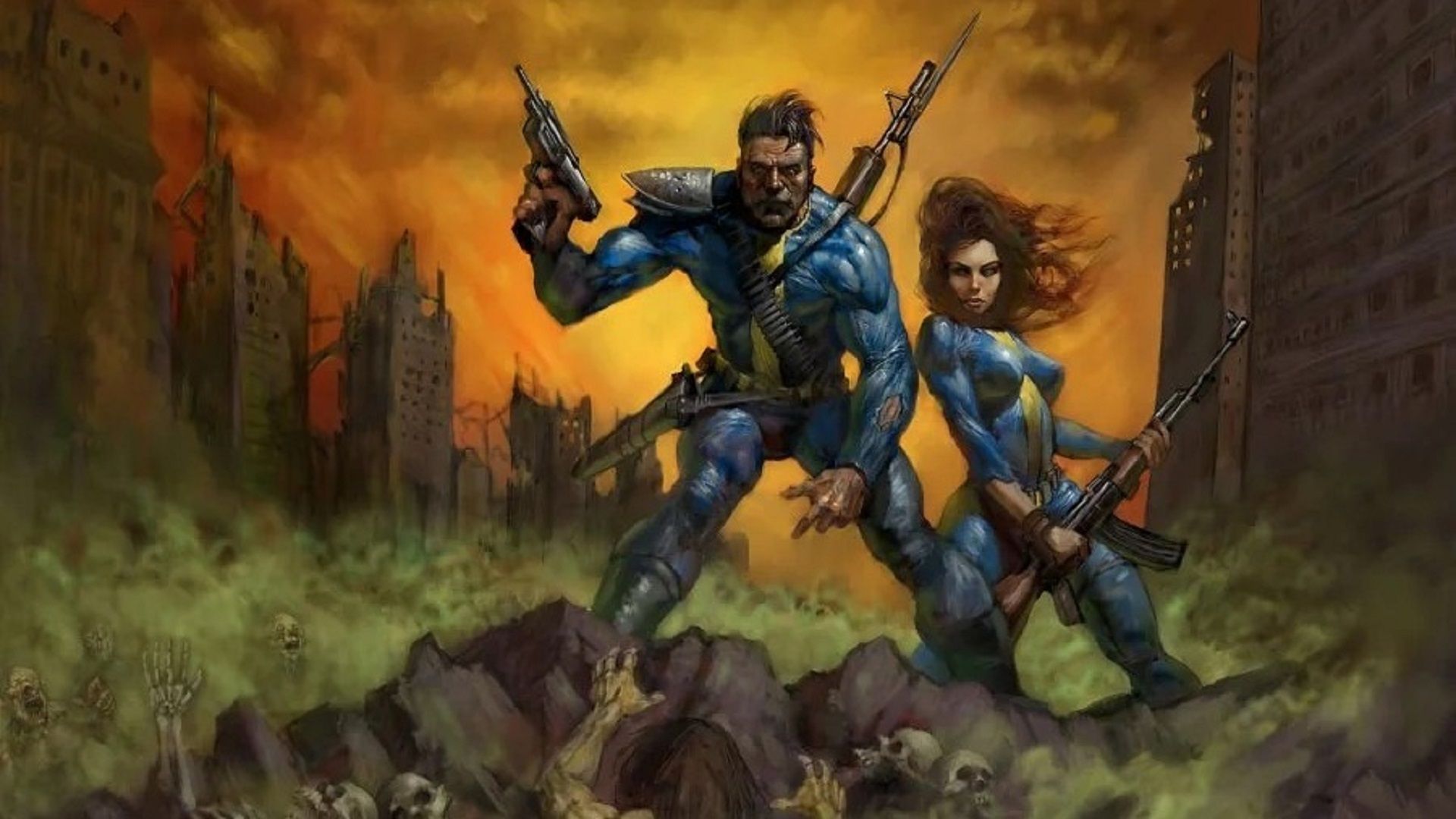
Cain’s work at Interplay eventually led to the development of Fallout (1997). While Fallout was famously not a D&D game—originally intended to use the GURPS (Generic Universal RolePlaying System) license before becoming an original IP—its DNA was rooted in the freedom and consequence Cain experienced in 1979. The S.P.E.C.I.A.L. system (Strength, Perception, Endurance, Charisma, Intelligence, Agility, and Luck) was designed to offer the same multiclassing flexibility and "ask any question" agency that Cain’s first elf character embodied.
Technical Analysis: The Legacy of Multiclassing and Player Agency
Cain’s preference for a Fighter/Cleric/Magic-User character is more than a nostalgic anecdote; it represents a design philosophy that has permeated his entire body of work. In modern game design, this is often referred to as "build diversity." By creating systems that allow players to cross traditional class boundaries, Cain’s games encourage creative problem-solving.
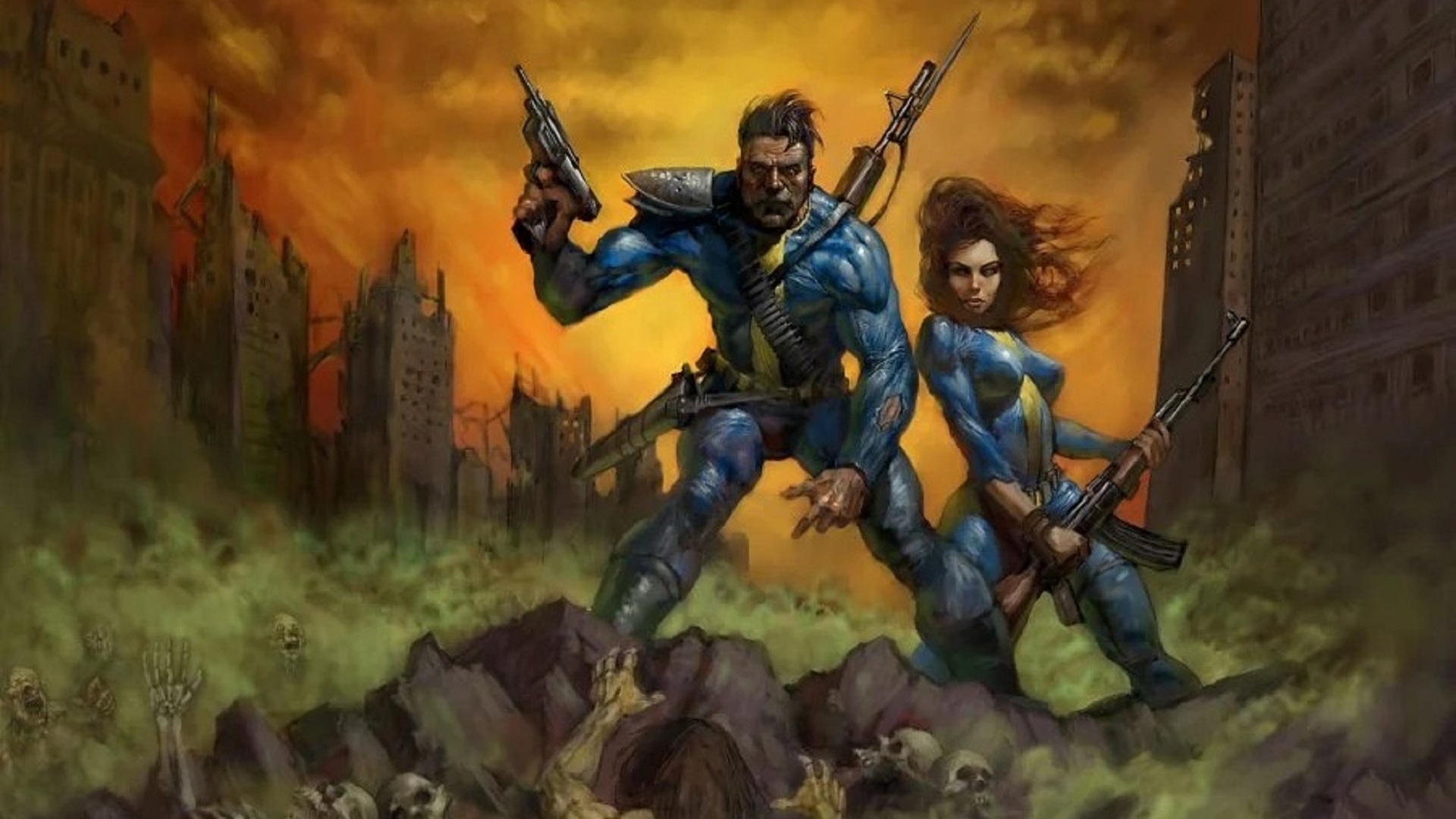
In Fallout, for instance, a player can choose to be a "diplomat" (heavy Charisma/Intelligence), a "bruiser" (heavy Strength/Endurance), or a "thief" (heavy Agility/Perception). However, the most successful players often find a middle ground—a digital version of Cain’s multiclassed elf. This philosophy reached its zenith in Arcanum: Of Steamworks and Magick Obscura, where players had to navigate the literal conflict between technology and magic, a dichotomy that required a deep understanding of the game’s underlying math.
Cain’s critique of modern "computer-handled" RPGs also offers a profound insight into the current state of the genre. He noted that when a computer handles all the rules, the player often loses the need to understand the "why" behind an outcome. By learning D&D from first principles—manually calculating modifiers and rolling physical dice—Cain developed a "systems-first" mindset. This transparency of mechanics is a hallmark of his games, where the player is often given explicit feedback on how their stats influenced a particular success or failure.
The Broader Impact on the CRPG Genre
The "Captain Dave" session of 1979 can be viewed as a foundational moment for the Western RPG. The influence of Cain and his contemporaries at Interplay and later Obsidian Entertainment (where Cain worked on The Outer Worlds) helped define the "CRPG Renaissance."
The implications of this history are significant for several reasons:
- Preservation of Tabletop Values: Cain’s insistence on player agency and narrative branching ensured that the CRPG genre did not simply become a series of "combat simulators" but remained a digital evolution of collaborative storytelling.
- Mechanical Rigor: The complexity of systems like THAC0, while often criticized for being unintuitive, demanded a level of engagement from developers that led to more robust and balanced game worlds.
- Cross-Generational Influence: The fact that naval officers were the ones to introduce Cain to D&D highlights the game’s early appeal to analytical minds and military strategists, debunking the myth that it was solely the province of "basement-dwelling" outcasts.
Chronology of Influence: Tim Cain’s Career Milestones
- 1979: Tim Cain is introduced to D&D by "Captain Dave" and naval officers; purchases his first AD&D books.
- 1980s: Cain refines his understanding of tabletop systems, playing extensively through high school and college.
- 1991: Cain joins Interplay Productions, partially due to his superior knowledge of D&D mechanics.
- 1997: Fallout is released, revolutionizing the post-apocalyptic RPG genre with the S.P.E.C.I.A.L. system.
- 2001: Cain co-founds Troika Games and releases Arcanum, a masterclass in multiclassing and world-building.
- 2003: Cain directs The Temple of Elemental Evil, widely considered one of the most faithful digital recreations of the D&D 3.5 Edition ruleset.
- 2019: The Outer Worlds is released, continuing Cain’s legacy of player-driven narrative and complex character builds.
Conclusion: A Hearty "Thank You" to the Officers of 1979
Tim Cain’s reflection on his 1979 D&D session serves as a reminder of the power of mentorship and the importance of parental support in the development of creative minds. The "Captain Dave" who ran that session likely had no idea that his young pupil would go on to define the digital entertainment landscape for millions of players worldwide.
By sharing this story, Cain acknowledges that his contributions to gaming—the bleak deserts of Fallout, the Victorian magic of Arcanum, and the tactical depth of Temple of Elemental Evil—are all extensions of a single afternoon spent around a table with polyhedral dice and a group of naval officers. As the RPG genre continues to evolve with modern hits like Baldur’s Gate 3, the lineage can be traced back to these early, manual experiences where the only limit was the player’s imagination and the roll of a twenty-sided die.


