The Evolution of First-Person Parkour: A Retrospective Analysis of Mirror’s Edge and Its Lasting Impact on Modern Game Design


Mirror’s Edge, developed by EA DICE and released for the PC in early 2009, stands as one of the most polarizing yet influential titles in the history of first-person action games. Originally conceptualized as a departure from the developer’s military shooter roots in the Battlefield series, the game sought to redefine how players interacted with 3D environments. By shifting the focus from the barrel of a gun to the movement of the human body, Mirror’s Edge introduced a "parkour" or "free-running" mechanic that remains a benchmark for the industry. However, as contemporary reviews and retrospective analyses suggest, the game’s brilliance was often obscured by a fundamental conflict between its innovative movement systems and traditional combat requirements.

The Vision of a Dystopian Utopia
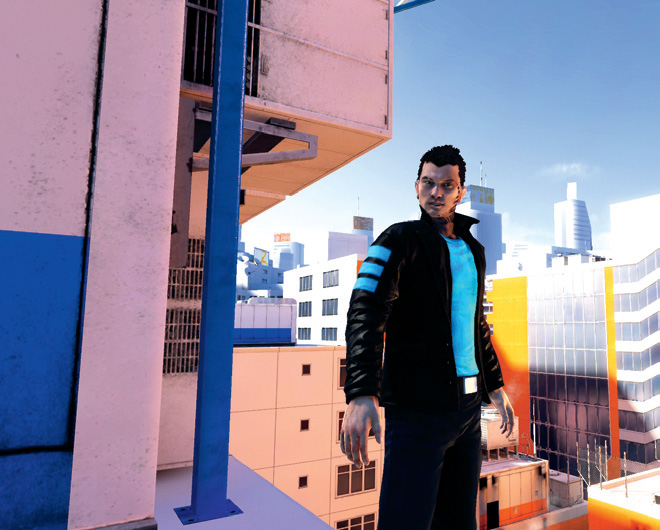
Set in a nameless, near-future city, Mirror’s Edge presents a world that is visually distinct from the "grimy" dystopias common in 21st-century media. The city is a sterile, sun-bleached metropolis characterized by primary colors and minimalist architecture. This aesthetic choice was not merely for style; it served a functional purpose in gameplay. The "City of Glass" was designed to be a playground for the "Runners"—underground couriers who transmit physical messages to bypass the pervasive electronic surveillance of a totalitarian regime.
The protagonist, Faith Connors, embodies this resistance. Unlike the silent or sarcastic protagonists typical of the era, Faith was presented as a grounded, athletic woman whose primary skill was evasion rather than extermination. The narrative centers on Faith’s attempt to clear her sister, a police officer, of a framed murder charge. This setup provides the impetus for a series of high-stakes chases across rooftops, through ventilation shafts, and inside massive corporate atria.

The Mechanics of Momentum and Runner Vision
The core appeal of Mirror’s Edge lies in its "body awareness" philosophy. Unlike most first-person shooters where the player feels like a floating camera with a gun, Mirror’s Edge utilized a sophisticated animation system to simulate the physical presence of the protagonist. Players see Faith’s arms pump as she sprints, her legs tuck during a jump, and her hands scrabble for purchase on a ledge. This immersion was enhanced by a minimalist HUD, forcing players to rely on environmental cues.
To assist with navigation at high speeds, DICE implemented "Runner Vision." This system highlights specific environmental objects—such as pipes, ramps, and doors—in a vibrant red, guiding the player’s flow without resorting to intrusive on-screen markers. When working in harmony, these systems created a "flow state" where players could traverse complex urban landscapes with rhythmic grace. Supporting data from the game’s development cycle indicates that the team spent months refining the "swing and climb" mechanics to ensure that the transition between horizontal and vertical movement felt seamless.
The Combat Contradiction: Friction in the Flow
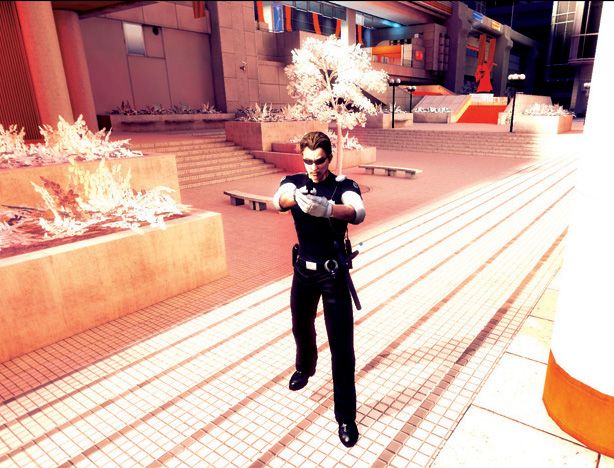
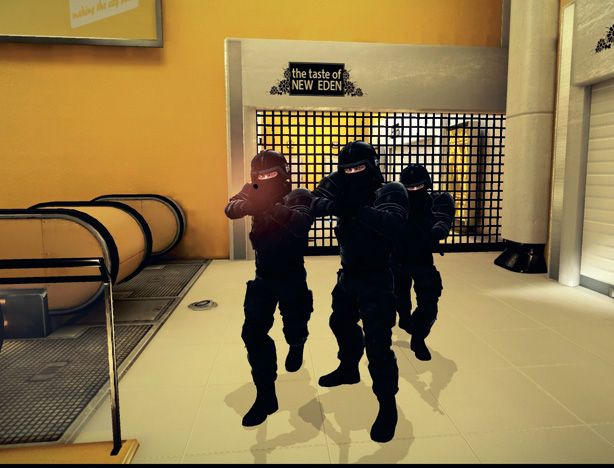
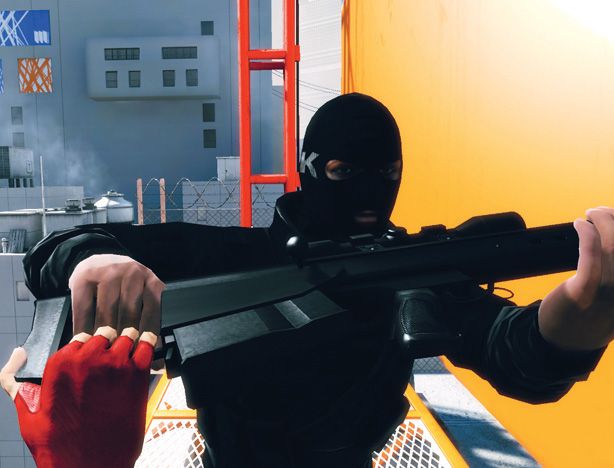
Despite the mastery of its movement systems, Mirror’s Edge faced significant criticism for its combat encounters. The game’s design philosophy encouraged evasion, yet many levels forced players into "choke points" where they had to confront armed police (referred to as "Blues"), SWAT teams, and snipers.
The combat mechanics allowed Faith to disarm opponents through a timed "Reaction Time" (bullet time) mechanic, or to engage in basic melee strikes. However, these encounters often felt like a jarring interruption to the game’s central hook. Carrying a firearm, while possible, actively penalized the player by slowing Faith down and preventing her from performing her most agile moves. Critics at the time, including those from PC Gamer, noted that the game felt most "pure" during its Time Trial modes—segments stripped of enemies where the player’s only opponent was the clock and their own previous best performance.
Technical Milestones and the PC Port
The PC release of Mirror’s Edge in January 2009 arrived several months after the console versions, bringing with it significant technical enhancements. Most notable was the integration of NVIDIA PhysX technology. In an era where environmental interactivity was often static, Mirror’s Edge used PhysX to simulate realistic cloth physics, wind effects, and destructible glass.
Vents would puff out steam that reacted to Faith’s movement, and plastic curtains would billow as she ran through them. These additions were more than just visual flourishes; they added to the "tactile" feel of the world. Even years later, the PC version is cited for its longevity, partially due to NVIDIA’s continued support for legacy PhysX drivers, allowing the game to maintain its visual fidelity on modern RTX hardware.
Chronology of the Mirror’s Edge Franchise
The journey of Mirror’s Edge from a risky experimental title to a cult classic is marked by several key milestones:
- 2007: The game is first revealed, stunning audiences with its bright color palette and first-person parkour footage.
- November 2008: Mirror’s Edge launches on PlayStation 3 and Xbox 360 to positive but cautious reviews.
- January 2009: The PC version is released, featuring enhanced physics and higher resolutions.
- 2009–2010: Despite lower-than-expected initial sales (estimated at around 2.5 million units eventually), the game gains a dedicated following through word-of-mouth and its unique Time Trial community.
- 2013: After years of rumors, EA announces a new Mirror’s Edge project at E3.
- June 2016: Mirror’s Edge Catalyst is released. Designed as a reboot rather than a direct sequel, it introduced an open-world structure but received a mixed reception for its repetitive side content and less focused narrative.
Industry Impact and Legacy
The influence of Mirror’s Edge can be seen in a wide array of modern titles. The concept of "parkour in first-person" became a staple in the industry, directly influencing the development of games like Dying Light, Titanfall, and Ghostrunner.
- Dying Light: Took the free-running concepts of Mirror’s Edge and integrated them into a survival horror framework, proving that parkour could be a viable primary traversal tool in an open world.
- Titanfall: Respawn Entertainment integrated wall-running and double-jumping into the core loop of a competitive shooter, solving the "combat vs. movement" friction that Mirror’s Edge struggled with.
- Cyberpunk 2077: While primarily an RPG, the verticality of Night City and the "body awareness" of its first-person perspective owe a debt to the aesthetic and mechanical groundwork laid by DICE in 2008.
Official Responses and Developer Philosophy
At the time of release, DICE producers frequently spoke about the "sanitized" nature of the game’s world. They intended the city to feel like a "perfect" society on the surface to highlight the "hidden" nature of the Runners. Senior Producer Owen O’Brien famously stated that the goal was to "get the player to stop looking at the gun and start looking at the world."
While the developers acknowledged the difficulty in balancing the combat, they remained steadfast in their commitment to the first-person perspective. This commitment extended to the game’s controversial 2D animated cutscenes. These were outsourced to a third-party studio and were intended to provide a "graphic novel" feel, though many players found them to be a jarring departure from the high-fidelity 3D engine used during gameplay.
Broader Impact and Implications
Mirror’s Edge remains a case study in the risks of "ambitious originality." It proved that there was an appetite for games that moved away from established genre tropes, but it also highlighted the difficulty of marketing a title that didn’t fit neatly into the "shooter" or "platformer" categories.
The game’s failure to become a massive commercial blockbuster led to a decade-long hiatus for the IP, yet its DNA is present in almost every modern game that features a "climb" prompt or a "vault" animation. The "City of Glass" may have been a dystopian vision, but for the gaming industry, it provided a clear window into the future of first-person immersion. As the archive reviews suggest, Mirror’s Edge was a game that "tripped up" occasionally, but it did so while running at a speed that few other developers have dared to match since.