
The Enduring Enigma of Unresolved Narratives: Forty Years Since Benson’s Cliffhanger Finale Left Viewers in Political Limbo


The landscape of television is fraught with the specter of the unresolved narrative, a phenomenon where promising series conclude not with a definitive resolution, but with a tantalizing cliffhanger, only to face the axe of cancellation. While not a daily occurrence, it is a recurring source of frustration for dedicated viewers, transcending genres and eras. Iconic science fiction series such as Sliders notoriously concluded its run in the late 1990s on such an abrupt note, leaving its protagonists perpetually lost in the multiverse. Similarly, the beloved alien sitcom Alf met a strikingly bleak end, with its titular character captured by government agents, an outcome far more traumatic than its lighthearted premise suggested, and one that took years for a (television movie) answer. Even critically acclaimed dramas like the Buffy the Vampire Slayer spin-off, Angel, concluded with its heroes charging into an impossible battle, a cliffhanger that eventually found its resolution in the pages of comic books, underscoring the audience’s persistent demand for closure. This vexing trend is not confined to the annals of classic television; the advent of the streaming age has, in fact, accelerated the rate of cancellations, often leaving entire narrative arcs dangling. Platforms like Netflix alone house multiple examples of beloved shows, including Archive 81, Glow, I Am Not Okay With This, Santa Clarita Diet, and The OA, all of which concluded on significant cliffhangers, their stories tragically cut short.
However, far rarer than a dramatic or science fiction series ending on an unresolved note is the sitcom. Typically, sitcoms, with their often self-contained episode structures, lower production costs, and generally lighter narrative stakes, are perceived as more stable and capable of concluding on their own terms. Iconic examples like Seinfeld, Cheers, and The Big Bang Theory meticulously planned and executed their finales, providing satisfying conclusions for their characters and fanbases. Yet, precisely forty years ago today, on April 19, 1986, a major sitcom defied this expectation, landing squarely in this rare category when Benson concluded its seventh season with a pivotal cliffhanger. The series, which had steadily evolved from a domestic comedy into a political satire, ended on the precipice of a major election result. Unfortunately, the network’s decision to cancel the show shortly thereafter meant that the eagerly anticipated outcome never materialized on screen, leaving viewers aghast and sparking decades of speculation. Despite the on-screen void, details regarding the planned resolution have emerged over the years, offering a glimpse into what might have been.
The Genesis of a Groundbreaking Sitcom: From Butler to Governor’s Aide
Benson originated as a spin-off from the groundbreaking and often controversial satirical soap opera, Soap, which aired from 1977 to 1981. In Soap, Robert Guillaume introduced audiences to Benson DuBois, the sarcastic, intelligent, and highly capable butler to the wealthy but dysfunctional Tate family. Benson quickly became a fan favorite, admired for his sharp wit, unwavering common sense, and the dignity he brought to a role that could have easily been a stereotype. His popularity was undeniable, leading ABC to greenlight a spin-off centered entirely on his character.
The new series, Benson, premiered in September 1979. It transplanted Benson from the chaotic Tate household to the Governor’s Mansion, where he served as the head of household for the widowed and often bumbling Governor Eugene X. Gatling (played by James Noble), who also had a teenage daughter, Katie (Missy Gold). While still rooted in domestic comedy, the setting provided Benson with a unique platform to explore political themes and social commentary, gradually shifting its focus over its impressive seven-season run. Robert Guillaume’s portrayal of Benson DuBois was central to the show’s success, earning him an Emmy Award for Outstanding Lead Actor in a Comedy Series in 1985, a testament to his nuanced performance and the character’s profound resonance with audiences.
Robert Guillaume and the Evolving Role of Benson DuBois
Robert Guillaume, a distinguished actor with a background in Broadway and a commanding presence, imbued Benson DuBois with a gravitas and intelligence that transcended typical sitcom archetypes. Benson was not merely a servant; he was an astute observer, a shrewd strategist, and often the moral compass in a world populated by well-meaning but often out-of-touch politicians and staff. His journey on the show was a remarkable progression of upward mobility and professional aspiration, reflecting changing societal attitudes and providing a powerful narrative of a Black man rising through the ranks of American politics.
Throughout the series, Benson’s responsibilities expanded significantly. He began as the head of the Governor’s household, managing domestic affairs and frequently defusing conflicts among the staff, including the often-antagonistic German chef, Gretchen Kraus (Inga Swenson). However, his innate intelligence and political acumen quickly became indispensable to Governor Gatling, drawing him into more substantial roles within the state administration. He served as the Governor’s budget director, then as his chief of staff, and eventually, in a groundbreaking development, he was elected Lieutenant Governor, serving directly alongside his former boss. This trajectory was a deliberate and pioneering narrative choice, showcasing Benson’s capabilities and challenging traditional notions of power and influence on network television.
The show itself often demonstrated a remarkable versatility in its storytelling. Episodes could swing from lighthearted, classic sitcom fare—such as Benson helping a street gang find purpose or dealing with the Governor’s eccentricities (including a memorable episode where Gatling believes Benson was abducted by a UFO during a golfing outing)—to more serious and politically charged narratives. These included episodes delving into state budget crises, legislative processes, and ethical dilemmas, occasionally touching upon themes of racial prejudice and the complexities of public service. This unique blend allowed Benson to tackle substantial issues while retaining its comedic core, a balancing act few sitcoms dared to attempt, let alone sustain for seven years.
The Road to the Governorship: Plot Developments Leading to the Finale
As Benson entered its final seasons, the political aspirations of its titular character became the central driving force of the narrative. Having already served as Lieutenant Governor, the logical next step for Benson DuBois was to seek the state’s highest office. The stage was set for a dramatic political contest in the seventh and final season.

The premise for Benson’s gubernatorial bid was initially straightforward: Governor Gatling was term-limited and therefore unable to seek re-election. This opened the door for Benson, who, having gained considerable experience and public trust, announced his candidacy for Governor. His campaign gained momentum, and the narrative built towards a seemingly inevitable victory, representing the culmination of Benson’s remarkable journey from domestic staff to a prominent political figure.
However, in a last-minute twist characteristic of the show’s knack for unexpected political machinations, a loophole was discovered. It was revealed that if Governor Gatling ran as a third-party candidate, he would technically be eligible to seek re-election, circumventing the term limits. Driven by a renewed sense of purpose and perhaps a touch of his characteristic naivete, Gatling decided to enter the race, setting up an unprecedented and emotionally charged confrontation. This development pitted Benson against his long-time friend and former employer, creating a deep personal and professional conflict that tested the bonds of their relationship. The final episodes of the series masterfully explored the intricacies of this political rivalry, the strains it placed on their friendship, and the ethical dilemmas inherent in campaigning against someone you deeply respect.
April 19, 1986: A Nation Left in Suspense
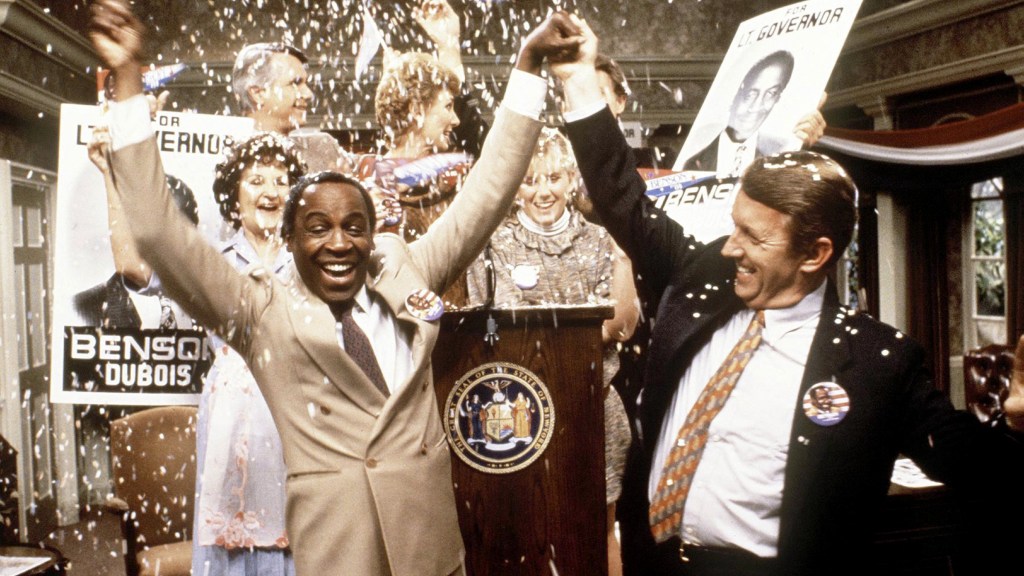
The series finale of Benson, titled "And the Winner Is…," aired on April 19, 1986. The episode built to a fever pitch as Benson and Governor Gatling, having managed to put their political differences aside and reaffirm their friendship, awaited the election results together. The tension was palpable, and viewers across the nation were poised to witness the culmination of seven seasons of character development and political ambition.
However, true to the episode’s teasing title, the winner was never actually announced. The show concluded precisely at the moment when the final tally was about to be revealed, cutting to black and leaving the outcome entirely ambiguous. This abrupt ending, a dramatic cliffhanger typically reserved for season finales of high-stakes dramas, was an astonishing choice for a sitcom and quickly became a source of widespread frustration among its loyal audience. The expectation was that the series would be renewed, allowing the subsequent season to open with the resolution of this pivotal election. Unfortunately, ABC had other plans. The series was cancelled shortly after the finale aired, leaving the question of who won the governorship—Benson or Gatling—forever unanswered within the show’s canon.
Behind the Scenes: Unraveling the Post-Cancellation Plans
The lack of a definitive resolution on screen naturally led to years of speculation and curiosity regarding the show creators’ intentions. Over time, two primary, though somewhat conflicting, accounts have emerged from key figures involved in the production of Benson.
In a 2007 interview with TV Series Finale, Benson showrunner Bob Fraser shed light on the network’s role and the creative team’s vision for the future. Fraser confirmed that the decision to end Season 7 on a cliffhanger was a deliberate choice mandated by ABC, likely in anticipation of a potential eighth season. He then detailed an ambitious long-term plan for Benson DuBois. According to Fraser, Governor Gatling would have ultimately won re-election, but by an incredibly slim margin. The twist, however, would have been Gatling appointing Benson to finish the term of the state’s junior senator, who would unexpectedly die in office. Fraser further elaborated on a fantastical progression: through a series of other unforeseen accidents and mishaps, the line of succession would continually break down, ultimately leading to Benson DuBois becoming the President of the United States. While this vision offers a grand, albeit perhaps overly convenient, path for Benson, it’s worth noting that TV Series Finale‘s report did not include direct quotes from Fraser from this specific interview, making its precise accuracy somewhat difficult to independently verify.
A year later, in 2008, Gary Brown, who directed the "And the Winner Is…" finale, offered a different, more grounded perspective in an interview with Salon (published in 2014, but referencing his 2008 statements). Brown revealed that the production team, anticipating different outcomes or network decisions, had actually filmed three distinct endings for the Season 7 finale. One version showed Benson winning the election, another depicted Gatling securing re-election, and a third, which Brown described as "whimsical," resulted in a tie between the two candidates. Brown indicated that this third option was seriously considered for broadcast.
Crucially, Brown’s perspective on the ultimate fate of Benson diverged from Fraser’s presidential ambition. Brown believed that regardless of the immediate election outcome, Benson would have eventually become Governor. He stated that Robert Guillaume himself "wanted" that for his character, suggesting a creative consensus around this particular advancement. Brown also reflected on the show’s resilience, noting that despite being frequently moved around the schedule across its seven seasons, Benson consistently retained its audience. He posited that the resolution of the cliffhanger, which he firmly believed would have seen Benson ascend to the governorship, "might well have put gas in the tank for seasons to come… It would have given the show new life." His statements underscore the frustrating irony that the very narrative device intended to propel the series forward ultimately became its unresolved epitaph.
The Economics of Television: Why Shows Get Cancelled
The cancellation of Benson after seven successful seasons, particularly on a cliffhanger, highlights the often-brutal economic realities of network television in the 1980s. While Benson enjoyed solid ratings for much of its run, several factors typically contribute to the demise of long-running series.
Firstly, production costs tend to escalate significantly with each passing season. As actors’ contracts are renegotiated, their salaries increase, often substantially, especially for lead actors like Robert Guillaume, who had become a respected star. Crew salaries, set maintenance, and other operational expenses also rise over time. For a network like ABC, which was constantly balancing its budget and seeking new, potentially cheaper hits, a show reaching its seventh season represented a considerable financial outlay.
Secondly, audience demographics and ratings, while perhaps still strong in raw numbers, might have shown subtle shifts that concerned advertisers. Networks are not just interested in the total number of viewers, but also in the demographics (age, income, lifestyle) that advertisers covet. If a show’s audience was perceived to be aging or less appealing to key advertising segments, its value to the network could diminish, regardless of overall viewership.
Finally, the desire for new programming played a significant role. Networks are in a perpetual cycle of developing and launching new shows, hoping to find the next big hit. Cancelling an established, expensive show frees up a slot on the schedule and significant budget resources that can be reinvested in fresh concepts. In 1986, the television landscape was intensely competitive, with only three major networks (ABC, CBS, NBC) vying for prime-time dominance, making strategic scheduling and cost management paramount. While Benson was a beloved institution, its age and rising costs likely made it a prime candidate for cancellation in favor of newer, more cost-effective ventures.
The Enduring Impact of Unresolved Narratives
The experience of Benson‘s cancellation on a cliffhanger is a poignant reminder of the implicit contract between creators and audiences. Viewers invest their time, emotional energy, and loyalty into a series, expecting a coherent narrative arc and, ultimately, a sense of closure. When a show ends abruptly, especially with a major plot point hanging, it can create a lasting sense of frustration and disappointment. This phenomenon impacts audience trust, potentially making viewers more hesitant to invest deeply in new series for fear of similar abandonment.
For Benson, the political cliffhanger was particularly impactful because it left the central character’s ultimate destiny unfulfilled. Robert Guillaume’s portrayal of Benson DuBois was a trailblazing one, presenting a dignified, intelligent Black man ascending to positions of significant power. To have that journey cut short at its most critical juncture felt like a disservice not only to the character but also to the narrative’s underlying message of meritocracy and ambition. The unresolved ending has ensured Benson‘s place in television history as a prime example of network decisions overriding creative continuity, fueling decades of discussion among fans and television historians alike.
Modern Echoes: Cliffhangers in the Streaming Era
While Benson‘s cliffhanger cancellation occurred forty years ago in a vastly different media landscape, the phenomenon persists and has arguably become more prevalent in the streaming era. The shift from traditional broadcast schedules to on-demand content has altered viewership metrics and cancellation criteria. Streaming platforms often prioritize subscriber acquisition and retention over consistent week-to-week ratings. Shows are often judged by completion rates within a short window, social media buzz, and internal algorithms that remain opaque to the public.
This new paradigm has led to rapid-fire cancellations, often after just one or two seasons, even for critically acclaimed shows with dedicated fanbases. The examples from Netflix – Archive 81, Glow, I Am Not Okay With This, Santa Clarita Diet, The OA – illustrate this trend vividly. These shows, much like Benson, ended on significant narrative hooks, leaving their stories incomplete. The difference is that while Benson operated within a system where seven seasons was a substantial run, many modern streaming cancellations occur before a series even has a chance to fully develop its narrative potential. The shared legacy is the frustration of audiences who have invested in these stories, only to be left without a resolution, a testament to the enduring, universal desire for narrative closure.
Conclusion: A Timeless Testament to Television’s Unpredictability
Forty years after its dramatic, unresolved finale, Benson remains a compelling case study in the unpredictable nature of television production and the enduring impact of cliffhanger cancellations. It stands as a testament to the pioneering spirit of Robert Guillaume and the creative team who crafted a sitcom that dared to blend sharp political satire with heartfelt character development. The show’s journey from a domestic comedy to a political arena, culminating in a gubernatorial race, was a remarkable arc, sadly cut short at its most pivotal moment.
While the intended resolutions from showrunner Bob Fraser and director Gary Brown offer tantalizing glimpses into what might have been—a presidential ascent or a gubernatorial triumph—they ultimately serve as posthumous footnotes to a story that, on screen, remains unfinished. The Benson cliffhanger, much like those of Sliders or Alf, continues to resonate, reminding us that even in an era of meticulously crafted finales, the economic realities and strategic decisions of television networks can abruptly alter a narrative’s course, leaving audiences forever pondering the question: "And the winner is…?" It underscores a timeless truth about television: for every satisfying conclusion, there’s often an untold story, a legacy of "what ifs" that continue to fascinate and frustrate dedicated viewers for decades to come.


