
Street Fighter The Trailer Unleashes a Technicolor Blast of Nostalgia and Fan Service


The recently unveiled trailer for the upcoming Street Fighter film has ignited a fervent buzz among fans, artfully bringing the iconic Capcom video game franchise to vibrant, technicolor life. Echoing the distinct retro aesthetic of its 1993 origins, the trailer is densely packed with Easter eggs and references, meticulously weaving in elements from the game’s rich history and even nodding to past animated adaptations. This comprehensive breakdown aims to capture every discernible nod, providing timestamps for easy reference and context for each significant inclusion.

The trailer opens with a subtle yet impactful introduction to the formidable presence of M. Bison. At the 0:08 mark, a statue of the notorious Shadaloo leader is revealed, with Shadaloo banners ominously decorating the background. This initial glimpse serves as a potent foreshadowing of Bison’s central role in the narrative, hinting that his influence extends far beyond mere iconography within the film’s world. The statue itself is a direct visual callback to the imposing presence Bison commanded in the games, particularly in his classic incarnations.
Transitioning to the martial arts prowess of the fighters, the trailer offers a look at Dhalsim at 0:15. The mystical yogi is depicted in what appears to be a training sequence, reminiscent of his signature stages in Street Fighter II, where background monks often provided a serene yet visually rich backdrop. This scene allows fans to appreciate Dhalsim’s distinctive appearance, rendered with a fidelity that aims to capture his spiritual and physical discipline as envisioned in the beloved sequel.
A cornerstone of the original Street Fighter II roster, Guile makes his appearance at 0:18, instantly recognizable with his signature flat-top haircut, green tank top, American flag tattoo, and dog tags. This meticulous attention to detail in recreating Guile’s iconic look ensures that the character feels authentically plucked from the game’s digital arena. His portrayal, described as "perfectly ridiculous," captures the unique blend of stoic military bearing and over-the-top character design that defined the era.
At 0:20, Cammy White makes her debut, sporting her Street Fighter Alpha II attire, affectionately known by fans as the "Killer Bee" outfit. This choice of costume immediately signals a deep cut for dedicated followers of the franchise, showcasing a willingness to draw from various eras of Street Fighter lore. The inclusion of this specific look emphasizes the film’s commitment to fan service, acknowledging the diverse visual history of the characters.

The trailer also introduces characters who played supporting roles in the original games. At 0:22, NPC Joe, also known as "Superstar," is given a visual presence. Joe was a memorable figure from the original Street Fighter‘s intro screen, and his inclusion here suggests that the film is drawing inspiration from the foundational elements of the series, not just its main combatants.
The masked matador, Vega, enters the fray at 0:23. His appearance in a slightly more subdued version of his Street Fighter II look highlights the film’s approach to adapting characters. While retaining his distinctive mask and clawed glove, the visual design seems to balance the theatricality of the game with a more grounded cinematic presentation.

Adding a touch of modern comedic flair, the trailer features Eric Andre as Don Sauvage at 0:24. Sauvage, a ring announcer character who debuted in Street Fighter V, brings a new layer of personality to the film. His design is noted to be inspired by musician Bootsy Collins, a nod that further enriches the character’s visual identity and connects him to broader cultural influences.
A pivotal early combat sequence is shown at 0:26, featuring Ken Masters delivering an "Inazuma kick" to El Fuerte. El Fuerte, a character introduced in Street Fighter IV, is a high-speed, acrobatic lucha libre wrestler and aspiring chef. His inclusion demonstrates the film’s ambition to incorporate characters from multiple generations of the Street Fighter saga, bridging the gap between classic and modern iterations of the franchise.

The trailer masterfully incorporates signature sound effects from the games, amplifying the nostalgic impact. At 0:29, after Ken secures a victory and the referee declares "You win!", the iconic "Perfect" sound effect, synonymous with flawless victories in Street Fighter II, is heard. This auditory callback is a powerful reminder of the game’s enduring legacy and its impact on players’ memories.
At 0:30, the flamboyant Dan Hibiki makes an appearance, resplendent in a pink suit that directly references his character’s signature pink gi from the games. Dan’s inclusion, known for his exaggerated persona and often comical fighting style, adds a distinct flavor of humor and fan-service to the trailer, promising a character that will likely be a source of entertainment for those familiar with his antics.

A strong visual cue to the era in which Street Fighter exploded in popularity is present at 0:34 with the prominent display of the retro MTV logo. This deliberate inclusion of the iconic 90s music television channel firmly anchors the film in Street Fighter‘s heyday, evoking the cultural zeitgeist when the game was a dominant force in arcades and popular culture worldwide.
The trailer also pays homage to the game’s unique bonus stages. At 0:37, Ken is shown literally punching a car, a direct visual reference to the destructive bonus rounds found between levels in the Street Fighter series, where players could earn extra points by demolishing vehicles.

Balrog, the ferocious boxer, is showcased in full Street Fighter II mode at 0:42. Previously glimpsed, this scene puts him in a boxing match against Ken, highlighting his raw power and aggressive fighting style, which are central to his character in the games.
A clever adaptation of game mechanics is evident at 0:47, where Ryu appears to execute a move on Ken that could be interpreted as a live-action "wall bounce." This technique, where opponents are repeatedly slammed against the edge of the screen to prolong combos, demonstrates the film’s effort to translate intricate gameplay elements into visually dynamic cinematic moments.
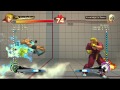
Ken’s signature "Hell Wheel" back-throw move is performed at 0:49, further emphasizing the film’s commitment to showcasing the distinct fighting styles of each character. This move, a staple of Ken’s arsenal, is rendered with impactful choreography.
A notable cameo appears at 1:02 with the Philippou brothers. These Australian twin filmmakers, who were initially slated to direct the project, are shown participating in a street fight scene amidst cheering onlookers. Their brief appearance serves as an interesting meta-commentary on the film’s production history and the creative journey it has undertaken.

The sheer power of Zangief, the "Red Cyclone," is put on full display at 1:07 as he is shown dragging a tractor. This Herculean feat perfectly encapsulates Zangief’s persona as a physically imposing wrestler whose strength is legendary within the Street Fighter universe.
The intense rivalry between Ken and Ryu is explored between 1:26 and 1:36, with Ken attempting a series of signature moves, including the Dragonlash kick, Oosoto Mawashi Geri, and Jinrai kick. During this sequence, the trailer incorporates authentic hit and kick sound effects, as well as a distinctive laughing sound effect, directly lifted from the games, further immersing the audience in the familiar audio landscape of Street Fighter.
The enigmatic M. Bison finally makes a more substantial appearance at 1:43, though initially seen only from behind. This reveal builds anticipation for his confrontation with the heroes, reinforcing his status as the primary antagonist.
A direct and somewhat cheeky reference to the Street Fighter II: The Animated Movie is made at 1:49 with Chun-Li entering a shower. This scene, while potentially surprising to newcomers, is a clear nod to a memorable, albeit adult-oriented, moment from the beloved animated film, acknowledging a piece of Street Fighter‘s multimedia history.

The introduction of the Pao Pao Café at 1:50, a burlesque club, offers a visual parallel to the Pao Pao Café stage found in the games. While not a direct recreation, the thematic similarity suggests an intentional connection, hinting at the film’s exploration of various iconic game locales.
Guile’s signature Flash Kick is showcased at 1:56 as he unleashes it against Vega. This iconic aerial attack is a critical part of Guile’s moveset, and its cinematic execution promises to be a visual highlight.

Chun-Li’s legendary physique and iconic outfit are finally revealed at 1:59. The trailer includes a playful jab at her famously powerful thighs, a recurring element that has been a point of fan fascination since the games’ inception. This moment marks the first clear look at Chun-Li in her instantly recognizable attire.
The visual spectacle continues at 2:04 with Chun-Li performing her "Spinning Bird Kick" on Vega, followed by her "Hazanshu" move against Juli. The inclusion of Juli, a brainwashed assassin and member of Bison’s Doll unit, hints at the presence of the wider Street Fighter cast and the shadowy organizations that drive the narrative.

At 2:12, Zangief delivers a devastating "Russian Suplex" to Ken. The sheer force of the move, combined with Zangief’s grim determination, underscores the brutal physicality of the film’s combat.
The formidable sumo wrestler E. Honda makes his appearance at 2:16, demonstrating his signature "Hundred Hand Slap" technique. This rapid barrage of strikes is a defining characteristic of Honda’s fighting style, and its cinematic rendition is sure to be a crowd-pleaser.

Chun-Li unleashes her "Lightning Kick" at 2:19, a flurry of swift kicks that showcases her agility and offensive capabilities. This move, employed against Vega, further highlights the dynamic combat sequences featured in the trailer.
The full might of M. Bison is finally unveiled at 2:21, offering a clear, unobstructed view of his classic Street Fighter II design. This moment serves as a dramatic reveal of the film’s central antagonist.

The trailer then introduces Akuma, the demon-like warrior and master of the Ansatsuken style, at 2:23. He is depicted performing "Empyrean’s End" on Ryu, a move that signifies Akuma’s immense power and his role as a formidable force within the Street Fighter universe. Akuma’s presence as the younger brother of Gouken, Ryu and Ken’s master, adds depth to the narrative’s familial and martial arts lineage.
The dynamic between Ken and Dhalsim is briefly shown at 2:29, with Ken employing his devastating "Shoryuken" uppercut. This iconic move is a hallmark of Ken’s repertoire, and its inclusion signifies the film’s commitment to showcasing the signature attacks of its characters. Immediately following this, Dhalsim demonstrates his unique ability to stretch his limbs, grabbing and throwing Ken, a visual representation of his extraordinary powers.

A fleeting but significant glimpse of M. Bison’s "Psycho Power" is presented at 2:30. Within the Street Fighter lore, Psycho Power is the dark counterpart to Soul Power, representing a malevolent energy source that fuels Bison’s destructive capabilities.
At 2:31, the mutated, green-skinned Blanka bursts onto the scene, faithfully rendered in his Street Fighter II appearance. His wild, electric-charged demeanor, reminiscent of the MCU’s Hulk, suggests that the film will embrace the more monstrous and primal aspects of the character.

The ultimate offensive technique, Ryu’s "Hadouken," is unleashed at 2:41, as he fires the iconic energy blast at Ken. This is a definitive moment for fans, confirming the presence of one of the most recognizable special moves in video game history.
The trailer concludes with a final auditory callback at 2:48. Over the release date card, the iconic "Perfect!" sound effect from the games is played once more, cementing the trailer’s nostalgic impact and reinforcing the film’s dedication to honoring the Street Fighter legacy. The film is slated for a theatrical release on October 16th, promising a cinematic event packed with decades of fan-favorite characters, moves, and sound effects. The sheer volume of meticulously placed Easter eggs suggests that Street Fighter aims to be a definitive love letter to the franchise, appealing to both long-time aficionados and newcomers alike.


