Redguard Unity Project Reveals Hidden Secret in The Elder Scrolls Adventures After Nearly Three Decades of Obscurity


The legacy of Bethesda Softworks is often defined by the sprawling, open-world epics of the modern Elder Scrolls era, yet a significant portion of the franchise’s DNA is rooted in the experimental titles of the late 1990s. Among these, The Elder Scrolls Adventures: Redguard stands as a unique, albeit historically troubled, entry. Released in 1998, the game departed from the series’ traditional role-playing roots to offer a linear, third-person action-adventure experience. For twenty-eight years, Redguard has held onto its mysteries, shielded by a proprietary engine and the technical limitations of the MS-DOS era. However, a dedicated community effort known as the Redguard Unity project has recently unearthed a secret that has remained hidden from the general public since the game’s initial launch.
The discovery was brought to light by the Ultimate Elder Scrolls Portal, a prominent repository for franchise lore and technical history. According to the group, the ongoing work to port Redguard into the Unity engine has allowed researchers to peel back layers of code that were previously inaccessible or obscured by the game’s notoriously unstable performance. This revelation marks one of the longest-running secrets in the history of the franchise, highlighting the importance of fan-led preservation efforts in an industry where legacy software often faces the threat of digital obsolescence.
The Historical Context of The Elder Scrolls Adventures: Redguard
To understand the significance of this discovery, one must examine the state of Bethesda Softworks in the late 1990s. Following the massive, procedurally generated success of The Elder Scrolls II: Daggerfall in 1996, the studio found itself at a crossroads. Under the creative direction of Todd Howard, Bethesda sought to diversify the franchise. Redguard was intended to be the first in a series of "Adventures" that would focus on specific characters and tighter narratives within the world of Tamriel.
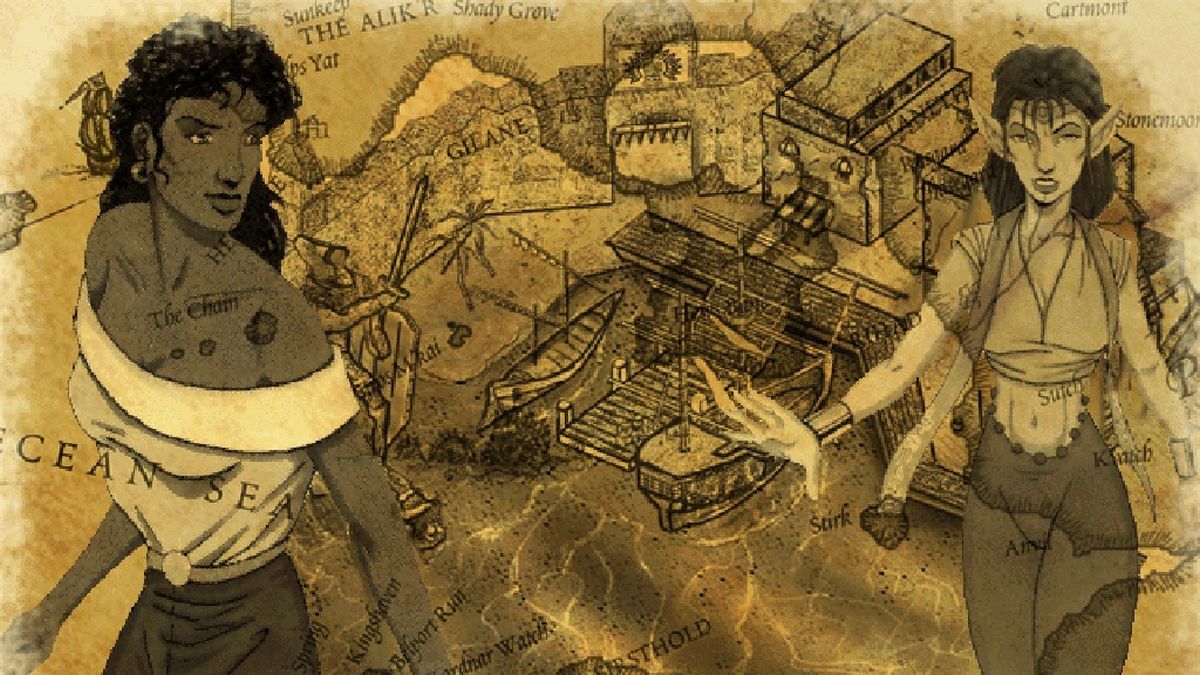
Set in the Second Era, approximately 400 years before the events of The Elder Scrolls V: Skyrim, Redguard follows the story of Cyrus, a mercenary who returns to his homeland of Hammerfell to find his missing sister, Iszara. Unlike the customizable protagonists of Arena or Daggerfall, Cyrus was a fully voiced, pre-defined character. The game introduced many elements that would become staples of the series’ lore, including the first "Pocket Guide to the Empire," a physical booklet included with the game that laid the groundwork for the modern understanding of Tamrielic geography and politics.
Despite its narrative importance, Redguard was a commercial struggle. It was built using the XnGine, an internal Bethesda technology that powered titles like Battlespire and Terminator: SkyNET. While cutting-edge at the time, the XnGine was notoriously difficult to optimize. By the time Redguard reached consumers, the industry was rapidly shifting toward Windows-based gaming and dedicated 3D acceleration, leaving the DOS-centric Redguard feeling like a relic of a passing era.
The Redguard Unity Project: A Technical Resurrection
The catalyst for the recent discovery is the Redguard Unity project, an ambitious fan undertaking designed to modernize the 1998 classic. For decades, playing Redguard on modern hardware has been an exercise in frustration. Even with the use of emulators like DOSBox, the game is prone to frequent crashes, graphical glitches, and inconsistent frame rates. The controls, modeled after early third-person titles like Tomb Raider, have aged poorly, making the platforming and combat sections difficult for contemporary players to navigate.
The Redguard Unity project aims to solve these issues by re-implementing the game’s assets and logic within the Unity engine. This process involves more than just simple emulation; it requires reverse-engineering the original game’s data structures and scripts. By doing so, the developers are able to provide:
- System Stability: Eliminating the crashes associated with the XnGine’s memory management.
- Modern Controls: Implementing a "mouse-look" system and remapping inputs to match modern action-adventure standards.
- Enhanced Visuals: Supporting high resolutions, widescreen displays, and improved texture filtering without compromising the original art style.
- Modding Support: Opening the game’s architecture to allow for community-created content, something that was virtually impossible with the original release.
It was during this deep dive into the game’s internal mechanics that the project team identified the "28-year secret." While the specific technical nature of the secret involves previously unreferenced code pathways, the discovery serves as a testament to the complexity of Bethesda’s early world-building.
Chronology of Elder Scrolls Technical Milestones
The discovery in Redguard is part of a broader timeline of technical evolution within Bethesda Softworks. Understanding this chronology illustrates why secrets in these older games often take decades to surface:
- 1994: The Elder Scrolls: Arena is released, utilizing a 2.5D engine capable of rendering massive, albeit repetitive, landscapes.
- 1996: The Elder Scrolls II: Daggerfall introduces a true 3D world (though using sprites for objects and NPCs) and a sophisticated procedural generation system.
- 1997: An Elder Scrolls Legend: Battlespire is released, focusing on multiplayer and a more linear dungeon-crawling experience.
- 1998: The Elder Scrolls Adventures: Redguard is released. It is the final major Bethesda title to rely on the MS-DOS platform.
- 2002: The Elder Scrolls III: Morrowind moves the franchise to the Gamebryo engine on Windows and Xbox, marking the beginning of the "modern" era.
- 2020s: Community projects like Daggerfall Unity and Redguard Unity begin to successfully port the "classic" era games to modern engines, leading to a resurgence in technical discoveries.
The Nature of the Discovery and Its Implications
The secret revealed by the Redguard Unity team pertains to hidden developer interactions and environmental triggers that were thought to be mere flavor text or non-functional assets. In the original 1998 release, the limitations of the XnGine meant that many scripted events were easily broken or bypassed by players. By stabilizing the environment in Unity, the team found that certain NPC behaviors and world-state changes were intended to be much more reactive than what players experienced in the 90s.
Furthermore, the team uncovered hidden debug menus and developer messages buried within the game’s executable. These messages, often left by programmers as "easter eggs" or notes to colleagues, provide a rare glimpse into the development culture of Bethesda during a period when the company’s future was uncertain. For historians of the medium, these fragments are invaluable, offering context on the design philosophies that eventually led to the creation of Morrowind and Oblivion.
Reactions from the Community and Industry Analysts
The reaction to the discovery has been one of widespread fascination within the Elder Scrolls community. Long-time fans have praised the Redguard Unity team for their diligence. "Redguard has always been the ‘black sheep’ of the family," noted one community member on the Ultimate Elder Scrolls Portal forums. "To see it finally getting the forensic treatment it deserves is incredible. There is so much lore in this game that people skipped because they couldn’t get it to run for more than ten minutes."
Industry analysts suggest that the success of projects like Redguard Unity and Daggerfall Unity could influence how major publishers approach their back catalogs. While Bethesda has officially re-released many of its older titles on platforms like Steam and GOG, these versions are often just the original files bundled with a pre-configured version of DOSBox. The depth of discovery possible through a full engine port suggests that there is significant value in "remastering" the underlying logic of classic games, rather than just their visual presentation.
Preservation as a Catalyst for Discovery
The revelation of a 28-year-old secret underscores a critical point in the debate over video game preservation. As hardware evolves, the software of the past becomes increasingly difficult to access. When a game is "locked" behind an obsolete operating system or a proprietary engine, its secrets are effectively buried.
The Redguard Unity project represents a form of "digital archaeology." By translating the language of the 1990s into a modern framework, the team has not only made the game playable but has also preserved the intent of the original creators. This discovery proves that even in games that have been analyzed for decades, there is always more to find if the tools used for analysis are sufficiently advanced.
Looking Ahead: The Future of Hammerfell
The timing of this discovery is also relevant to the future of the Elder Scrolls franchise. With rumors persistently suggesting that the upcoming The Elder Scrolls VI will be set in Hammerfell, the province featured in Redguard, interest in Cyrus’s adventure has reached an all-time high. The lore established in 1998—the culture of the Crowns and Forebears, the architecture of Stros M’Kai, and the history of the Ra Gada—will likely serve as the foundation for the next mainline entry.
As the Redguard Unity project nears completion, the community expects more secrets to emerge. The team has indicated that they are currently working on optimizing the game’s complex AI routines, which may reveal even more hidden interactions within the bustling streets of Stros M’Kai. For now, the uncovering of this nearly 30-year-old secret serves as a reminder that in the world of Tamriel, the past is never truly gone—it is simply waiting for the right technology to bring it back to light.