Philips Unveils Evnia 27M2D5901A 5K Dual-Mode Gaming Monitor Featuring 330Hz Refresh Rate and Ambilight Integration


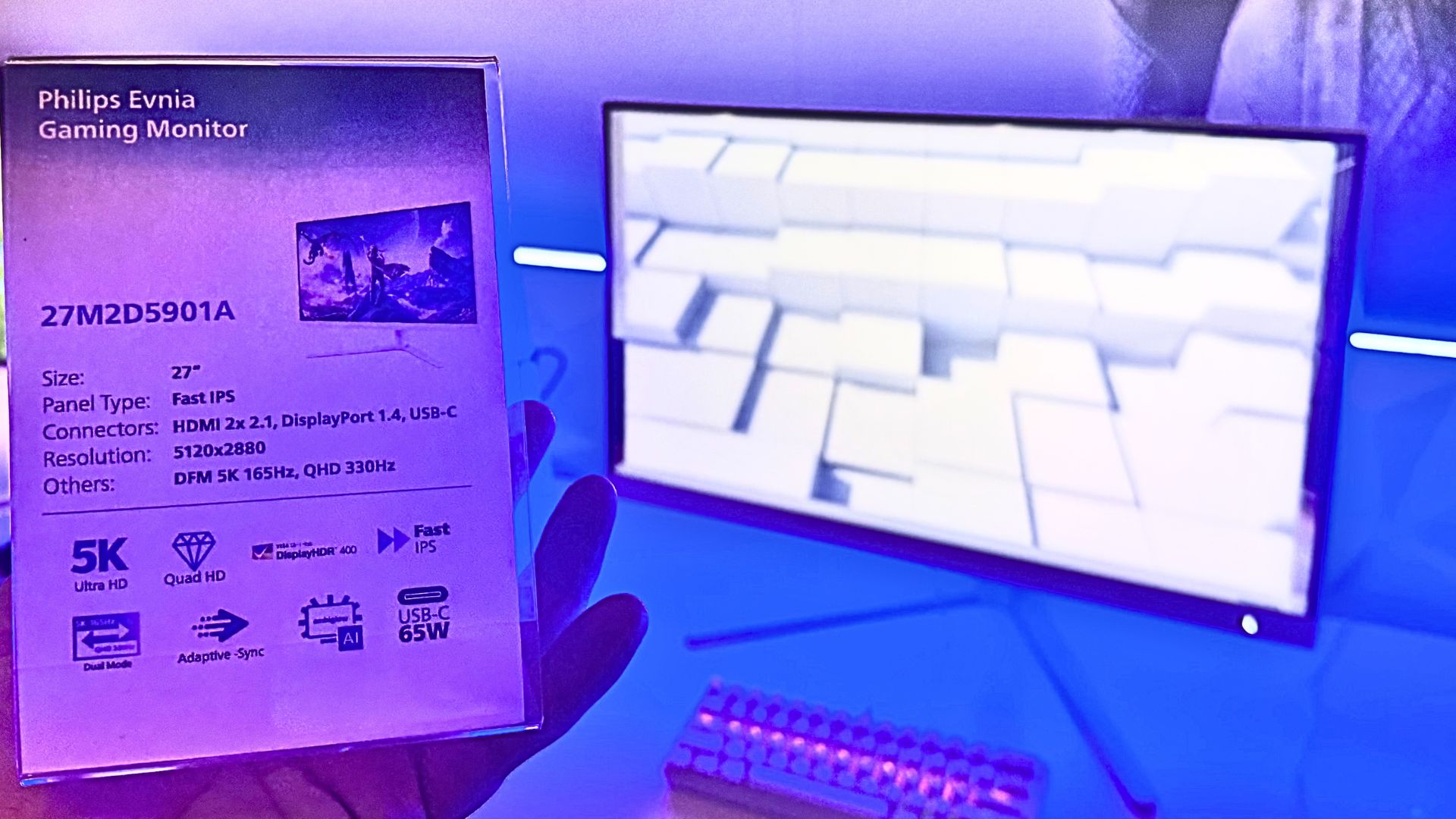
Philips has officially announced the global debut of the Evnia 27M2D5901A, a high-performance 27-inch gaming monitor designed to bridge the gap between ultra-high-resolution content creation and high-refresh-rate competitive gaming. This announcement, made during a specialized press event in Croatia, introduces a western-market counterpart to the previously revealed 27M2G5800, which was initially exclusive to the Chinese market. The 27M2D5901A distinguishes itself through its "dual-mode" functionality, allowing users to toggle between a native 5K resolution (5120 x 2880) at a 165Hz refresh rate and a Quad HD resolution (2560 x 1440) at an accelerated 330Hz refresh rate.
This strategic release targets a growing niche of enthusiasts who demand visual fidelity for immersive single-player titles and creative workflows, while simultaneously requiring the low-latency, high-frame-rate performance necessary for professional-grade esports. By offering these two distinct operating modes in a single IPS panel, Philips aims to eliminate the need for multi-monitor setups that occupy significant desk space and often require compromises in either pixel density or motion clarity.
Technical Specifications and Dual-Mode Mechanics
The centerpiece of the Evnia 27M2D5901A is its 27-inch IPS (In-Plane Switching) panel. In its primary mode, the monitor delivers a 5K resolution of 5120 x 2880 pixels. This provides a pixel density of approximately 218 pixels per inch (PPI), which is significantly higher than the 163 PPI found on standard 27-inch 4K displays. This level of detail is traditionally reserved for professional productivity monitors, such as the Apple Studio Display, but Philips has integrated gaming-centric features to make this resolution viable for interactive entertainment.
The dual-mode technology operates through the monitor’s internal firmware and scaler. When users require maximum fluidity for titles like Counter-Strike 2, Valorant, or Overwatch 2, the monitor can be switched to 1440p mode. In this configuration, the refresh rate doubles from 165Hz to 330Hz. This transition is handled via the On-Screen Display (OSD) and takes only a few seconds to complete, making it a practical solution for gamers who switch between genres frequently.

Beyond resolution and speed, the monitor boasts a peak brightness that is reportedly 50 nits higher than its closest competitor from ASUS. This enhancement in luminance, combined with the inherent color accuracy of IPS technology, ensures that the display meets the demands of both high-dynamic-range (HDR) gaming and color-sensitive design work.
Integration of Ambilight and Smart Ecosystems
A defining feature of the Philips Evnia 27M2D5901A is the inclusion of Ambilight technology, a hallmark of Philips’ premium television lineup that has now been optimized for the gaming desk. The monitor features an array of RGB LEDs on the rear chassis that project light onto the wall behind the screen. This system uses a new AI-driven lighting engine to analyze the colors on the screen in real-time, extending the visual experience beyond the bezel to reduce eye strain and increase perceived immersion.
Furthermore, the 27M2D5901A is part of Philips’ new 5,000 to 8,000 series lineup, which introduces Matter compatibility to the gaming monitor space. Matter is a universal smart home connectivity standard that allows devices from different manufacturers to work together seamlessly. By integrating Matter, the Evnia monitor can act as a node within a broader smart home ecosystem. This allows users to synchronize their monitor’s Ambilight system with other smart lights in the room, such as Philips Hue bulbs or strips. Theoretically, in-game events—such as a flashbang in a tactical shooter—could trigger a coordinated burst of white light across the entire room’s lighting setup, providing a physical dimension to digital gameplay.
Connectivity and Industrial Design
The industrial design of the 27M2D5901A departs from the traditional "gamer" aesthetic of black plastic and aggressive angles. Instead, it utilizes an all-white chassis and stand, aligning with the "white setup" trend that has gained popularity among PC builders and interior designers. The stand is expected to offer a full range of ergonomic adjustments, including height, tilt, swivel, and pivot.
In terms of connectivity, the monitor is equipped with a versatile array of ports. A highlight is the inclusion of a USB Type-C port with 65W Power Delivery (PD). This allows users to connect a laptop with a single cable to transmit video signals, data, and power simultaneously. This feature positions the monitor as a viable docking station for professionals who use high-end laptops for work and wish to transition to a desktop gaming experience without managing multiple cables. Additional ports include DisplayPort 1.4 and HDMI 2.1, ensuring compatibility with the latest graphics cards and current-generation consoles, though the 5K/165Hz mode will primarily benefit from high-bandwidth PC connections.

Chronology of Development and Market Availability
The development of the 27M2D5901A follows a phased rollout strategy by TPV Technology, the parent company behind both the Philips and AOC monitor brands.
- May 2024: Philips launches the Evnia 27M2G5800 in China, establishing the feasibility of the 5K dual-mode panel.
- June 2024: During a regional press event in Croatia, European commercial leaders for Philips and AOC showcase the 27M2D5901A, highlighting its enhanced features over the Chinese variant, specifically the Ambilight integration and updated OSD software.
- July 2024: The monitor is scheduled for its official retail launch in the European market.
At the time of writing, the recommended retail price is set at €799. While this translates to approximately $860 to $940 depending on exchange rates, Philips has not yet confirmed a specific launch date or pricing for the North American market. However, industry analysts suggest that a US release is likely, given the competitive nature of the high-end gaming monitor segment.
Competitive Landscape and Market Analysis
The primary competitor for the Philips Evnia 27M2D5901A is the ASUS ROG Strix XG27JCG. Both monitors utilize a 27-inch IPS panel with 5K dual-mode capabilities. However, several factors differentiate the two offerings:
- Luminance and Visuals: The Philips model offers a slight advantage in peak brightness, which can be critical for HDR performance and visibility in well-lit rooms.
- Smart Home Integration: The inclusion of Matter compatibility and the Ambilight ecosystem gives Philips a unique edge for users already invested in smart home technology.
- Aesthetics: The all-white design of the Evnia appeals to a different demographic than the darker, more traditional ROG Strix styling.
- Price Point: With a price tag of €799, the Philips monitor sits in the premium tier. While the ASUS model is priced at approximately $849 in the US, the Philips unit’s additional features like the 65W USB-C PD and Ambilight may justify the potential price premium for certain users.
The move toward 5K resolution in gaming monitors is a significant shift. While 4K has become the standard for high-end gaming, 5K offers 77% more pixels than 4K. This creates a challenge for current hardware; even the NVIDIA GeForce RTX 4090 may struggle to maintain 165 FPS at 5K resolution in modern AAA titles without the use of upscaling technologies like DLSS or FSR. Consequently, the 27M2D5901A is positioned as a "future-proof" investment, designed to scale with the next generation of GPUs (such as the rumored RTX 50-series) while remaining highly functional in the present via its 1440p/330Hz mode.
Broader Impact and Implications for the Industry
The introduction of the Evnia 27M2D5901A signals a broader trend in the display industry: the "convergence monitor." Manufacturers are increasingly moving away from single-purpose displays. The ability to switch between high resolution for productivity/immersion and high speed for competition addresses the reality that most PC users perform a variety of tasks on a single screen.
Furthermore, the integration of AI-driven lighting and universal smart home standards like Matter suggests that monitors are no longer being viewed as isolated peripherals. They are becoming central hubs for the digital environment. As OLED technology continues to dominate the ultra-premium segment due to its infinite contrast ratios, IPS panels like the one found in the 27M2D5901A are pushing the boundaries of resolution and refresh rate to remain competitive.
For the consumer, the choice between this 5K IPS panel and a similarly priced 4K OLED will likely come down to use case. Those prioritizing text clarity, color work, and extreme refresh rates may find the 5K dual-mode IPS to be superior, while those seeking the best possible HDR contrast and response times may still lean toward OLED. Regardless, Philips’ entry into the 5K gaming space provides a sophisticated alternative that emphasizes versatility and ecosystem integration.