
Marvel’s ‘The Sentry #2’ Preview Unveils Spreading Crystalline Plague, Hulk Infection, and Hero’s Internal Battle


The second issue of Marvel Comics’ The Sentry, set to hit shelves on Wednesday, April 22, 2026, promises a deepening crisis for one of Marvel’s most powerful and tormented heroes. As revealed in an exclusive preview, the narrative thrust of The Sentry #2 intensifies the global threat introduced in the series, featuring the rapid spread of a mysterious "crystalline plague" that not only incapacits entire cities but also infects the formidable Hulk. Central to this escalating chaos is the Sentry himself, Robert Reynolds, grappling with the malevolent Void, his dark alter ego, while the world teeters on the brink of collapse. This issue is poised to deliver a high-stakes blend of cosmic horror, intense action, and profound psychological drama, cementing the series as a critical exploration of power, responsibility, and the fragility of sanity within the Marvel Universe.
The Unfolding Crisis: The Crystalline Plague’s Global Reach
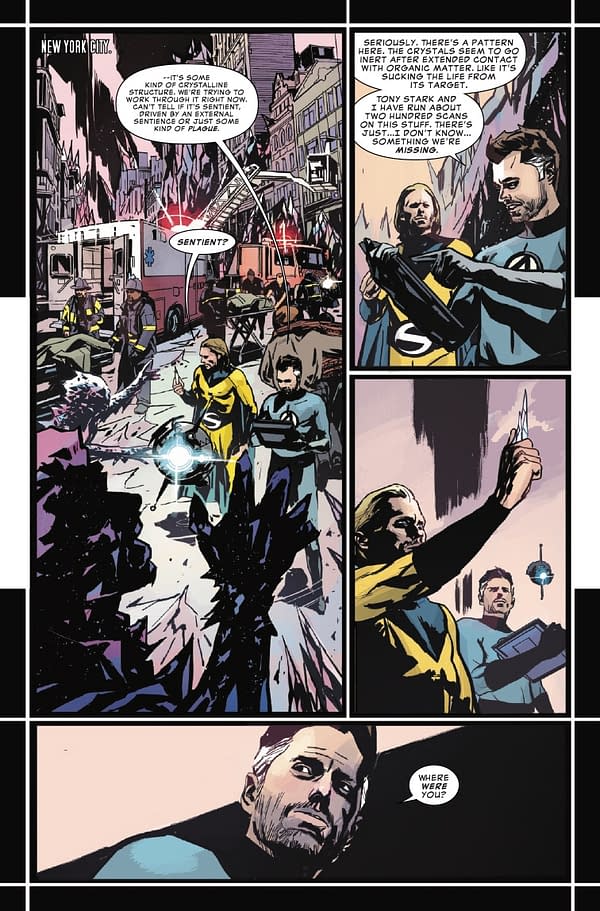
The "crystalline plague" emerges as the primary antagonist, a silent, pervasive threat that transforms its victims into frozen, crystalline husks. Its insidious nature is highlighted by the complete silence that falls over affected cities, implying a swift and total incapacitation of their populations. Beyond its biological devastation, the plague demonstrates a sophisticated, almost sentient technological capability, manifesting as widespread Electromagnetic Pulse (EMP) storms and electrical anomalies across the globe. These phenomena suggest that the crystalline formations are not merely inert structures but active components of a larger, coordinated intelligence, capable of manipulating physical and digital realms.
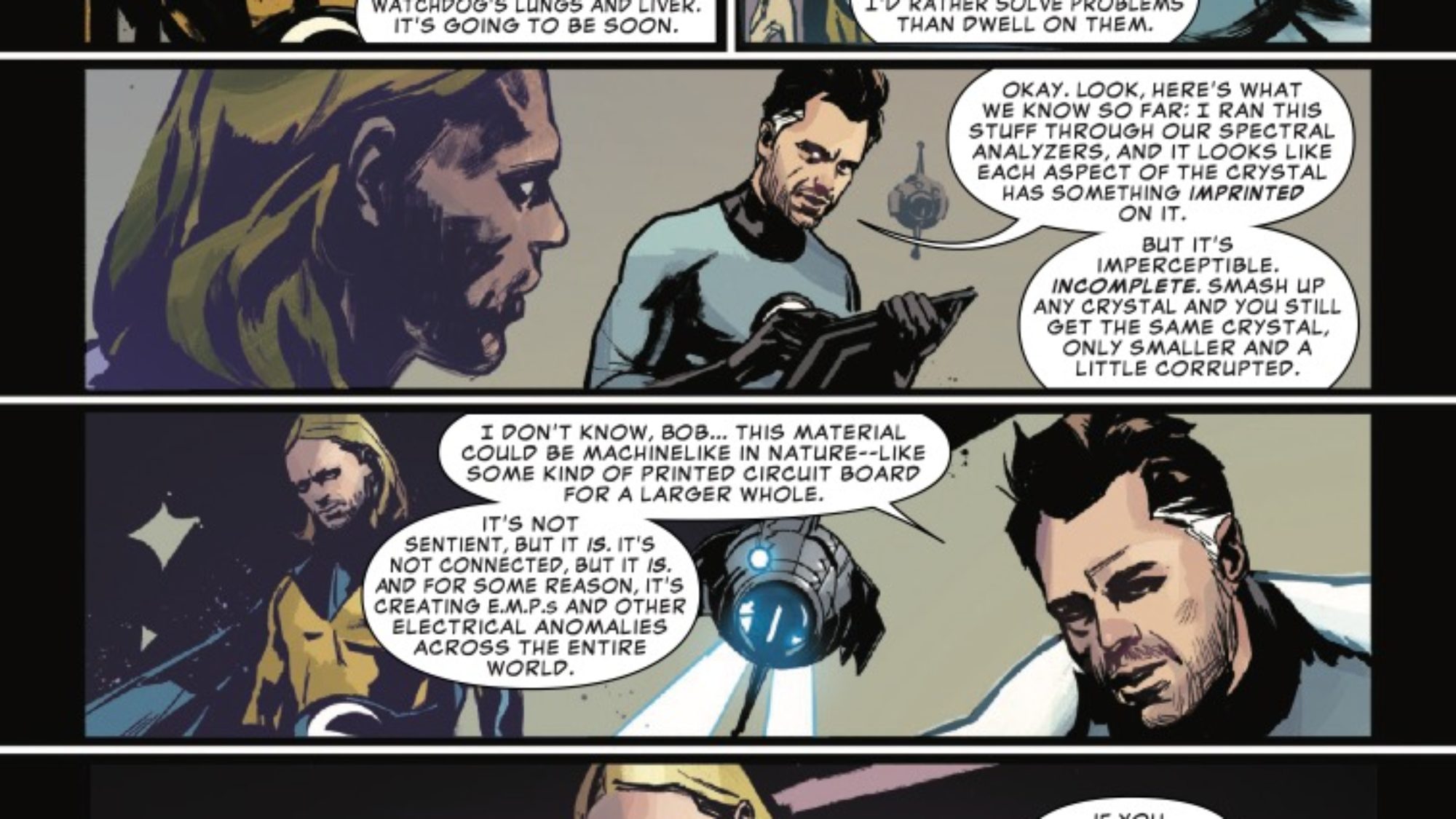
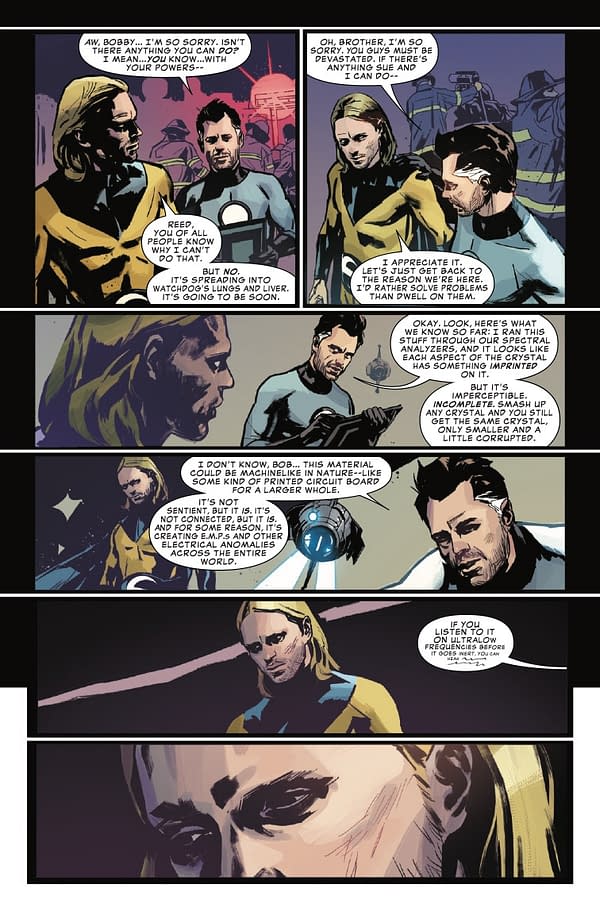
The preview pages specifically describe these crystals as "machine-like in nature…like some kind of printed circuit board for a larger whole," hinting at a highly advanced, possibly alien, origin. This technological manipulation of the physical realm, resulting in global EMP storms, has far-reaching implications. Such events would disable modern infrastructure, communication networks, and defense systems, plunging humanity into a pre-technological dark age and rendering conventional resistance virtually impossible. Historically, Marvel Comics has often explored global threats ranging from alien invasions (like the Kree-Skrull War or Secret Invasion) to cosmic entities (Galactus) and powerful mystical forces. The crystalline plague distinguishes itself by combining biological infection with technologically disruptive capabilities, presenting a multifaceted challenge that transcends traditional superhero confrontations. The scale of this threat underscores the need for heroes of immense power, even as it tests their mental and physical limits.
Hulk’s Predicament: A Symbol of Power Compromised
One of the most alarming developments in The Sentry #2 is the infection of the Hulk. Bruce Banner’s monstrous alter ego is renowned for his unparalleled physical strength, durability, and a regenerative healing factor that makes him virtually immune to most forms of harm. For the Hulk to fall victim to the crystalline plague is a stark testament to its potency and adaptability. It signifies that this threat is not merely a physical contagion but something far more insidious, capable of overcoming even the most robust biological defenses.
The sight of the Hulk, a beacon of raw, untamed power, succumbing to the crystalline transformation will undoubtedly send shockwaves through the Marvel Universe. This scenario evokes previous instances where formidable heroes have been compromised by unique threats, such as when the Venom symbiote possessed various characters or when cosmic entities altered their forms. The Hulk’s infection raises critical questions about the plague’s ultimate goals and its ability to co-opt powerful beings for its own purposes. If the Hulk, who typically grows stronger with rage, cannot resist its effects, what hope do ordinary humans or even less powerful superheroes have? This development dramatically elevates the stakes, highlighting the unparalleled danger posed by the crystalline plague and suggesting that its conquest extends beyond mere biological infection to potentially weaponizing the very heroes attempting to stop it.
The Sentry’s Burden: Battling the Void Amidst External Chaos
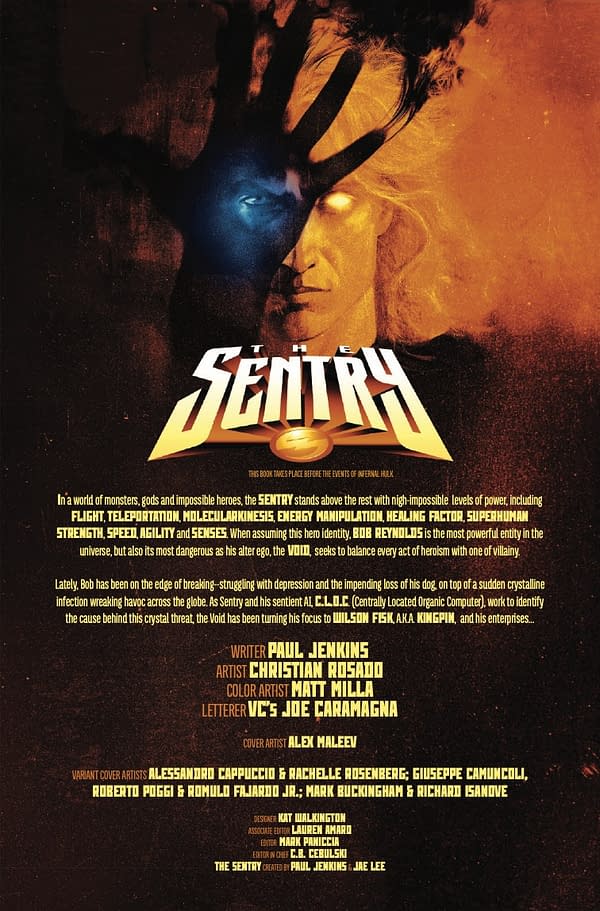
At the heart of The Sentry #2 is the ongoing struggle of Robert Reynolds, the Sentry. Often referred to as "the Golden Guardian," Sentry possesses the power of a million exploding suns, making him one of the most potent beings on Earth. However, his immense power is intrinsically linked to his greatest weakness: the Void. The Void is a malevolent entity, a dark reflection of Sentry’s own psyche, representing all his fears, doubts, and destructive impulses. It manifests as a separate, terrifying entity that seeks to wreak havoc on the world, often forcing Sentry into a desperate internal and external battle for control.
The character of Sentry was co-created by writer Paul Jenkins and artist Jae Lee, first appearing in The Sentry #1 in 2000. His origin was unique, presenting him as a forgotten hero whose existence was erased from the collective memory of the Marvel Universe dues to the Void’s threat. This foundational narrative established a hero burdened not just by external threats but by an ever-present internal darkness. Throughout his history, Sentry has grappled with the constant threat of the Void taking over, leading to periods of isolation, self-doubt, and tragic interventions that often resulted in immense destruction. This series, with Jenkins at the helm, revisits these core themes, leveraging his intimate understanding of Reynolds’s complex psychology.
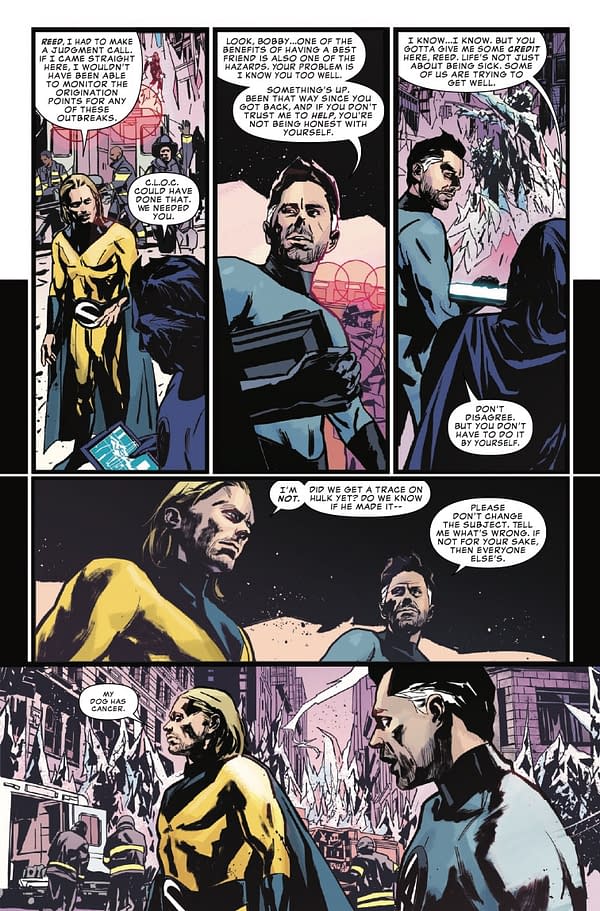
The current crystalline plague provides a harrowing external parallel to Sentry’s internal battle. As cities fall and chaos reigns, Sentry’s efforts to contain the Void become increasingly difficult. Every battle, every act of desperation, every life lost, drags him closer to the darkness inside. The pressure of global catastrophe, combined with the personal toll of witnessing such devastation, creates a fertile ground for the Void to exploit Reynolds’s vulnerabilities. The comic promises that Sentry "fights to keep the VOID at bay…but every battle drags him closer to the darkness inside." This is not just a physical conflict but a profound psychological one, exploring the limits of heroism when the greatest enemy resides within. Thematic analysis suggests that the crystalline plague, by mirroring Sentry’s fragmented self, becomes a catalyst for his ultimate confrontation with his inner demons, potentially leading to a definitive resolution or a tragic downfall.
Key Encounters and Narrative Progression
The narrative of The Sentry #2 is structured around several critical confrontations that highlight the escalating crisis. The solicitation mentions a "brutal showdown in the Siberian Wilds" and a "catastrophic strike against Kingpin’s Empire." These geographical and character-specific details offer crucial insights into the scope and nature of the conflict.
The "Siberian Wilds" setting evokes images of isolation, harsh survival, and desperate battles against overwhelming odds. This remote, unforgiving environment provides an ideal backdrop for Sentry to confront the crystalline plague or perhaps even the infected Hulk, away from civilian populations but with nowhere to hide. Such a setting typically emphasizes the raw power and resilience of characters, pushing them to their physical and psychological limits. The choice of Siberia also suggests the global spread of the plague, reaching even the most desolate corners of the Earth.
The "catastrophic strike against Kingpin’s Empire" introduces a different dimension to the conflict. Wilson Fisk, the Kingpin, is a ruthless crime lord who, despite lacking superpowers, wields immense power and influence over the criminal underworld and, at times, even legitimate political structures. A "catastrophic strike" against his empire could imply a direct confrontation between the crystalline plague and Kingpin’s forces, or it could be Sentry intervening in a situation where the plague has infiltrated Fisk’s operations. This encounter adds a layer of street-level consequence and political intrigue to the cosmic threat, demonstrating how the plague impacts all strata of society, from global superpowers to criminal organizations. It also offers a chance to explore how non-superpowered individuals and organizations react to an existential threat. The inclusion of Kingpin suggests that even in the face of planetary devastation, human elements of greed and power struggles persist, complicating the heroes’ efforts.
Creative Vision: The Team Behind the Story
The creative team behind The Sentry #2 is pivotal to its anticipated success and narrative depth. Paul Jenkins, who co-created the Sentry, returns as the writer. His deep understanding of Robert Reynolds’s complex psychology and the intricate mythology surrounding the Sentry and the Void is invaluable. Jenkins has a proven track record of crafting nuanced character-driven stories that delve into the psychological underpinnings of his protagonists. His return to the character he helped define ensures that the current series respects and expands upon the established lore while bringing fresh perspectives to Sentry’s eternal struggle.
Christian Rosado provides the interior art, tasked with visualizing the terrifying crystalline plague, the corrupted Hulk, and Sentry’s harrowing internal conflicts. The preview images suggest a style capable of conveying both epic scale and intense personal drama, crucial for a story of this magnitude. The visual representation of the crystalline plague, with its "machine-like" qualities and the silent horror of its victims, will be key to establishing its threat level.
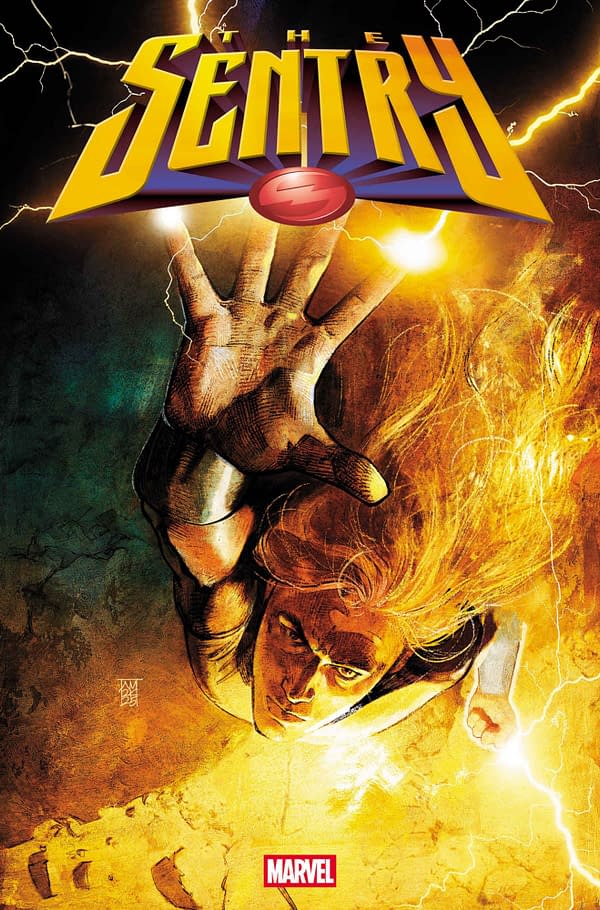
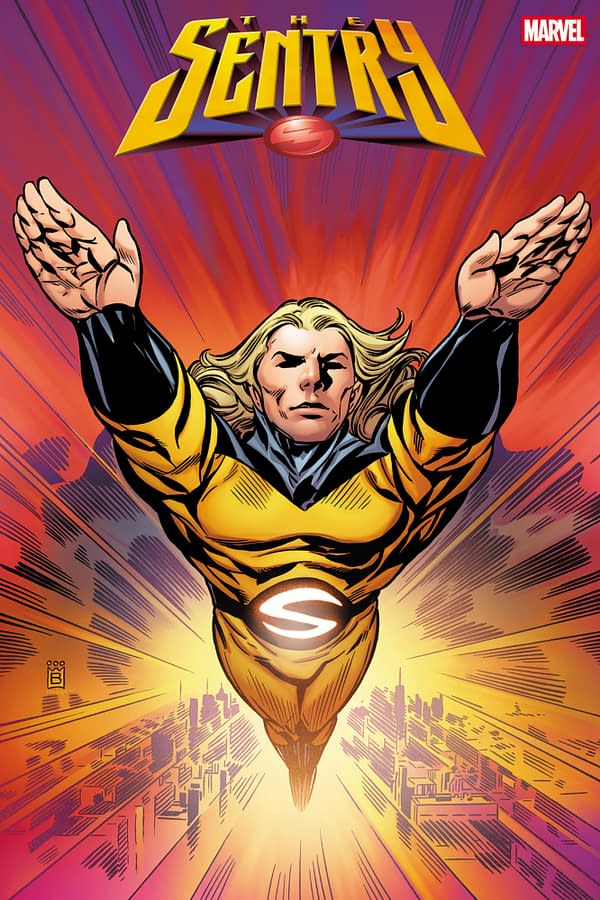
Adding to the visual appeal are the various cover artists. Alex Maleev provides the main cover, known for his gritty, atmospheric style that often imbues characters with a sense of brooding intensity, perfectly suited for the Sentry. Variant covers by Mark Buckingham, Giuseppe Camuncoli, and Alessandro Cappuccio offer diverse artistic interpretations of the issue’s central themes and characters, appealing to collectors and providing different visual entry points into the story. The practice of offering multiple variant covers has become a standard in the comic book industry, serving both as a marketing tool and an opportunity to showcase a wide range of artistic talent, often increasing the overall market buzz and sales for a high-profile release.
From a creative standpoint, the involvement of Paul Jenkins signals Marvel’s intent to deliver a story that is not just action-packed but also deeply thematic, exploring the persistent questions surrounding Sentry’s identity and purpose. The creative team appears to be building on the character’s established lore, pushing Sentry to his limits, and setting the stage for potentially transformative developments for the character and the wider Marvel Universe.
Publication Details and Market Impact
The Sentry #2 is scheduled for release on Wednesday, April 22, 2026. Published by Marvel Comics, the issue is rated T+ (Teen Plus), indicating content suitable for readers 13 and older, which often includes complex themes, moderate violence, or suggestive elements. The comic features 32 pages of story content, priced at $4.99. The dimensions are 6.57"W x 10.21"H x 0.05"D, with a weight of 2 oz.
The comic industry relies heavily on major character crossovers and high-stakes events to drive sales and reader engagement. A storyline featuring the Sentry, a character with immense power and a compelling internal struggle, facing a global threat that infects the Hulk, ticks many of these boxes. Previews like the one provided are crucial for generating anticipation and informing comic shop retailers and readers about upcoming releases. The availability of multiple variant covers further enhances market interest, as collectors often seek out all versions of a significant issue.
The sales performance of such titles often impacts the overall health of the comic book market, supporting local comic book specialty stores and digital distribution platforms. In an increasingly digital age, the choice between physical and digital purchases also reflects evolving consumer preferences, with some readers opting for the convenience of digital comics while others cherish the collectible nature of print issues. This particular release, with its strong creative team and compelling premise, is positioned to be a significant event in Marvel’s publishing schedule for 2026.
Broader Implications for the Marvel Universe
The unfolding events in The Sentry #2 carry significant implications for the broader Marvel Universe. The crystalline plague, with its global reach and ability to infect even powerhouses like the Hulk, represents an existential threat that could permanently alter the landscape of the Marvel world. If unchecked, such a plague could lead to a significant depopulation event, technological regression, and a profound shift in power dynamics among the surviving heroes and villains.
Furthermore, the narrative’s focus on Sentry’s struggle with the Void against this backdrop of global catastrophe could redefine his role in the Marvel Universe. Will he succumb entirely to the Void, becoming an even greater threat than the plague itself? Or will he find a way to reconcile his dual nature, perhaps even harnessing the Void’s power for good in a desperate bid to save humanity? Such a resolution would mark a significant evolution for a character long defined by his internal conflict and instability.
Stories that intertwine personal psychological battles with cosmic or global threats are a hallmark of compelling superhero fiction. This series appears to be leaning heavily into that tradition, offering a narrative that is both epic in scale and deeply personal. The long-term impact could see new alliances forming, old rivalries reigniting, and the very fabric of reality tested, leading to new status quos for many beloved characters. The outcome of this crisis could easily set the stage for future crossover events or spin-off series, demonstrating the interconnected nature of Marvel’s storytelling.
Conclusion: A Looming Threat and a Hero’s Last Stand
The Sentry #2 is shaping up to be a pivotal issue in the ongoing saga of Marvel’s most enigmatic hero. With the crystalline plague spreading rapidly, infecting the seemingly uninfectable Hulk, and pushing Robert Reynolds closer to the brink of succumbing to the Void, the stakes could not be higher. Paul Jenkins’s return to the character he helped create, coupled with Christian Rosado’s artistic vision, promises a story that is both visually stunning and emotionally resonant.
As the planet faces an unprecedented technological and biological threat, the Sentry’s battle becomes a microcosm of humanity’s fight for survival. Readers are encouraged to witness this unfolding crisis firsthand by picking up The Sentry #2 when it arrives in comic book stores and digital platforms on Wednesday, April 22, 2026. The issue not only promises thrilling action and profound character exploration but also sets the stage for potentially world-altering consequences within the expansive Marvel Universe. The fate of Earth, and indeed the very soul of its most powerful hero, hangs in the balance.
Related posts:


