
James Marsden Reflects on Cyclops’ Triumphant Return in ‘Avengers: Doomsday’ Trailer, Highlighting Technological Advancements and Fan Anticipation


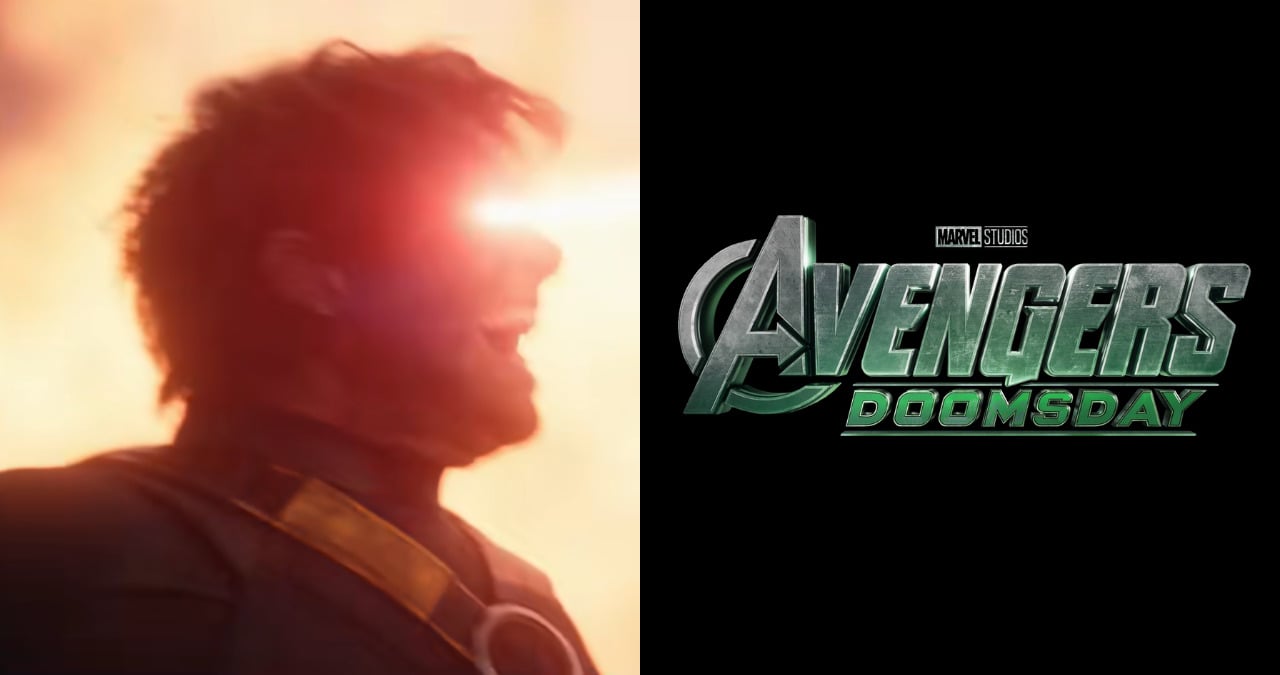
The recent unveiling of the trailer for Avengers: Doomsday has sent ripples of excitement throughout the global cinematic landscape, marking a pivotal moment for the Marvel Cinematic Universe (MCU) with the long-awaited introduction of the X-Men. Among the most impactful reveals was the return of James Marsden as Scott Summers, a.k.a. Cyclops, a role he famously originated in the seminal 2000 X-Men film. Marsden’s reprisal of the character, particularly in a modernized, comic-accurate costume within a seemingly darker narrative, has been met with an overwhelmingly positive response from fans and critics alike, reigniting discussions about the character’s cinematic legacy and the future direction of the mutant saga within the MCU.
The Resurgence of a Mutant Icon: James Marsden’s Emotional Return
For a generation of filmgoers who grew up immersed in the original X-Men trilogy, witnessing James Marsden don the ruby quartz visor once more in the Avengers: Doomsday trailer transcended mere nostalgia; it became a deeply resonant, almost spiritual experience. The actor’s return as Cyclops, especially in an iteration that appears to draw heavily from his classic comic book aesthetic and within a grittier narrative context, was previously considered a remote possibility, a cherished "pipe dream" for many devoted followers. This unexpected development has underscored the profound impact these characters have had on popular culture and the enduring desire for faithful adaptations.
Marsden himself has openly shared his sentiments regarding this significant comeback. In a recent interview with ScreenRant, he conveyed the profound emotional weight of stepping back into the role after such a considerable hiatus. "It felt really good. It was really special. It had been so long," Marsden remarked, reflecting on the passage of time since his last outing as the leader of the X-Men. He further articulated his appreciation for the fervent fan base, noting, "To see how enthusiastic and how waiting with bated breath everyone is to see this movie, it feels good." This collective anticipation, he suggests, amplifies the significance of the moment for both the creators and the audience.
Technological Leaps and Visual Spectacle: A New Era for Mutant Powers
A crucial aspect of Marsden’s reflection centered on the dramatic advancements in filmmaking technology and special effects since the early 2000s. The original X-Men films, while groundbreaking for their time, operated within the constraints of early digital visual effects. Marsden highlighted this contrast with an illustrative anecdote: "To have that epic shot with modern technology and special effects. When I’d do a blast, when we filmed the first movie, I’d have two rolls of film that they painted red [from my eyes]. No, but it felt good. It was a pretty cool thing to see. I watched it over and over and over again."
This comparison underscores the vast evolution in visual effects capabilities over the past two decades. In 2000, computer-generated imagery (CGI) was still relatively nascent, often requiring practical effects and post-production trickery to achieve superheroics. For instance, Cyclops’ optic blasts would have been a blend of physical wires, practical lighting, and rudimentary digital overlays. By contrast, the mid-2020s sees VFX technology capable of rendering hyper-realistic energy projections, intricate environments, and seamless character integration, offering a level of fidelity previously unimaginable. This leap in technology promises a Cyclops whose powers are depicted with unprecedented visual impact and accuracy, allowing for more dynamic action sequences and a truer representation of his formidable abilities from the comic books. The ability to create such "epic shots" with modern tools not only enhances the spectacle but also enables filmmakers to bring complex comic book panels to life with greater authenticity and immersion.
A History of Sidelining: Cyclops’ Cinematic Journey Prior to the MCU
James Marsden’s initial tenure as Cyclops in the Fox-produced X-Men films (2000, 2003, 2006) was, regrettably for many fans, characterized by a narrative choice that often relegated the character to a secondary role. Despite Cyclops being the tactical leader of the X-Men in the source material – a skilled strategist and powerful mutant – the films famously prioritized the brooding charisma of Hugh Jackman’s Wolverine. This creative decision, while undeniably boosting Wolverine’s cinematic profile and contributing to the franchise’s commercial success, led to a perception among a significant portion of the fan base that Cyclops was "sidelined" or "underutilized." His character arc was frequently intertwined with his romantic rivalry with Wolverine for Jean Grey’s affection, often at the expense of showcasing his leadership qualities or individual power.
This pattern of deemphasizing Cyclops continued into the prequel trilogy, where Tye Sheridan took on the role. In films like X-Men: Apocalypse (2016) and Dark Phoenix (2019), Sheridan’s Cyclops, while present, often found himself overshadowed by other prominent mutants such as Beast, Mystique, Magneto, and Professor X. The critical reception of these later films, particularly Dark Phoenix, highlighted a continued struggle to balance an ensemble cast, often resulting in key characters like Cyclops lacking substantial development or impactful moments. This consistent narrative choice across two distinct iterations of the X-Men franchise contributed to the widespread sentiment that Cyclops, despite his iconic status in the comics, had never truly received his due on the big screen. The character, a cornerstone of the X-Men mythos and a strategic genius, was often reduced to a reactive figure rather than a proactive leader.
The Road to Redemption: An Opportunity for Reassessment
The announcement of James Marsden’s return as Cyclops in Avengers: Doomsday is therefore not merely a casting decision; it represents a significant opportunity for cinematic redemption for a character widely perceived as having been previously underserved. This new chapter offers Marsden the chance to truly inhabit the gravitas and leadership inherent in Scott Summers, potentially allowing him to "take center stage" in a way that was largely denied in the earlier films. The context of an Avengers film, typically a massive ensemble event designed to showcase a diverse array of heroes, could paradoxically provide the perfect platform for Cyclops to shine, demonstrating his strategic acumen and formidable powers alongside other established MCU heavyweights.
The title Avengers: Doomsday itself implies a cataclysmic threat, one that would necessitate the combined might and varied tactical approaches of Earth’s most powerful heroes and, now, mutants. In such a high-stakes scenario, Cyclops’ abilities as a field leader and his devastating optic blasts would be invaluable, offering a stark contrast to his often-passive portrayal in the Fox films. This could finally allow him to prove that he is "just as cool as Wolverine," not through rivalry, but through sheer competence and heroic action. While the longevity of this particular iteration of Cyclops within the broader MCU remains to be seen, with many speculating this could be a multiversal "one-off" appearance or a "final swan song," the sheer potential for a powerful, definitive portrayal is undeniable. It offers a chance to rectify past narrative missteps and leave a lasting impression that honors the character’s comic book legacy.
Integrating Mutants into the Marvel Cinematic Universe: A New Multiversal Frontier
The introduction of the X-Men, spearheaded by Marsden’s Cyclops, into the MCU via Avengers: Doomsday signifies a monumental shift in the franchise’s narrative landscape. For years, the rights to the X-Men and Fantastic Four characters were held by 20th Century Fox, preventing their integration into the interconnected world of Marvel Studios. Following Disney’s acquisition of 21st Century Fox in 2019, the path was cleared for these iconic characters to finally join their Marvel brethren. This has been a source of immense anticipation for fans, who have eagerly awaited the moment mutants would officially become part of the MCU tapestry.
The ongoing "Multiverse Saga" within the MCU, which has explored alternate realities and divergent timelines through projects like Loki, Spider-Man: No Way Home, and Doctor Strange in the Multiverse of Madness, provides a natural and elegant pathway for the X-Men’s arrival. Rather than a hard reboot or a convoluted retcon, the multiverse allows for the reintroduction of beloved actors in their iconic roles, albeit potentially from different realities, without disrupting the established MCU canon. This approach not only caters to nostalgia but also offers creative freedom to cherry-pick beloved elements from previous iterations while charting new courses. The appearance of Marsden’s Cyclops, potentially from a universe familiar to long-time X-Men film fans, aligns perfectly with this multiversal strategy, allowing for a respectful nod to the past while building towards the future. This strategic integration is crucial, as it sets the stage for how Marvel Studios plans to introduce a whole new subset of superpowered beings into an already crowded universe, presenting both exciting narrative opportunities and complex logistical challenges.
Fan Anticipation and Broader Industry Impact
The fan reaction to the Avengers: Doomsday trailer, particularly the X-Men reveal, has been nothing short of explosive. Social media platforms, fan forums, and entertainment news outlets were inundated with discussions, analyses, and emotional outpourings. Hashtags related to Cyclops, X-Men, and James Marsden trended globally, reflecting the immense cultural impact of these characters and the significance of their long-awaited MCU debut. This overwhelming enthusiasm is a testament to the enduring appeal of the X-Men and the deep emotional connection audiences have forged with them over decades of comics, animated series, and films.
From an industry perspective, this development carries significant implications. The return of a beloved actor to a legacy role within a new cinematic universe could set a precedent for other potential character reintroductions. It showcases Marvel Studios’ understanding of fan desires and their willingness to leverage the multiverse concept to deliver on long-held dreams. Moreover, the sheer scale of Avengers: Doomsday, now encompassing both the established MCU heroes and the newly integrated X-Men, positions it as a truly epoch-defining cinematic event. This expansion of the superhero roster signals Marvel’s ambition to continue pushing the boundaries of shared universe storytelling, potentially eclipsing previous crossover events in scope and emotional resonance. The financial implications are also substantial; the integration of the X-Men characters, with their built-in fan base, is expected to drive massive box office returns and expand the MCU’s demographic reach even further.
The Broader Narrative of ‘Avengers: Doomsday’: A Confluence of Worlds
Scheduled for release in December 2026, Avengers: Doomsday is poised to be a monumental capstone to the ongoing Multiverse Saga, much like Avengers: Endgame concluded the Infinity Saga. The very title "Doomsday" suggests a threat of unparalleled magnitude, one that could imperil not just Earth, but potentially entire realities within the multiverse. This kind of existential threat inherently necessitates an alliance of heroes from across different dimensions and timelines, making the integration of the X-Men not just a fan-service moment, but a narrative imperative.
The film is expected to explore the ramifications of multiversal incursions, parallel realities colliding, and the desperate measures required to avert universal collapse. In this context, the X-Men, with their unique powers, diverse skill sets, and experience in dealing with societal prejudice and large-scale threats, would be invaluable. Cyclops, as a seasoned leader and powerful energy manipulator, would logically play a crucial role in coordinating efforts and executing tactical maneuvers against a "Doomsday" level adversary. His inclusion suggests a grand tapestry of heroism, where disparate universes must unite to face a common, overwhelming enemy, promising a narrative that is both epic in scale and rich in character interaction.
Marsden’s Legacy and Future Prospects: Beyond the Swan Song
While James Marsden’s statement about his return potentially being "one final swan song" for his portrayal of Cyclops carries a bittersweet note, the enthusiastic reception could open doors for future possibilities. In the fluid landscape of multiversal storytelling, "final" often proves to be a temporary state. The success of this appearance could prompt Marvel Studios to consider further explorations of these legacy characters, perhaps even giving them standalone projects within the multiverse framework.
Beyond Marsden himself, the impact of this return extends to the broader casting philosophy for the MCU’s X-Men. It signals that Marvel is not afraid to acknowledge and, in some cases, embrace the cinematic history of these characters, rather than simply erasing it. This could pave the way for other actors from the Fox X-Men universe to make similar multiversal cameos or even take on more significant roles, bridging the gap between two distinct eras of superhero filmmaking. Regardless of what the future holds for this specific iteration of Cyclops, Marsden’s performance in Avengers: Doomsday is set to cement his legacy as the definitive on-screen Scott Summers for many, providing the character with the formidable and respected portrayal he has long deserved.
As Avengers: Doomsday gears up for its December 2026 release, the excitement generated by James Marsden’s return as Cyclops underscores the enduring power of these characters and the transformative potential of modern cinematic storytelling. It is a moment that not only satisfies long-held fan desires but also redefines the boundaries of what is possible within the interconnected narrative of the Marvel Cinematic Universe. The inclusion of the X-Men promises to usher in an exhilarating new era for the franchise, one filled with unprecedented team-ups, untold stories, and a renewed sense of wonder.
Related posts:


