
City of Six Moons Challenges Players to Decipher Alien Rules in Experimental Solitaire Board Game


The traditional relationship between a board game designer and a player is built upon a foundation of clarity, where the rulebook serves as a definitive contract of mechanics and objectives. However, the upcoming release of City of Six Moons, designed by Amabel Holland and published by Hollandspiele, seeks to fundamentally disrupt this dynamic. In an unprecedented move within the tabletop industry, the game’s instruction manual is written entirely in a fictional alien language composed of cryptic icons, glyphs, and symbols. To play the game, players must first act as amateur cryptographers, translating the text without the aid of a key, a glossary, or any outside confirmation of their accuracy.
The project represents a radical departure from standard instructional design, transforming the act of learning how to play into the primary gameplay loop itself. According to Holland, the game is not merely about an alien civilization; it is presented as an artifact produced by that civilization. This meta-textual approach requires players to engage with the components through a lens of cultural anthropology, making assumptions based on visual patterns and the physical layout of the board while acknowledging that their human biases may lead them astray.
The Architectural Philosophy of Silent Design
At the heart of City of Six Moons is the concept of the "hermetic" game—a system that is sealed off from the player’s immediate understanding. Designer Amabel Holland has stated that she will categorically refuse to answer any questions regarding the rules or the intended meaning of the glyphs. This silence is a deliberate design choice intended to preserve the mystery of the experience. In many modern board games, designers are highly accessible via forums like BoardGameGeek or social media, often providing "official" rulings on edge cases within hours of a query. By removing this safety net, Holland forces the player into a state of total self-reliance.
The game is a solitaire experience, a choice that is logically consistent with its premise. Without a second player to provide a "check" on the rules, the solo player becomes the sole arbiter of the alien logic. If a player misinterprets a symbol and plays the game "incorrectly," that version of the game becomes their reality. The tension of the experience stems from the lingering doubt that one might never truly understand the designer’s intent, a feeling Holland describes as essential to the work’s emotional impact.
Chronology of Development and Experimental Roots
The development of City of Six Moons follows a trajectory of increasingly experimental titles from Hollandspiele, a publisher known for its willingness to explore niche historical topics and avant-garde mechanics. Founded by Amabel and Mary Holland, the company has carved out a unique space in the industry by utilizing a print-on-demand model, which mitigates the financial risks associated with unconventional titles.
The announcement of City of Six Moons follows a broader trend in gaming—primarily seen in the digital space—where the instruction manual is treated as a lost artifact. Games like the 2022 hit Tunic utilized a similar conceit, featuring an in-game manual written in a fictional alphabet that players had to slowly decode. However, while Tunic eventually provided visual context clues that clarified mechanics, City of Six Moons offers no such guarantee of ultimate clarity.
Holland began teasing the project on social media platforms like Bluesky, emphasizing that while the game is "functional and replayable," the process of deciphering it is a one-time journey. Once the code is "cracked," the player undergoes a permanent cognitive shift. Holland noted that the "loss" of that initial mystery is something she wants players to feel deeply, suggesting that the mystery itself is more valuable than the mechanical game hidden beneath it.
Supporting Data and the Mechanics of Solitaire Play
While the specific mechanics remains obscured, several facts about the game’s physical presence have been confirmed:
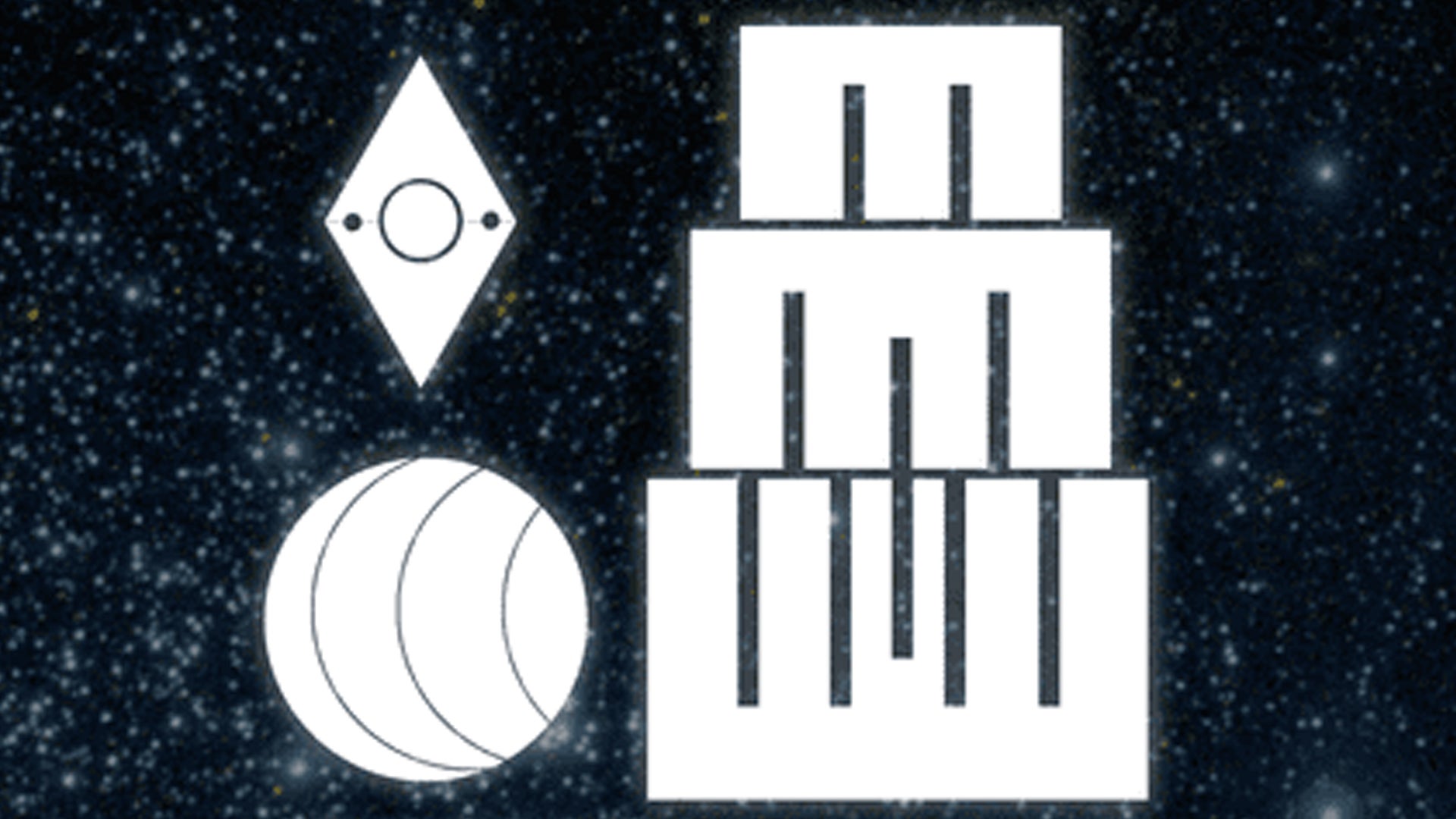
- Format: A boxed solitaire game featuring a rulebook and a set of physical components.
- Theme: Guiding the fortunes and architectural development of an alien city under six moons.
- Components: The box includes various tokens and a board, though it is unclear if these components contain human-readable text or are also part of the glyph system.
- Replayability: Holland asserts that once the rules are understood, the game functions as a standard, repeatable tabletop experience.
The decision to market a game that might be "unplayable" to some consumers is a bold move in a market that typically prioritizes accessibility. According to industry data from the last five years, the "Solo Board Game" category has seen a 400% increase in search volume and sales, largely driven by the isolation of the COVID-19 pandemic. This demographic of gamers often seeks high-complexity, immersive experiences that can be played at a slow, methodical pace, making them the ideal audience for a linguistic puzzle of this magnitude.
Professional and Community Reactions
The announcement has sparked a significant debate within the tabletop community regarding the definition of a "game." On platforms like BoardGameGeek, some enthusiasts have praised the project as a work of interactive art, comparing it to the Voynich Manuscript or the Codex Seraphinianus. These proponents argue that the challenge of translation provides a level of immersion that traditional "flavor text" cannot achieve.
Conversely, a segment of the hobby has expressed skepticism. Critics point out that the barrier to entry may be too high for the average consumer and that the refusal to provide a "correct" answer could lead to frustration rather than enlightenment. There is also the logistical concern of "rule drift," where players inadvertently simplify the game because they cannot understand the more complex nuances hidden in the glyphs.
Despite these concerns, the anticipation for the game remains high. Hollandspiele has a track record of success with "unconventional" games, such as Table Battles, which uses a minimalist approach to historical wargaming, and The Mughal Empire, which explores complex economic systems. This pedigree provides a level of consumer confidence that City of Six Moons is a curated experience rather than a random collection of symbols.
Broader Implications for Tabletop Design
City of Six Moons may represent a turning point for how designers approach the "onboarding" process. In a world where many games are criticized for having overly long tutorials or "hand-holding" mechanics, Holland’s approach is a move toward radical player agency. It suggests that the player’s struggle to understand the world is just as valid a form of entertainment as the act of winning or losing.
Furthermore, the game touches upon the field of semiotics—the study of signs and symbols. By forcing players to derive meaning from abstract shapes, the game highlights the arbitrary nature of human language and the cultural assumptions we bring to gaming. For example, a red icon in a human game usually signifies "danger" or "attack," but in an alien culture, it might represent "growth" or "sacred ground." Navigating these cultural disconnects is the true heart of the City of Six Moons experience.
Release Information and Future Outlook
City of Six Moons is scheduled for release in the coming month via the Hollandspiele website. Given the nature of the game, it is unlikely to follow a traditional retail path, instead catering to a dedicated audience of "heavy" gamers and puzzle enthusiasts.
As the release date approaches, the board game community is bracing for what may be the most discussed "black box" project of the year. Whether players will successfully build the City of Six Moons or find themselves lost in a sea of untranslatable icons remains to be seen. Regardless of the outcome, Amabel Holland has succeeded in creating a conversation about the limits of communication and the beauty of the unknown. For those willing to take the risk, the game promises a journey that begins long before the first piece is moved on the board—a journey into the very mind of an alien world, written in a language that only the most patient observers will ever hope to speak.


