
Charlie Cox Bridges the Gap Between Hollywood and Interactive Storytelling Following Critical Acclaim for Clair Obscur Expedition 33 Performance


Charlie Cox, the acclaimed actor widely recognized for his portrayal of Matt Murdock in Marvel’s Daredevil series, has officially transitioned from the recording booth to the controller, marking a significant milestone in his journey into the video game industry. Following his celebrated performance as Gustave in the breakout role-playing game Clair Obscur: Expedition 33, Cox has begun experiencing the title firsthand, fulfilling a public promise made to the gaming community during the height of the game’s award season buzz. This move highlights a growing trend of high-profile dramatic actors engaging deeply with the interactive medium, not merely as a commercial venture, but as a legitimate extension of narrative art.
The transition comes at a pivotal moment for Sandfall Interactive, the French development studio behind the game. Clair Obscur: Expedition 33 emerged as a surprise heavyweight in the industry, ultimately securing a nomination for Best Performance at The Game Awards. For Cox, whose previous exposure to gaming was largely rooted in the late 1990s, the experience of playing a modern, narrative-driven RPG has proven to be a revelatory encounter with the evolution of digital storytelling.
The Evolution of Gustave: A Collaborative Performance
In Clair Obscur: Expedition 33, Cox provides the voice and emotional depth for Gustave, a central protagonist in a world haunted by a cyclical tragedy. However, the character’s presence is the result of a sophisticated dual-performance model. While Cox handled the vocal intricacies and character nuances, Maxence Cazorla provided the physical motion capture. This collaborative approach has sparked significant discussion within the industry regarding how performances are credited and recognized.
The success of Gustave as a character led to a Game Awards nomination for Cox, an achievement that the actor has met with both humility and a sense of discovery. Industry analysts note that the synergy between Cox’s vocal gravitas and Cazorla’s physical performance created a character that resonated with players on a level typically reserved for prestige cinema. This success prompted Cox to engage with the medium more directly, leading to his recent sessions with the game.
During a recent interview, Cox admitted that his technical proficiency with modern gaming hardware is still in its infancy. He described his experience with the opening hours of the game, focusing on exploration and world-building. "I’m not very good, because obviously, it’s a skill set, but I’ve played it," Cox stated. He noted that his progress involved navigating the game’s introductory environments, interacting with non-player characters (NPCs), and absorbing the dense lore that defines the world of Clair Obscur.
From FIFA 98 to Modern Narratives: A Generational Leap
Cox’s return to gaming highlights the massive technological and narrative chasm between the fifth generation of consoles and the current era. The actor noted that his primary memories of the medium date back to titles like FIFA 98, Mario Kart, and Goldeneye 007. While he acknowledged the "addictive" nature of those classic titles, he emphasized that they lacked the structural complexity and emotional resonance found in modern projects like Expedition 33.
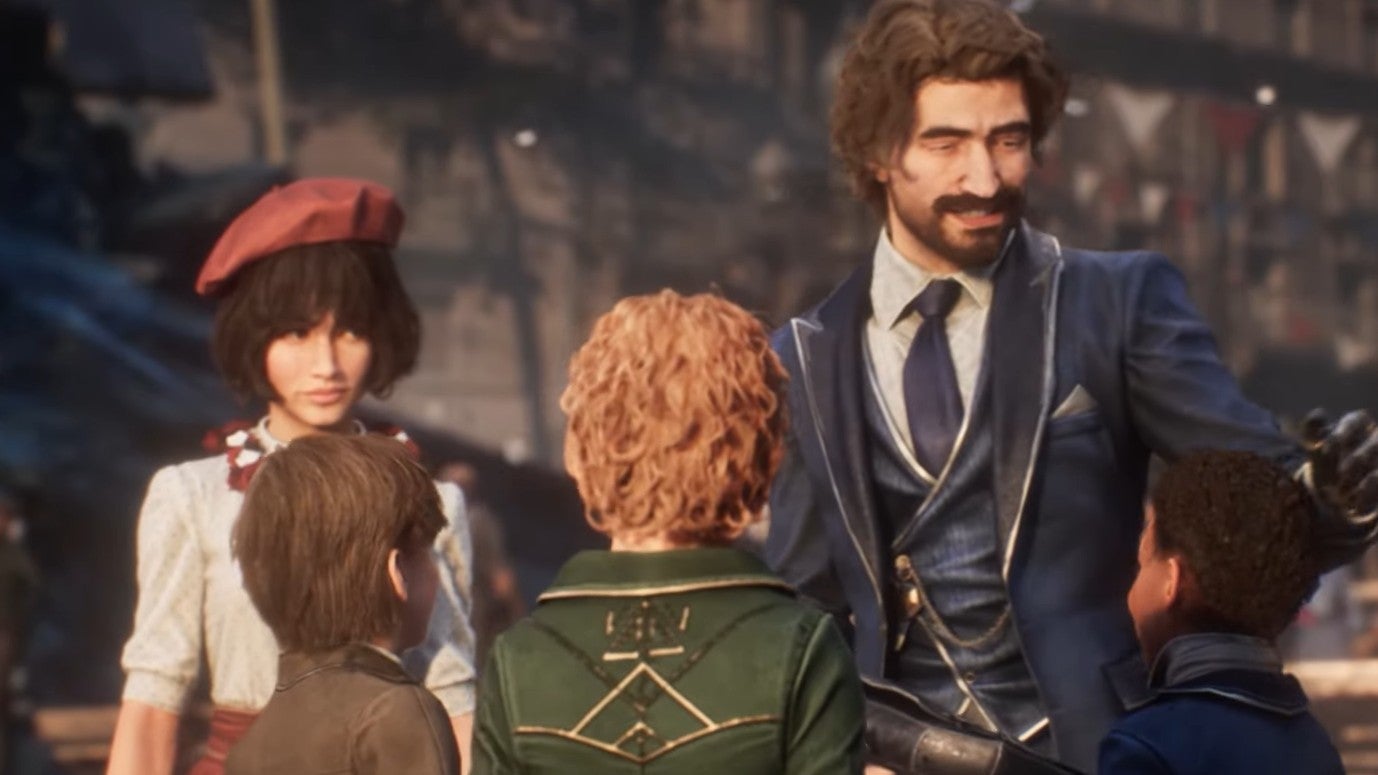
The shift from the arcade-style mechanics of the late 90s to the "playable cinema" of the 2020s is a central theme in Cox’s newfound appreciation for the industry. He described modern games as "stories that were so carefully carved out and created," comparing the experience to a movie in which the viewer is an active participant. This sentiment echoes a broader industry shift where narrative designers and writers are increasingly utilizing Hollywood-caliber talent to bridge the "ludonarrative" gap—the space between gameplay mechanics and story progression.
In Expedition 33, this is achieved through a "reactive turn-based" combat system and a world that reveals its history through environmental storytelling. For an actor trained in traditional theatre and film, the discovery-based nature of gaming—where information is earned through exploration rather than delivered in a linear script—presents a unique artistic challenge and opportunity.
Background: The World of Clair Obscur: Expedition 33
To understand the weight of Cox’s performance, one must look at the ambitious scope of Sandfall Interactive’s debut. The game is set in a world inspired by Belle Époque France, but with a dark, surrealist twist. The central antagonist is the "Paintress," a god-like entity who wakes once a year to paint a number on a monolith. Everyone in the world who is that age immediately turns to smoke and vanishes.
The narrative follows the members of "Expedition 33" as they embark on a desperate journey to reach the Paintress and end her cycle of death before she paints the next number. Cox’s character, Gustave, is a key figure in this final attempt. The high stakes of the plot require a level of emotional vulnerability that Cox was uniquely positioned to provide, given his history of playing complex, burdened heroes.
The game’s aesthetic, which blends traditional oil painting techniques with high-end Unreal Engine 5 graphics, served as the backdrop for Cox’s first modern gaming experience. His description of "walking around and meeting the people" refers to the game’s meticulously designed hubs, where the consequences of the Paintress’s actions are visible in the mourning and desperation of the citizenry.
Industry Implications and the "Best Character" Debate
The nomination of Charlie Cox at The Game Awards has reignited a debate regarding the categorization of digital performances. Because Gustave is the product of two distinct artists—the voice actor and the motion capture performer—some industry veterans, including Cazorla himself, have argued for the creation of a "Best Character" category.
The argument posits that isolating a single performer potentially leaves the technical and physical contributors "invisible." However, Cox’s nomination is seen by many as a win for the visibility of the project as a whole. It underscores the power of a recognizable name to draw attention to independent or AA studios like Sandfall Interactive. The "Cox Effect" helped propel Clair Obscur: Expedition 33 from a niche interest to a mainstream contender, demonstrating the marketing and artistic value of cross-industry talent.

Chronology of Events: From Casting to Gameplay
The timeline of Cox’s involvement with the project reflects the lengthy development cycles inherent in modern AAA and high-end AA gaming:
- Casting and Recording (2022-2023): Cox was brought on board to voice Gustave, working closely with the narrative directors at Sandfall Interactive to establish the character’s tone.
- Public Reveal (Early 2024): The character trailer for Gustave was released, showcasing Cox’s vocal work and generating immediate social media traction.
- Critical Reception (Mid-2024): Upon the game’s release, critics praised the narrative depth and the quality of the acting, specifically highlighting Cox’s contribution.
- Awards Season (Late 2024): The Game Awards announced Cox as a nominee for Best Performance, placing him alongside industry veterans.
- The "Vow" and Execution (Late 2024): Following his nomination, Cox publicly vowed to play the game to understand the medium better. He recently confirmed that he has begun this journey, moving past his "Super Mario 64" era knowledge.
The Future: A New Career Path in Interactive Media
The success of Clair Obscur: Expedition 33 has evidently opened new professional avenues for Cox. The actor recently confirmed that he has already signed on for a second video game project. While details regarding the title and developer remain confidential, Cox hinted at a more intensive role.
Unlike his work on Expedition 33, where he was primarily a vocal contributor, his next project will reportedly require him to be "much more involved." This suggests that Cox may be undergoing full performance capture (both voice and body), a process that requires significant time in a "volume" (the specialized stage used for motion capture). This transition mirrors the paths taken by actors like Norman Reedus (Death Stranding) and Keanu Reeves (Cyberpunk 2077), who have become synonymous with their digital counterparts.
Analysis: The Strategic Value of Talent in Gaming
From a business and analytical perspective, the involvement of actors like Charlie Cox serves several purposes. First, it provides a "prestige" anchor for new IPs (Intellectual Properties). In a crowded market, having a recognizable voice helps a game stand out in trailers and marketing materials. Second, it elevates the quality of the narrative. As games become more cinematic, the demand for actors who can handle subtle, complex character arcs has increased.
For Cox, the decision to play the game he starred in is more than just a PR move; it represents a commitment to understanding the specific nuances of the medium. By experiencing the "opening" and the "discovery" phases of the game, he is gaining insight into how his vocal cues land when triggered by player actions—a fundamental difference between linear film acting and non-linear game acting.
Conclusion
Charlie Cox’s foray into the world of Clair Obscur: Expedition 33 marks a definitive moment in the convergence of traditional acting and modern gaming. By moving from a casual observer of the "FIFA 98" era to an active participant in a high-concept RPG, Cox is bridging a generational and technological gap. His nomination and subsequent engagement with the game serve as a testament to the growing cultural power of video game narratives. As he prepares for his next, more involved role in the industry, Cox stands as a prime example of how Hollywood talent can successfully integrate into and enrich the gaming landscape, provided they are willing to pick up the controller and experience the story from the player’s perspective.


