
Bob Odenkirk Reveals Why It Took Years to Get Chris Farley in That Van Down By the River


Bob Odenkirk, an Emmy-winning actor celebrated for his roles in critically acclaimed television dramas, Broadway productions, and a recent resurgence as an action star in films like "Normal," recently shared a poignant anecdote about his most cherished professional memory. When asked by his daughter to identify the pinnacle of his entertainment career, Odenkirk’s answer was immediate and unwavering: performing alongside the late Chris Farley in the iconic Saturday Night Live sketch, "The Motivational Speaker," famously featuring the line, "living in a van DOWN BY THE RIVER!" Odenkirk described the experience as an unparalleled joy, noting Farley’s dedication to eliciting laughter from his fellow performers.
The genesis of this legendary sketch, however, predates its television debut. Odenkirk himself penned the original "Motivational Speaker" piece during his time at Chicago’s renowned Second City theater, years before its eventual transfer to the Saturday Night Live stage. This foundational period at Second City was instrumental in shaping Odenkirk’s comedic voice and his early collaborations with comedic titans like Chris Farley.
The Chicago Roots of a Comedy Classic
Odenkirk’s connection to the Chicago improv scene was deep-seated. As a native of the city, performing on the mainstage of Second City was akin to reaching a significant career milestone for any aspiring theater professional. He recalled his initial involvement with SNL as a writer, starting in 1987. During his first summer hiatus from the show, Odenkirk returned to Chicago to participate in a stage show he co-wrote with fellow SNL writers Robert Smigel and Conan O’Brien.
By his third summer break from SNL, Odenkirk’s engagement with Second City had deepened. He wasn’t just writing; he was also performing and writing for Flag Burning Permitted in Lobby Only, a Second City Mainstage revue that notably featured talent already appearing on Saturday Night Live. It was during this period that Odenkirk found himself in the same creative space as Chris Farley and Tim Meadows, alongside other future collaborators like Jill Talley and Dave Pasquesi.
"I got into that troupe with Chris Farley and Timmy Meadows," Odenkirk stated in a recent recollection. "And other great friends, Jill Talley and Dave Pasquesi. We wrote a show, and I wrote ‘The Motivational Speaker,’ and then we all went—me, Tim, Chris—went back to SNL. That was my fourth year." This particular year marked Odenkirk’s final season as a writer for Saturday Night Live.
The Long Road to Television
Despite Odenkirk and Farley’s considerable enthusiasm for "The Motivational Speaker," the sketch did not immediately transition from the Second City stage to the SNL broadcast. Even after Odenkirk departed New York for Los Angeles following his departure from the show, the character of Matt Foley remained absent from the television screen. It wasn’t until the latter part of Farley’s fourth season on Saturday Night Live that the character finally made his much-anticipated debut, delivering his now-famous lines about life in a van by the river.
"They finally relented and did ‘The Motivational Speaker’ as a sketch on Saturday Night Live, which I very much appreciated, and Chris did too," Odenkirk commented. "Chris loved playing that character and he wanted to get that same reaction that he got at Second City." The journey from a beloved stage sketch to a national television phenomenon was, by all accounts, a deliberate and at times, challenging process.
Navigating the Transition from Stage to Screen
The delay in bringing "The Motivational Speaker" to Saturday Night Live can be attributed, in part, to the inherent skepticism within the show’s creative hierarchy regarding the direct transfer of characters from regional theater companies like Second City or The Groundlings in Los Angeles. Odenkirk offered an insightful perspective on this phenomenon:
"I think a lot of the actors from Saturday Night Live come from Second City or from the Groundlings in LA, and they’re kind of not sure how much they want you to bring your characters wholecloth from your theater company onto that national stage into the TV," Odenkirk explained. "And I think [there is] even some suspicion that they won’t work. They worked so well where they worked, but that’s a small theater space, and yet it’s happened many times. Many of the characters you see Groundlings [alumni] do on Saturday Night Live do come from the Groundlings, but usually they go through more of a mutation, whereas ‘The Motivational Speaker’ character, that was exactly what I wrote back in Chicago. It’s the exact same scene, same words, same order. So I think SNL is justifiably uncertain about the idea of taking things directly and putting them now on the TV."
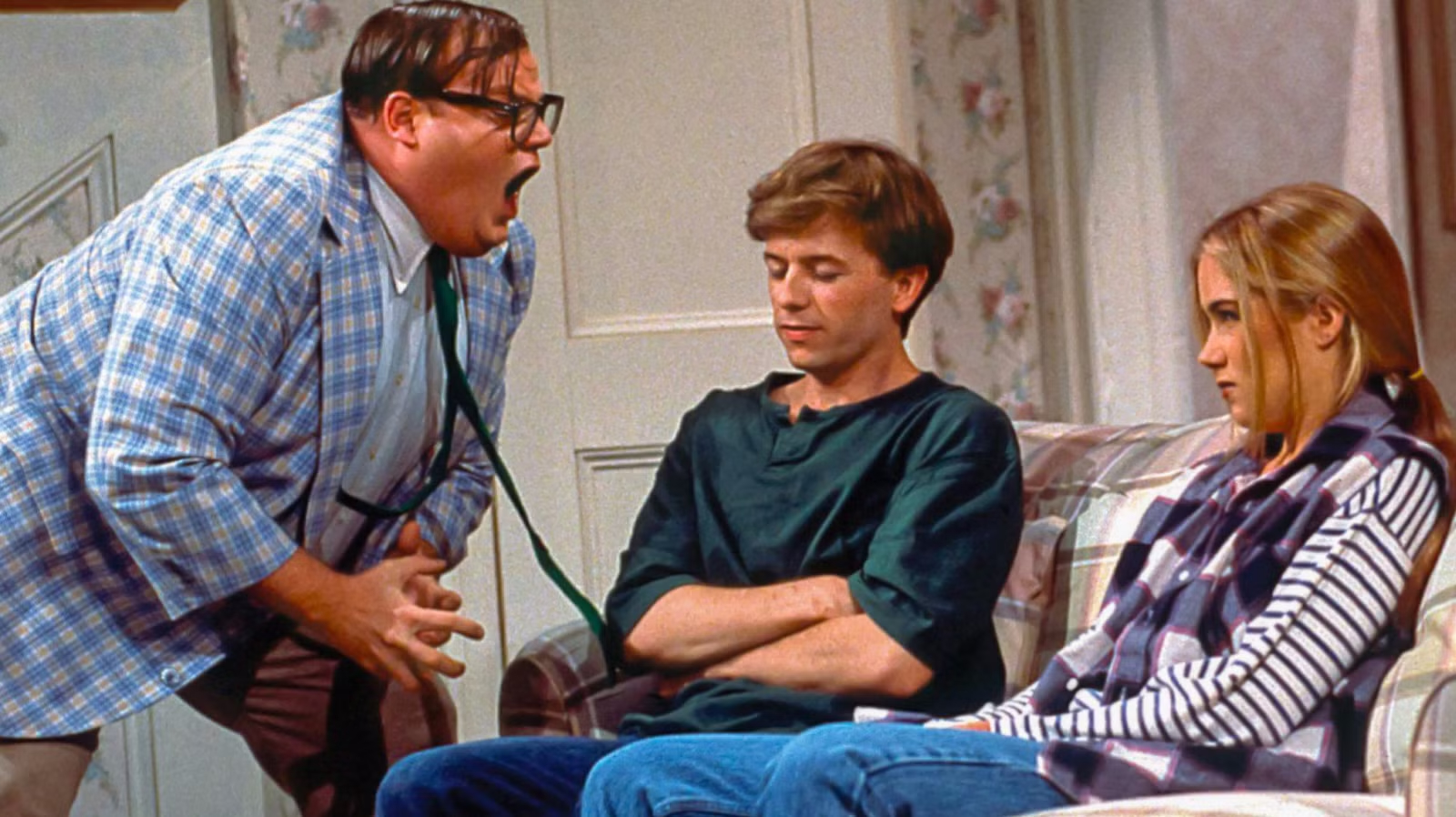
This cautious approach, while understandable given the different demands and audiences of live theater versus a national television sketch show, meant that a character and a sketch that had already proven their comedic mettle in a live setting had to undergo a period of evaluation and acclimatization before being deemed ready for prime time. The success of the sketch upon its eventual broadcast underscores the inherent quality of Odenkirk’s writing and Farley’s performance, which transcended the limitations of the stage.
A Moment of Triumph and Lasting Legacy
The eventual airing of "The Motivational Speaker" sketch on Saturday Night Live was a moment of immense satisfaction for Odenkirk. He had played the father in the scene during its Second City run, and the transition to television, with Farley embodying the iconic Matt Foley character, was a culmination of years of creative effort and collaboration.
"Doing that scene was the greatest joy," Odenkirk reiterated. "I played the father in the scene when we did it at Second City. Everything about that scene was magic. Writing it pretty much exactly the way it’s done, and it was all just touched with magic, and Chris was born to be that guy, so I was thrilled. I had left the show and I got a phone call, ‘They’re going to do the scene.’ And Lorne [Michaels] was great. They gave me credit. It was the greatest."
The sketch’s impact was immediate and enduring. It quickly became a touchstone of SNL history, frequently cited as one of the show’s most memorable and effective comedic moments. The character of Matt Foley, brought to life by Chris Farley’s unparalleled physical comedy and raw emotional delivery, resonated deeply with audiences, cementing its place in the pantheon of Saturday Night Live greats. The sketch’s enduring popularity is a testament to the power of original comedic writing and the brilliance of performers who can inhabit a character with such authenticity and comedic force.
Supporting Data and Context
Chris Farley’s tenure on Saturday Night Live (1990-1997) was marked by his larger-than-life persona and his ability to generate explosive comedic energy. His performances, often characterized by a disarming blend of vulnerability and unbridled physicality, made him a fan favorite. The "Motivational Speaker" sketch, which aired on December 10, 1994, during Farley’s fourth season, is often ranked among the show’s most iconic. According to various critical analyses and fan polls conducted by publications such as Esquire and The Guardian, the sketch consistently appears on lists of the "best" or "greatest" SNL skits of all time.
The development of the Matt Foley character can be seen within a broader trend at Saturday Night Live of incorporating talent and material from established comedy theaters. Second City, in particular, has been a significant breeding ground for SNL cast members and writers throughout the show’s history, including Tina Fey, Bill Murray, and Gilda Radner. The hesitation to directly port characters often stems from the need to adapt material for a television format, which requires different pacing, visual cues, and audience engagement strategies compared to a live stage performance. However, in the case of "The Motivational Speaker," the core of the sketch’s humor—Farley’s earnest yet pathetic portrayal of a man down on his luck—proved to be universally relatable and highly translatable to the television medium.
The success of the sketch also highlights the symbiotic relationship between writers and performers. Odenkirk’s vision for the character and his comedic premise, combined with Farley’s unique talent for embodying such a character, created a perfect storm of comedic synergy. Farley’s dedication to making his fellow actors laugh during performances, as noted by Odenkirk, was a hallmark of his creative process and contributed to the infectious energy that made the sketch so successful.
Broader Impact and Implications
The enduring legacy of the "Van Down by the River" sketch extends beyond its status as a comedic masterpiece. It serves as a powerful reminder of the creative pipeline between live comedy theaters and television. The initial reluctance of SNL to embrace the character directly also points to the challenges of translating live performance art to a mass media format, a challenge that has been navigated successfully by many performers and writers over the years.
Moreover, the story of this sketch’s development underscores the importance of perseverance and creative conviction. Odenkirk and Farley’s belief in the material, and their efforts to champion it, ultimately led to its iconic status. The fact that the sketch was performed almost exactly as written in Chicago, with minimal alteration for television, speaks to the strength of the original concept and its immediate comedic impact.
Bob Odenkirk’s reflection on this moment not only provides valuable insight into the creative process behind one of Saturday Night Live‘s most beloved sketches but also offers a touching tribute to his friendship and professional collaboration with Chris Farley. It solidifies the sketch’s place in comedy history, not just as a collection of jokes, but as a testament to the power of shared creative vision and the lasting impact of comedic brilliance. The "Van Down by the River" sketch, born in the intimate setting of a Chicago theater, ultimately achieved a global reach, continuing to entertain and inspire audiences decades later, a true testament to the enduring power of laughter.


