
‘Black Panther’ Director Ryan Coogler & MCU Head Kevin Feige Reflect On Chadwick Boseman’s Passing Five Years Out


The tragic passing of Chadwick Boseman in August 2020 sent shockwaves through Hollywood and around the globe, leaving an indelible void in the hearts of fans and colleagues alike. More than three years later, the profound emotional and creative ramifications of his death continue to resonate, particularly within the Marvel Cinematic Universe (MCU) and for those who worked most closely with him on the groundbreaking Black Panther franchise. In a recent poignant conversation at the University of Southern California, Marvel Studios President Kevin Feige and Black Panther director Ryan Coogler candidly reflected on Boseman’s life, his battle with cancer, and the unique challenges and unexpected displays of humanity that emerged in the aftermath of his death. Their shared reflections offered a rare glimpse into the personal toll and professional pivots necessitated by such an immense loss, underscoring Boseman’s irreplaceable impact.
The Weight of Loss: Feige’s Revelation on Taking Time for Granted
The conversation, hosted by the USC School of Cinematic Arts, provided a platform for Feige and Coogler to discuss their collaborative journey through and beyond the MCU. As their discussion naturally gravitated towards Boseman, Feige articulated a realization that many can relate to in the face of unexpected loss. He confessed to a common human tendency: taking the future for granted, especially when it comes to professional relationships within a bustling industry. "We will be back in there, that was always my expectation," Feige stated, referring to the assumption of future collaborations and interactions with colleagues. "So the need to set a dinner or a lunch to say hi, I just never do. Because we’re busy and because we’re going to have a next time. And that hit me like a ton of bricks when I realized that there wasn’t going to be a next time." This sentiment laid bare the vulnerability beneath the often-impenetrable corporate veneer of Hollywood, revealing a deeply personal regret over missed opportunities for connection. It highlighted the relentless pace of film production, where the next project often overshadows the present moment, only for the fragility of life to brutally reframe priorities. For Feige, a figure synonymous with the meticulously planned, interconnected narrative of the MCU, this personal admission underscored the profound shock and grief experienced by the entire Marvel family.
A Legacy Forged in Purpose: Chadwick Boseman’s Journey to Wakanda
Chadwick Boseman’s journey to becoming the iconic King T’Challa, the Black Panther, was a testament to his talent, dedication, and deep understanding of the characters he portrayed. Born in Anderson, South Carolina, Boseman’s early career saw him hone his craft in theater before making a significant mark in biographical films. His portrayal of baseball legend Jackie Robinson in 42 (2013) garnered widespread critical acclaim, followed by his electrifying performance as James Brown in Get On Up (2014) and his powerful turn as Thurgood Marshall in Marshall (2017). Each role showcased his uncanny ability to embody historical figures with depth, dignity, and nuance.
However, it was his casting as Black Panther in 2014, making his debut in Captain America: Civil War (2016), that cemented his status as a global icon. The character of T’Challa, ruler of the technologically advanced African nation of Wakanda, was not merely another superhero; he was a symbol of Black excellence, dignity, and power on an unprecedented scale within mainstream cinema. The standalone Black Panther film, released in 2018 and directed by Ryan Coogler, became a cultural phenomenon. It was the first superhero film to be nominated for a Best Picture Oscar and grossed over $1.3 billion worldwide, shattering box office records and societal barriers. Boseman’s performance as T’Challa was central to its success, bringing a regal gravitas, quiet strength, and profound humanity to the character. He inspired millions, particularly children of color, who finally saw a superhero on screen who looked like them, embodying hope and possibility. His portrayal transcended mere acting; it became a movement.
A Secret Battle: Boseman’s Private Fight with Colon Cancer
The tragic layer to Boseman’s meteoric rise was the private battle he was waging with stage III colon cancer, a diagnosis he received in 2016. Throughout his most prolific years, including filming Captain America: Civil War, Black Panther, Avengers: Infinity War, Avengers: Endgame, 21 Bridges, and Spike Lee’s Da 5 Bloods, Boseman underwent countless surgeries and chemotherapy treatments, all while maintaining an extraordinary level of secrecy about his condition. His dedication to his craft and his commitment to bringing these powerful characters to life were nothing short of heroic. He often arrived on set directly from treatments, enduring immense physical pain and fatigue, yet delivering performances that betrayed no hint of his suffering. This commitment spoke volumes about his character and his understanding of the cultural significance of his roles. The world remained unaware of his struggle until his family announced his passing on August 28, 2020, at the age of 43. The revelation that he had fought cancer for four years, all while creating some of his most iconic work, added another layer of awe and heartbreak to his already legendary status.
The World Mourns: August 2020 and Global Tributes
The news of Chadwick Boseman’s death sent a wave of profound shock and grief across the globe. Tributes poured in from fellow actors, directors, politicians, athletes, and millions of fans. Social media platforms were inundated with messages of sorrow, remembrance, and gratitude for his contributions. Many shared images of Boseman in his Black Panther suit, often accompanied by the Wakandan salute, "Wakanda Forever." His passing was not just the loss of a talented actor but the loss of a cultural icon, a symbol of hope and empowerment. For Marvel Studios, the grief was compounded by the immediate professional uncertainty. Boseman was not just an actor; he was the titular character of one of their most successful and culturally significant franchises. His death left a massive void in the MCU’s meticulously planned Multiverse Saga, forcing a fundamental reassessment of the future of the Black Panther series.
Navigating Grief and Creativity: The Making of Black Panther: Wakanda Forever
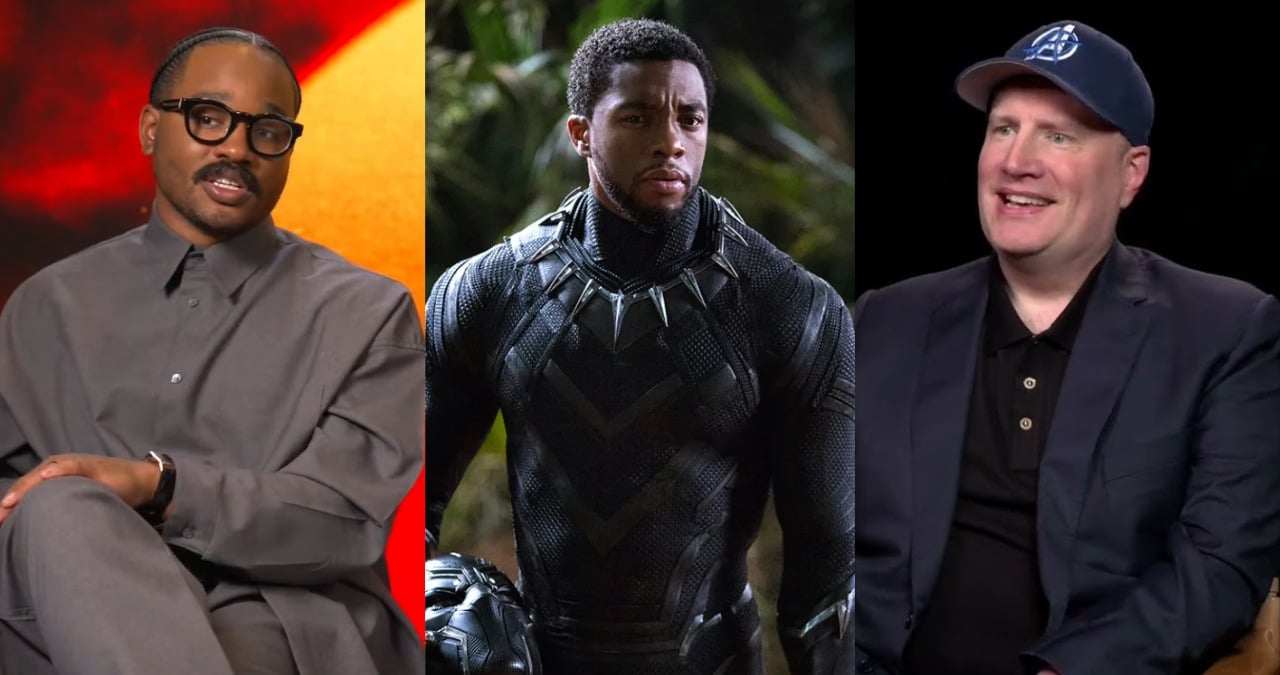
The challenge of continuing the Black Panther saga without its king fell heavily on the shoulders of Ryan Coogler. The original plans for a sequel, which would have centered on T’Challa’s continued reign, had to be completely re-envisioned. Marvel Studios, in a move widely praised, made the decision not to recast the role of T’Challa out of respect for Boseman’s indelible portrayal and legacy. This decision underscored the unique bond between actor and character that Boseman had forged.
Coogler found himself in an unenviable position: tasked with crafting a sequel that honored his friend and colleague while navigating a path forward for the franchise. The process was undoubtedly arduous, emotionally draining, and creatively demanding. The resulting film, Black Panther: Wakanda Forever (2022), became a poignant exploration of grief, loss, and succession. It depicted Wakanda mourning its king, T’Challa, mirroring the real-world grief experienced by the cast, crew, and audience. The narrative centered on the Wakandan people, particularly Shuri (Letitia Wright), T’Challa’s brilliant younger sister, stepping up to protect their nation and honor their fallen leader. The film was a commercial success, grossing over $859 million worldwide, and received critical acclaim for its sensitive handling of Boseman’s absence, its emotional depth, and its powerful performances, earning five Academy Award nominations. It was a testament to Coogler’s vision and the entire team’s commitment to honoring Boseman’s memory while pushing the story forward.
Humanity Beyond Corporate Walls: Coogler’s Account of Leadership Empathy
During the USC discussion, Ryan Coogler offered a deeply personal insight into how Marvel Studios leadership handled the immediate aftermath of Boseman’s death, revealing a level of empathy that transcended typical corporate concerns. He recounted a pivotal moment when Kevin Feige and then-Disney CEO Bob Iger personally visited his apartment during lockdown. "They came to our apartment in lockdown… and we walked around the Richmond Arena and just talked," Coogler shared. What made this encounter particularly impactful, Coogler emphasized, was the nature of their concern. "And that was the first real check-in. And it wasn’t ‘Hey, what are we going to do about this franchise?’ It was about, ‘Hey, are you OK? How are you taking it?’… It was a real moment where you see the humanity beyond the corporate things and the financial responsibilities."
This anecdote provides a powerful counter-narrative to the often-perceived cold, profit-driven nature of large corporations. It showcased Feige and Iger prioritizing the well-being of their creative talent over immediate business concerns, allowing Coogler the space to process his grief before addressing the monumental task of reshaping a multi-million-dollar franchise. Such a display of compassionate leadership is rare and speaks volumes about the culture they fostered within Marvel Studios, especially during an unprecedented time of global pandemic and profound personal loss. Coogler’s additional reflection, "There was only one Chad, bro. And there was only one character that was really meant for him," succinctly encapsulates the irreplaceable nature of Boseman and the profound impact he had on everyone who knew him or was touched by his work.
The Future of Wakanda: Black Panther 3 and the Recasting Debate
As the MCU continues to evolve, with Kevin Feige currently in the process of wrapping up the ambitious Multiverse Saga, the future of the Black Panther franchise remains a subject of intense interest and ongoing discussion. Ryan Coogler, who recently added an Oscar win for his role as writer and director of Sinners to his impressive resume, is widely expected to return to helm Black Panther 3. His intimate connection to the world of Wakanda and his proven ability to navigate its complexities, especially in the wake of Boseman’s passing, make him the natural choice.
However, a lingering question that occasionally resurfaces is the potential recasting of the titular Black Panther character, perhaps not as T’Challa, but as a new iteration. While Marvel has firmly committed to not recasting T’Challa, rumors occasionally circulate about the possibility of a different Black Panther or a new actor taking on the mantle in a way that respects the established narrative. This ongoing debate highlights the challenges of balancing legacy with the demands of a long-running cinematic universe. Should a future Black Panther emerge, perhaps through the multiverse or a new lineage, it would need to be handled with extreme care to honor Boseman’s foundational portrayal while establishing a compelling new direction. Coogler’s involvement in shaping this future will be crucial, ensuring that whatever path the franchise takes, Chadwick Boseman’s spirit and impact remain central to its identity.
Enduring Influence: Boseman’s Place in Cinema History
Chadwick Boseman’s legacy extends far beyond his filmography or the box office success of Black Panther. He carved out a unique place in cinema history as an actor who consistently chose roles that resonated with dignity, purpose, and cultural significance. His life and untimely death taught the industry profound lessons about the hidden battles many face, the importance of representation, and the enduring power of a single individual’s vision. His impact on diversity in Hollywood and on the global perception of Black superheroes cannot be overstated. He proved that films centered on Black narratives and characters could achieve massive commercial and critical success, paving the way for more inclusive storytelling.
The reflections shared by Kevin Feige and Ryan Coogler serve as a powerful reminder of the human element at the heart of even the largest cinematic endeavors. They underscore the deep personal connections formed on set and the profound grief experienced when those connections are severed. Boseman’s story continues to inspire, not just through the strength and nobility of his on-screen characters, but through the courage, resilience, and quiet grace with which he lived his own life. As the Black Panther saga continues to unfold, guided by talents like Ryan Coogler and supported by the leadership of Kevin Feige, it will undoubtedly remain tethered to the extraordinary legacy of the man who first brought Wakanda’s protector to life, ensuring that Chadwick Boseman’s spirit forever reverberates through the halls of cinema and the hearts of millions.
Related posts:


